Living traditions
Arapides of Volakas
Volakas, Drama
Field photographArapis of Volax
Collector mode
A photograph to live with. Enter a private viewing.Introduction
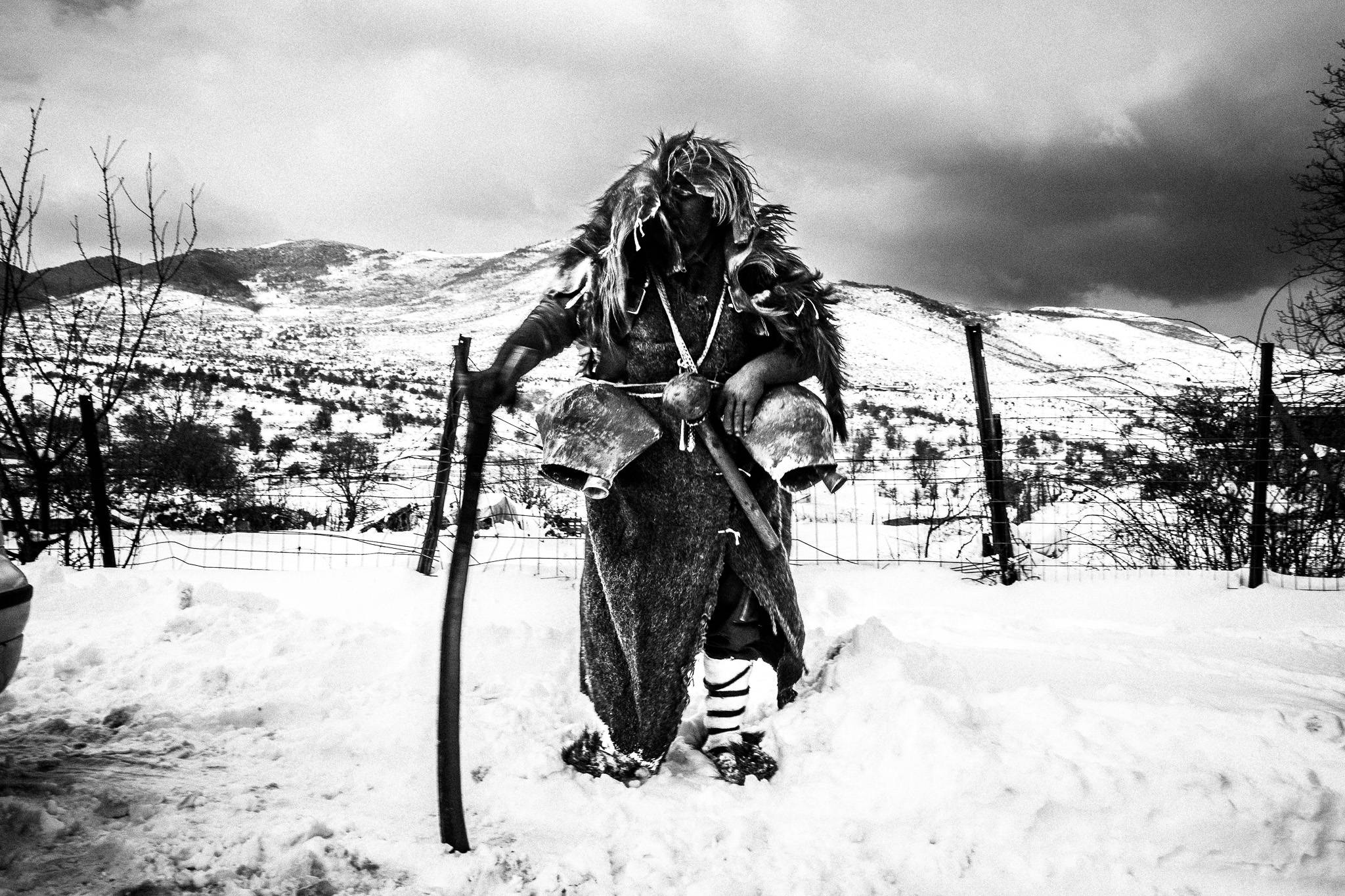
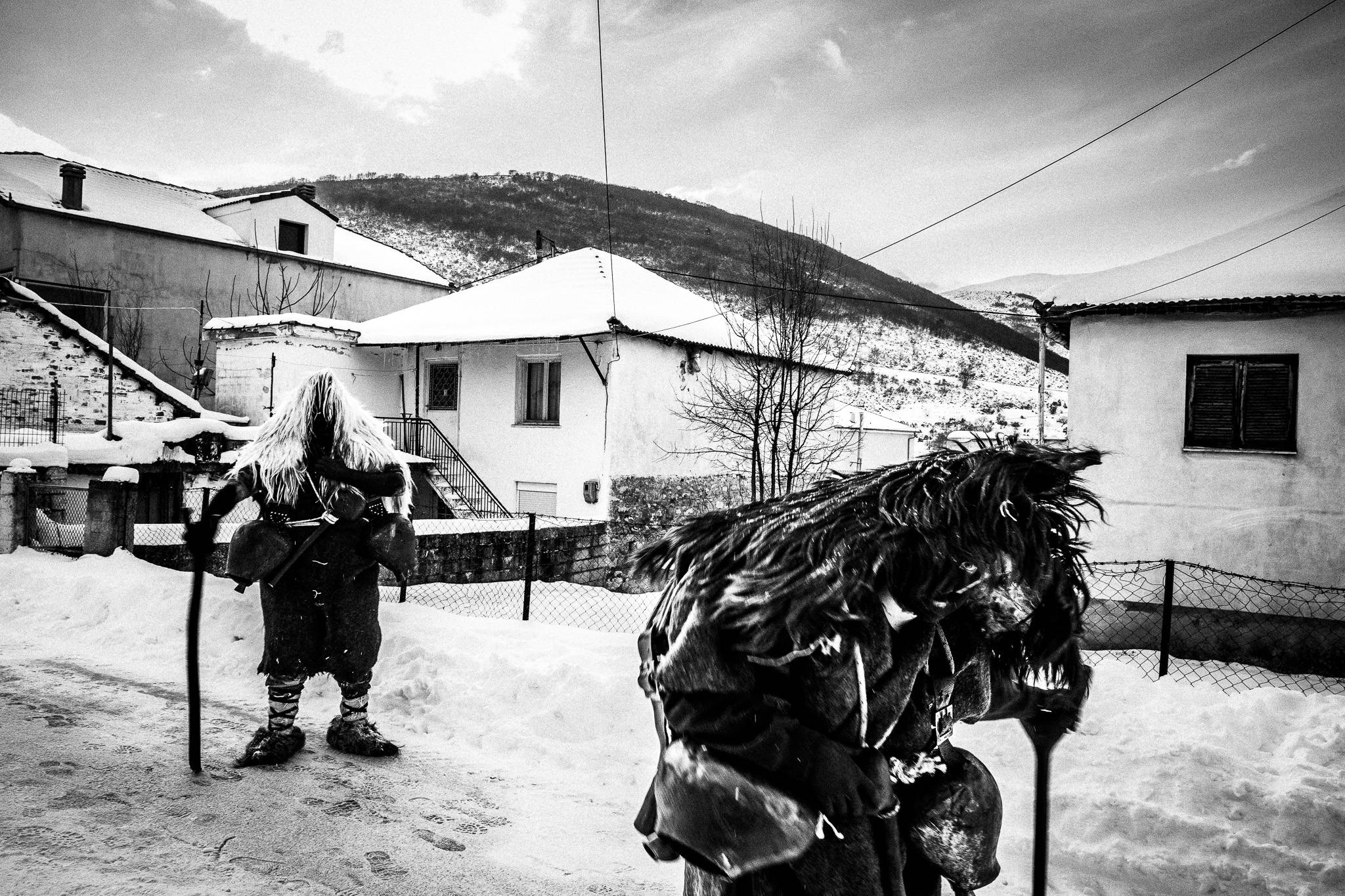
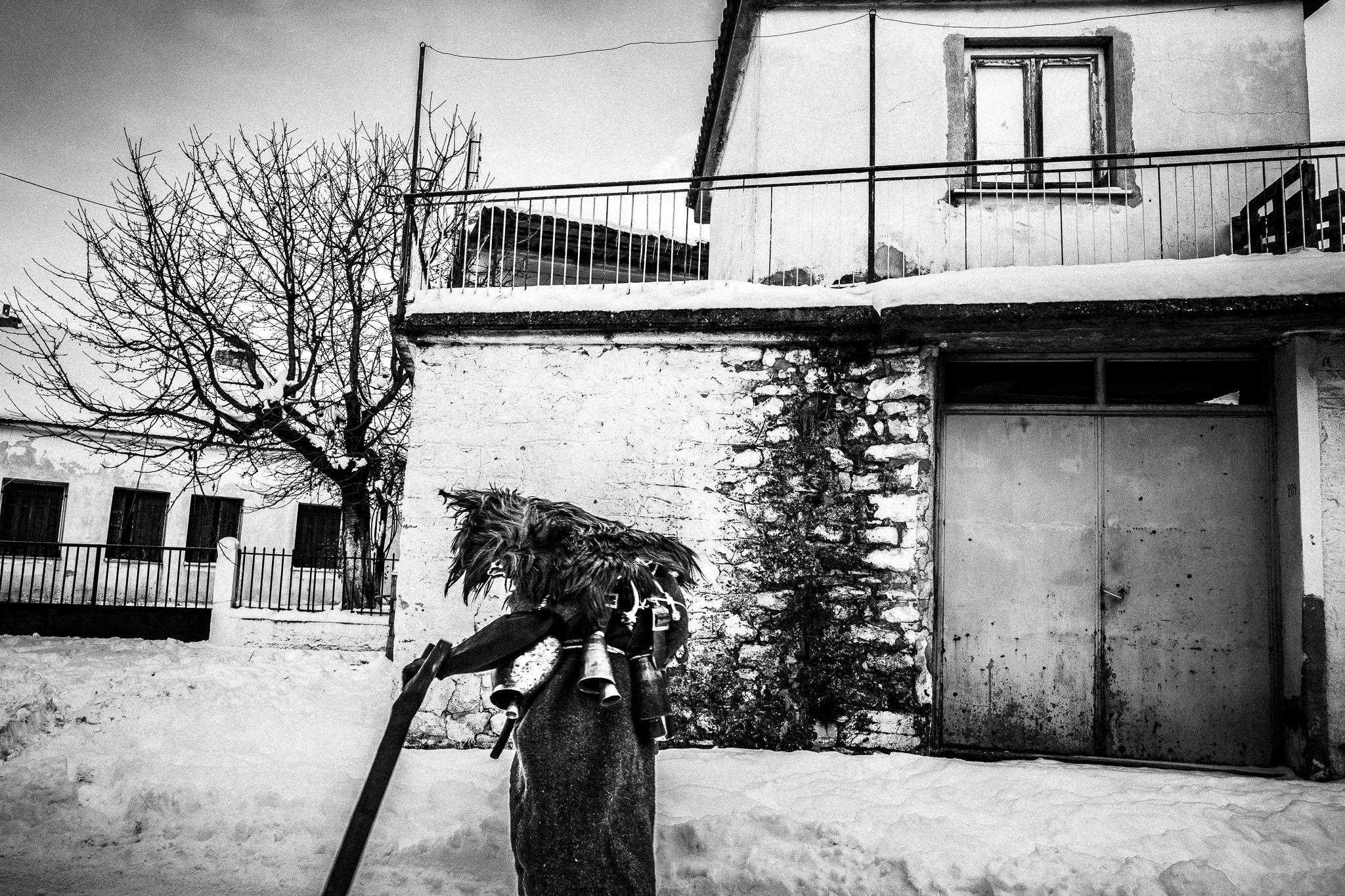
On 7 January, the black-faced Arapides of Volakas emerge with straw humps, goat fleece, crooks and thunderous bells.
One of Northern Greece’s best-known bell-bearing customs, performed to drive the Kallikantzaroi back underground.
Arapides in Volakas
Fascinated by ancient pagan (Dionysian) customs, I have been too intrigued to meet the Arapides of Volakas (Volax), who are amongst the most famous of all, frightful bell bearers that come out on 7 January every year to scare away the "Kallikantzaroi".
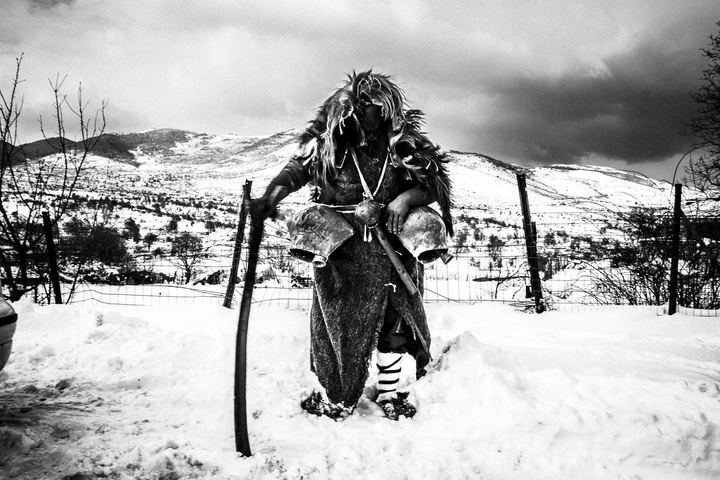
January 7 marks the day that the sun starts to move again, so it is time for the kallikantzaroi to go back underground and finish sawing the Tree of the World, only to find out that the Tree has healed itself back and they have to start all over again. That is the day when the Arapides of Volakas have to do their job and scare them away back to where they belong.
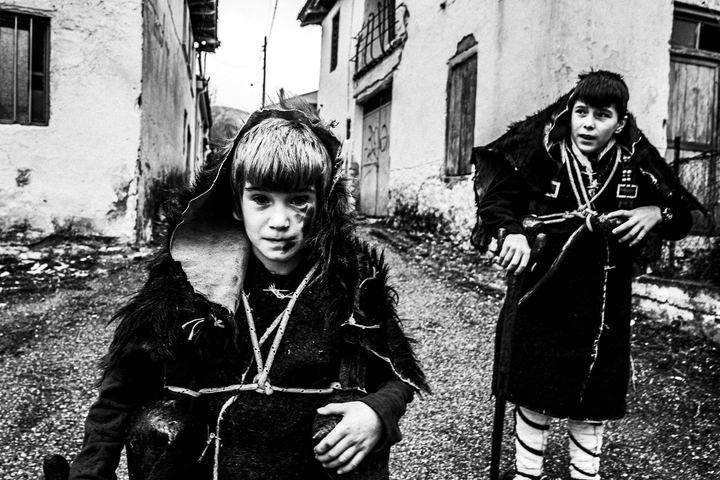
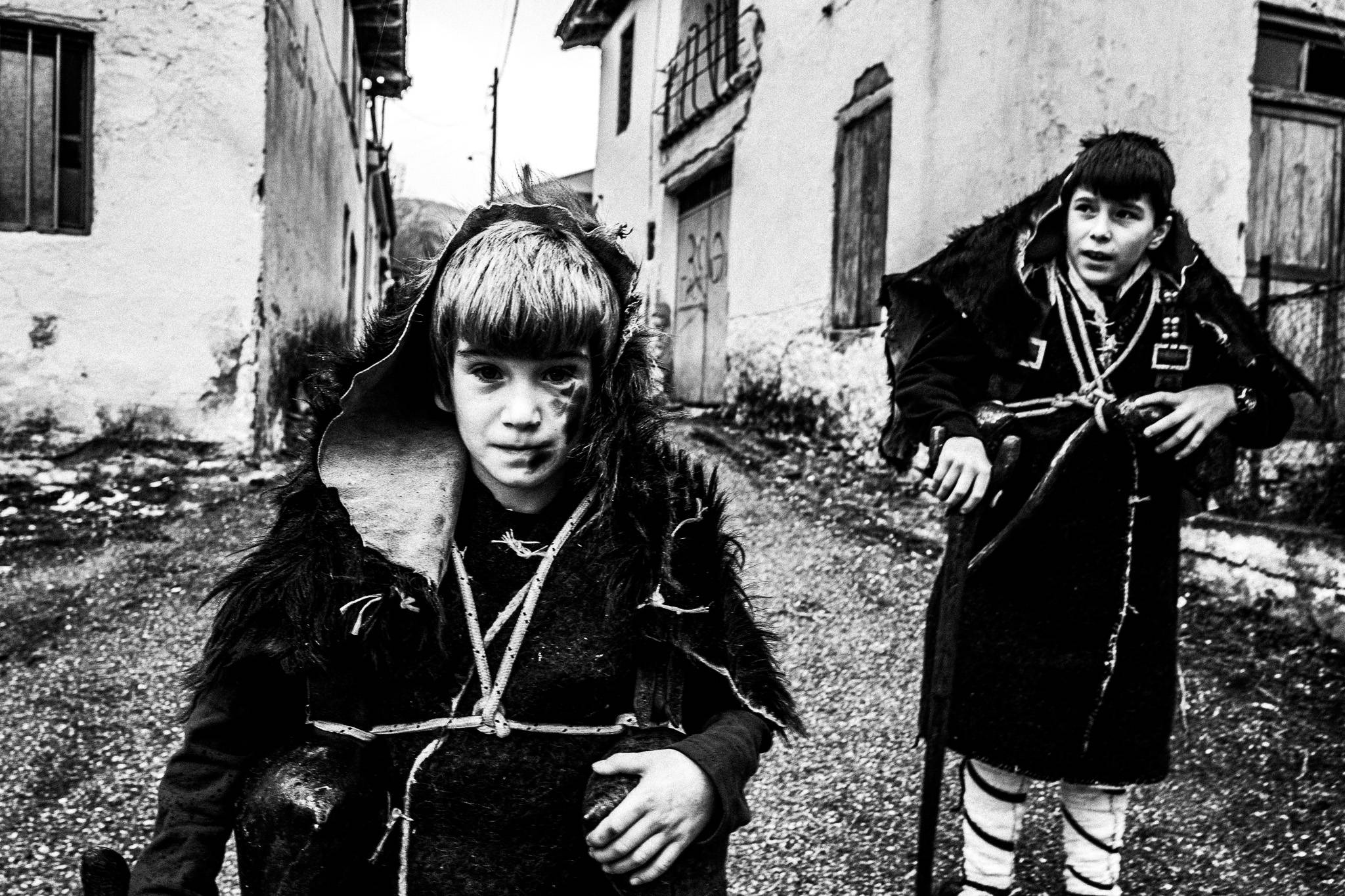
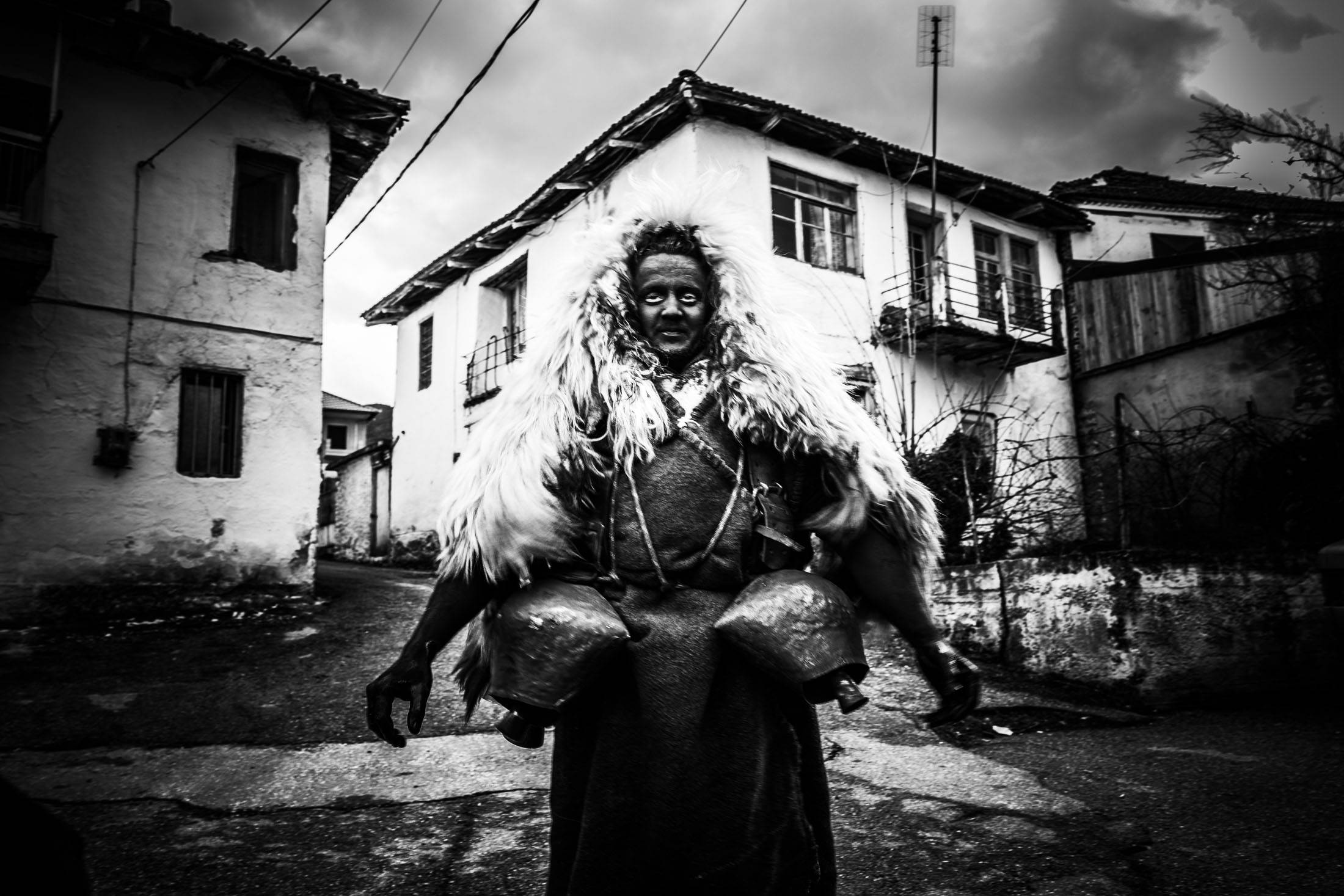
I arrived at the village much earlier than the time of the event. In such events, no one is too punctual with time anyway. I've heard that the Arapides will come out in the afternoon, somewhere between two and three. My idea was to be there at around 10 to 11 in the morning, to make some pictures of the Arapides getting ready. I left Drama at around 9:30. It's an approximately 45-minute drive from the centre of Drama, so I arrived a few minutes after 10 in Volakas. When I arrived, there was no one to see outdoors. Everything was too calm and quiet. Of course, it was a bit too cold for anyone to dwell in the open for no good reason, so I took shelter inside a cafe that was next to the central square.
Well, here was everyone after all. The cafe was crowded, maybe even more than ten people inside (!). The plan became clear now. I would have had a nice hot coffee in the cafe and tried to get some information on the event's schedule, thus I started making acquaintances with the locals. I saw two men sitting by the bar, bearing some instruments. A bagpipe and a drum. So I figured that these two would be the best approach from the lot, to get appropriate information. Indeed, they confirmed that the main event would start in the afternoon and also hinted at where I should be looking for houses that Arapides were getting ready.
I went out and started exploring the village. I was too lucky to find an old garage where maybe the largest Arapides gang (known as "Cheta" locally) was getting ready. The garage door was closed and the same was true with the wooden door by the side, but I could hear all the fuss inside and also knew that it was Arapides getting ready in there, because I'd already been hinted at that, and I could also hear some bells ringing. Therefore, I banged on the side door without hesitation and a man opened it. As soon as he laid eyes on me he looked puzzled, as he wasn't expecting anyone he didn't know. That made me a bit hesitant but inquired:
- Hey, I am a photographer and I travelled from Athens to see your custom. Is it OK if I hang out with you guys while you are getting ready and take a few pictures along the way?
- Well... OK, I guess.
That was the first step, and although he was still reluctant, I was sure that they would gain confidence after some time.
- Do you want some whiskey? the peculiar man asked.
Wow, that was an ice-breaker. It was still 11 in the morning, but anyway...
- Sure, I'll pour it myself, thank you!
These guys started drinking probably at 9, I could see the cheer on everyone's faces. I took a quick look around the place. Wow, that was a great place for pictures. An old garage with tools on the walls, a large pile of fire logs for the winter and many people all getting ready to dress as Arapides. Small windows on one side provided an excellent lighting atmosphere creating light rays and beautiful light pockets here and there.
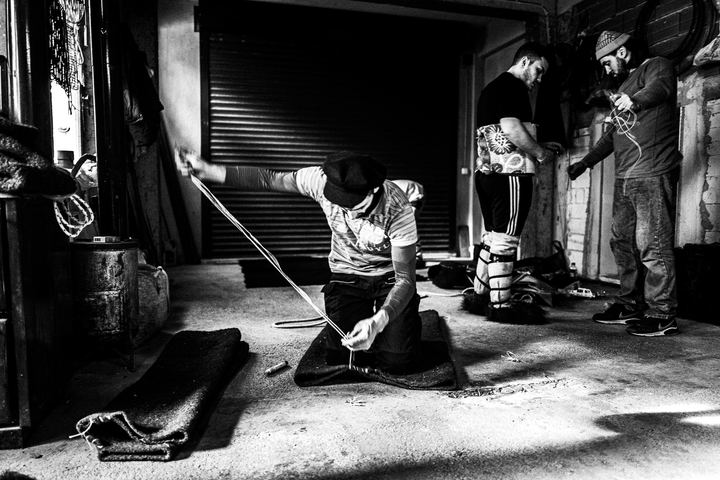
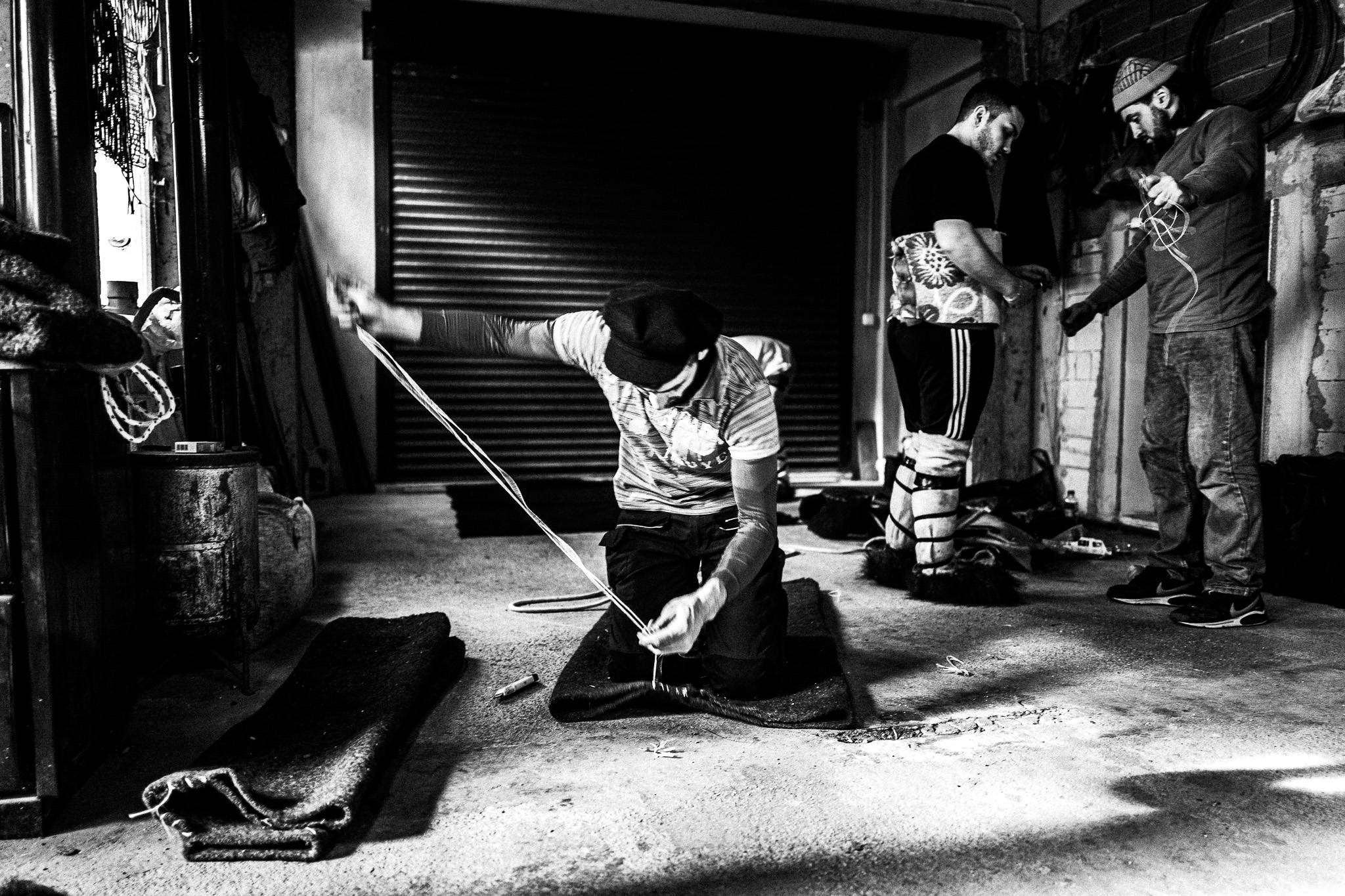
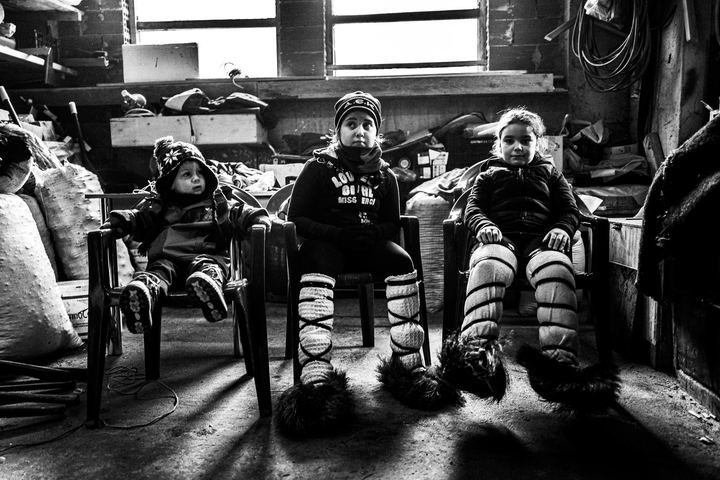
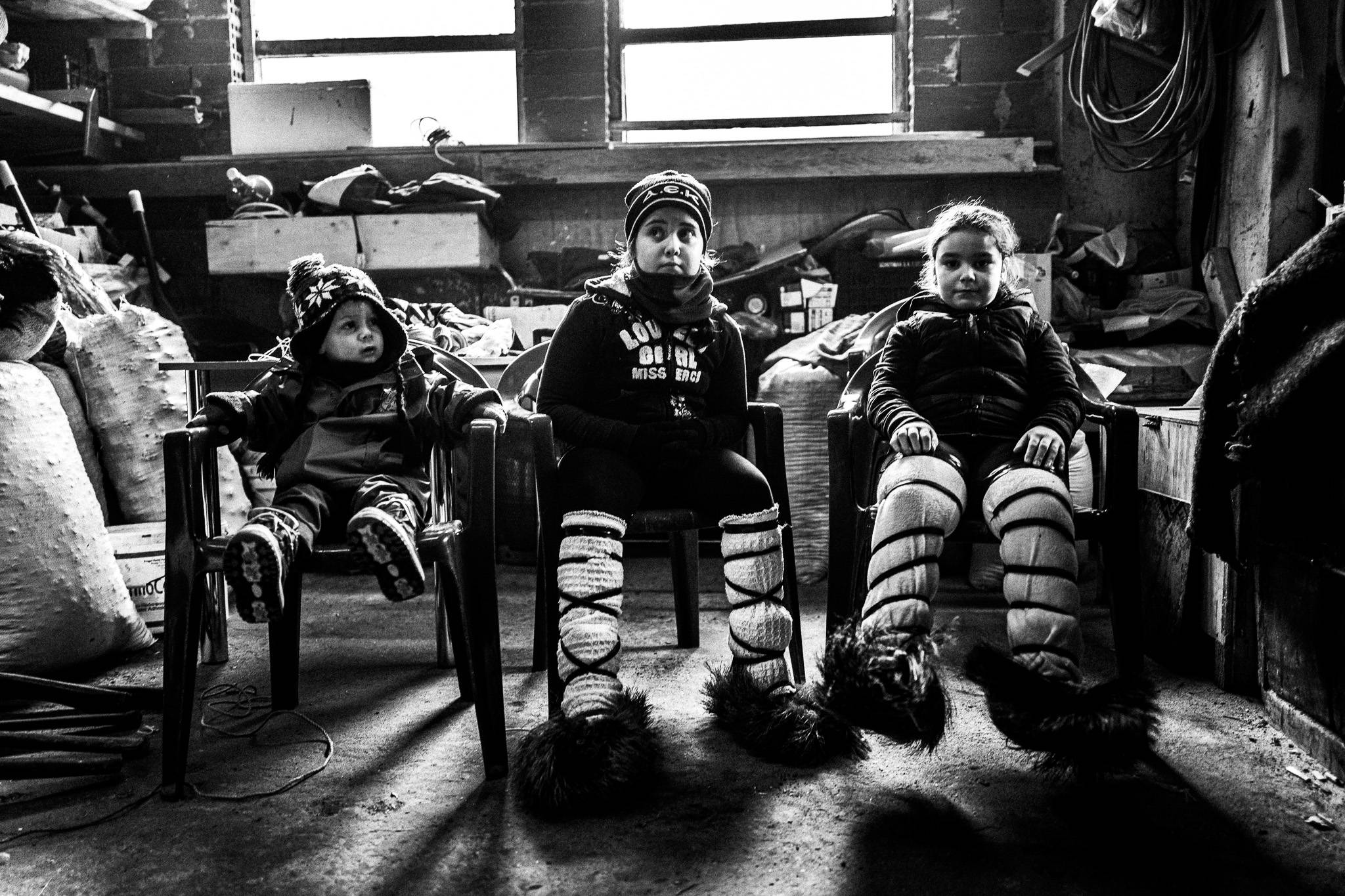
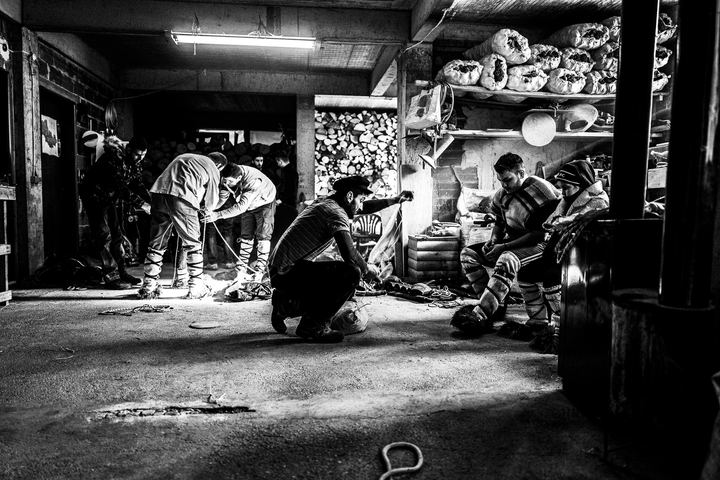
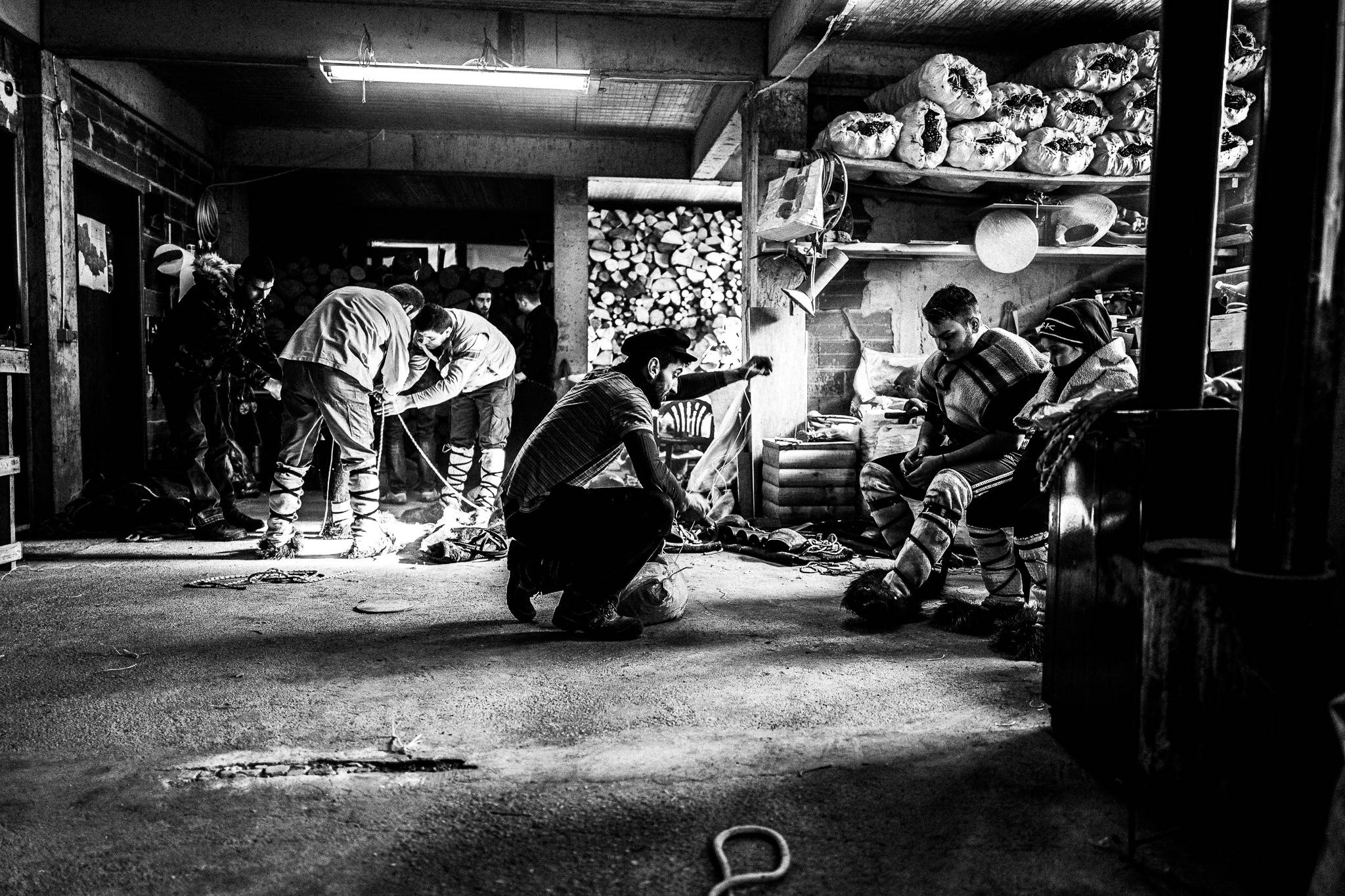
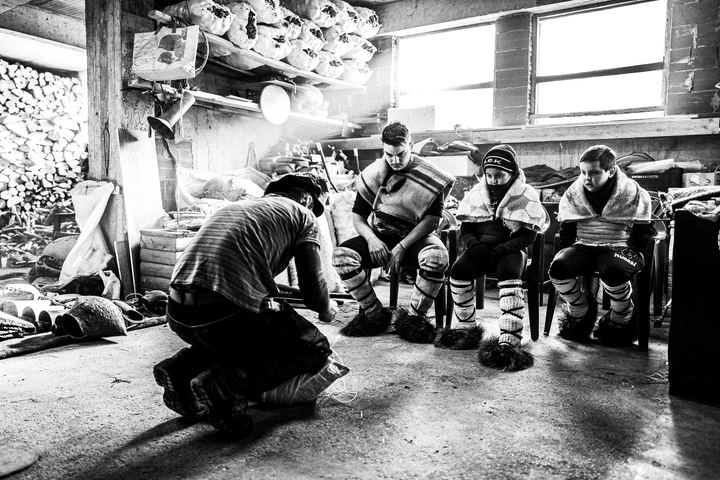
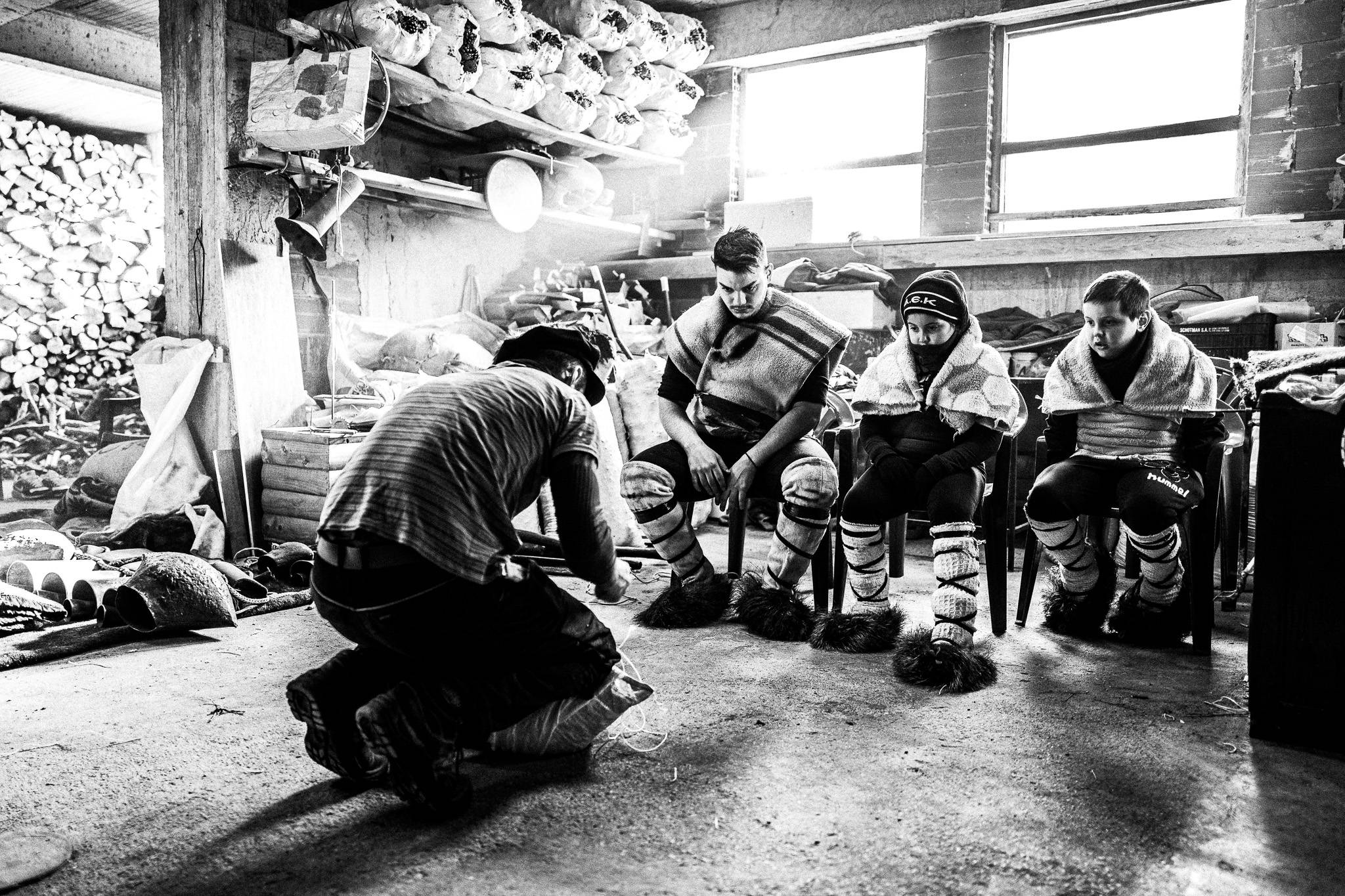
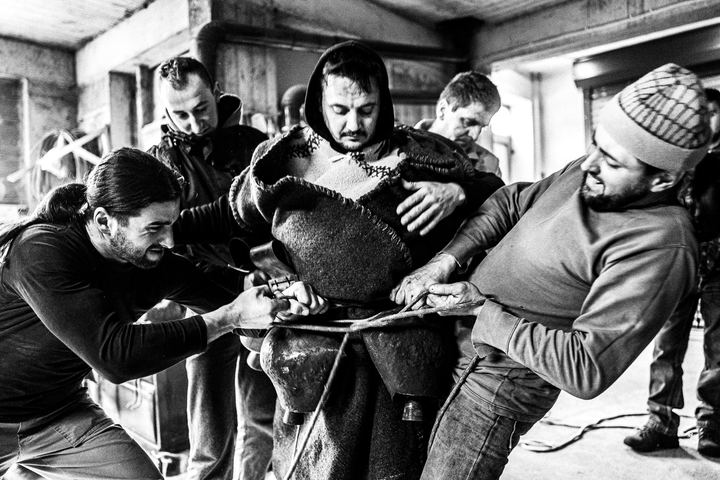
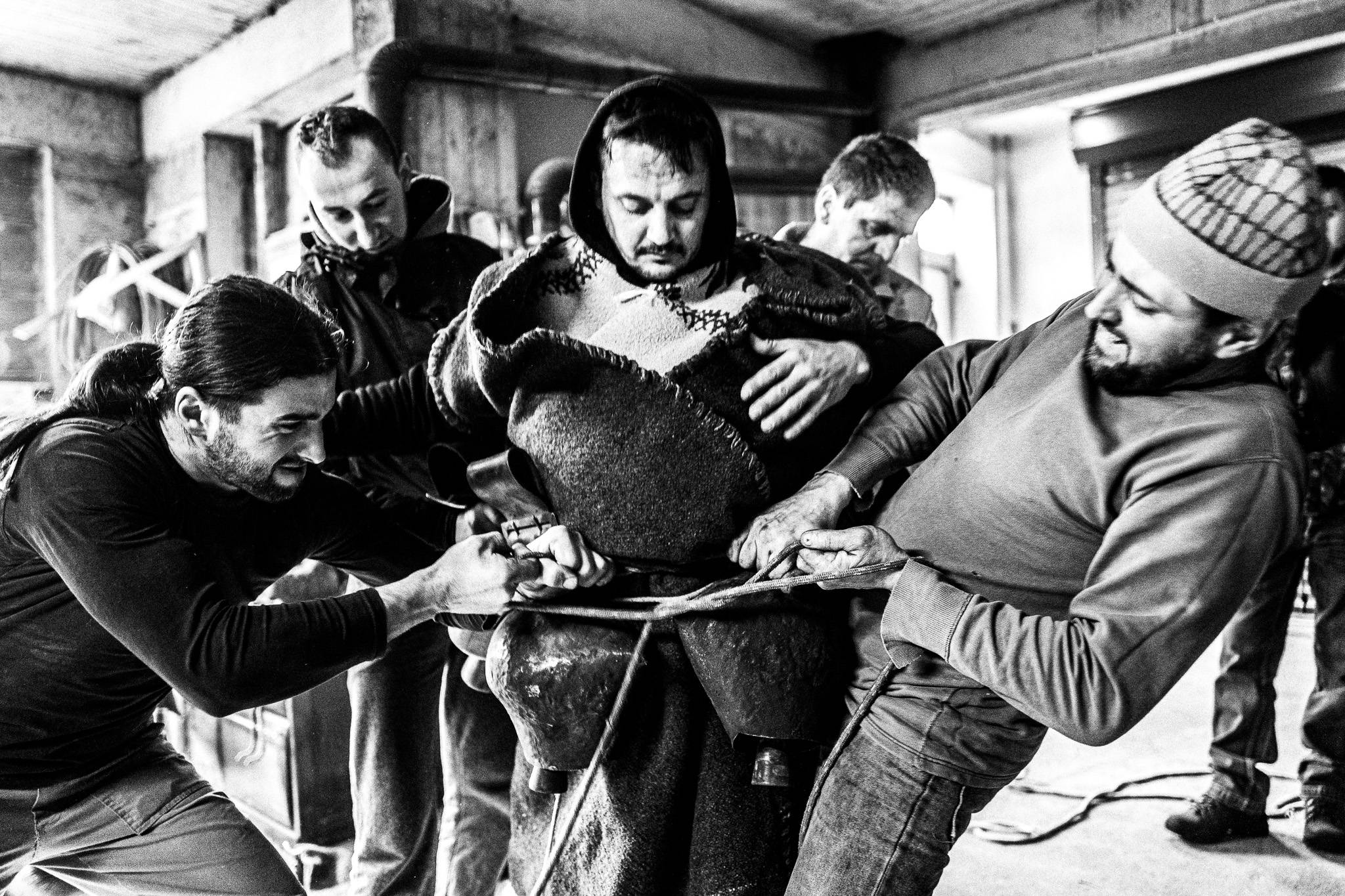
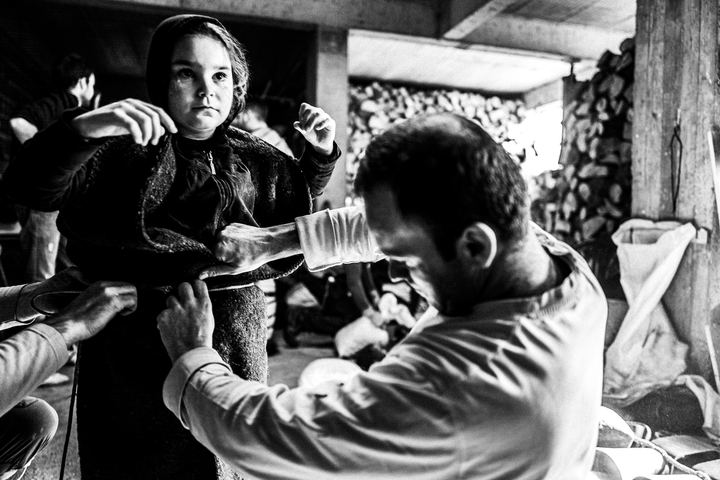
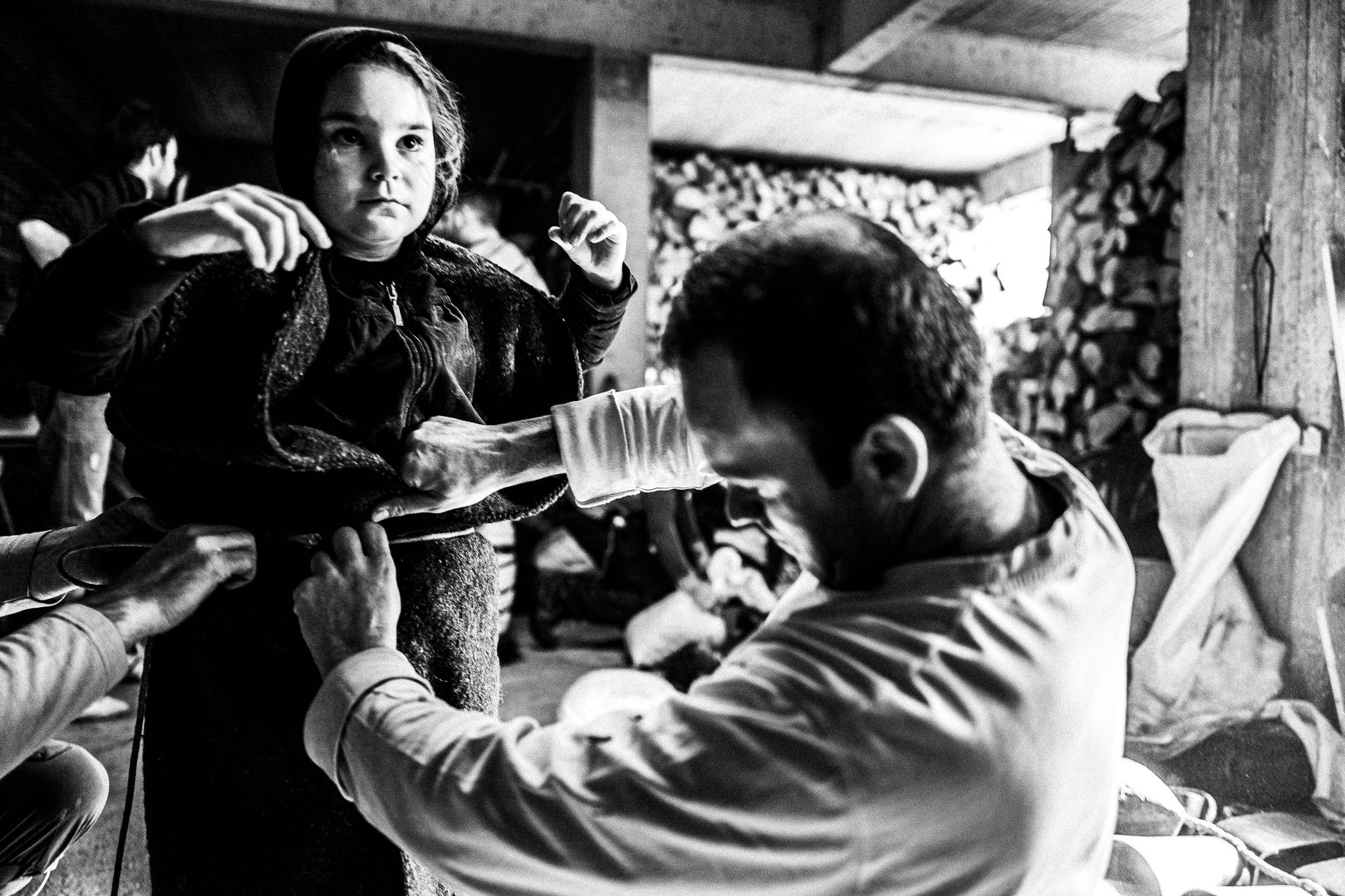
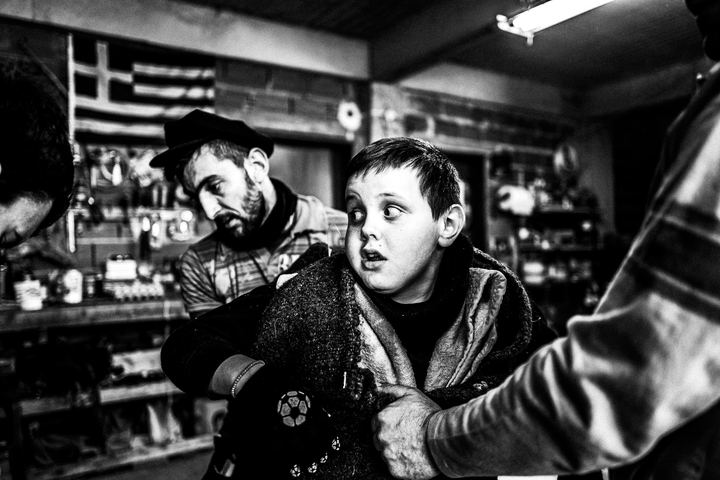
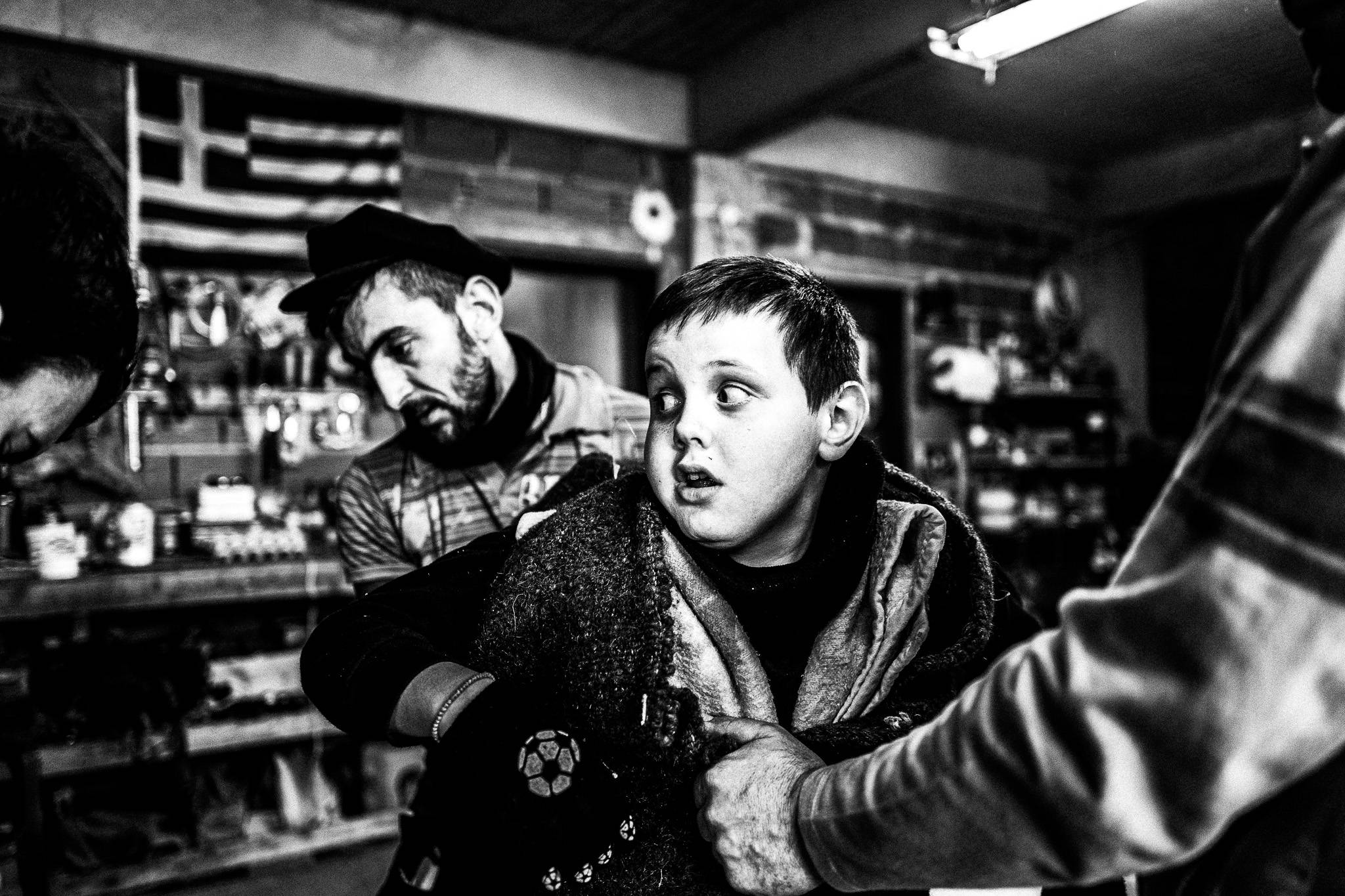
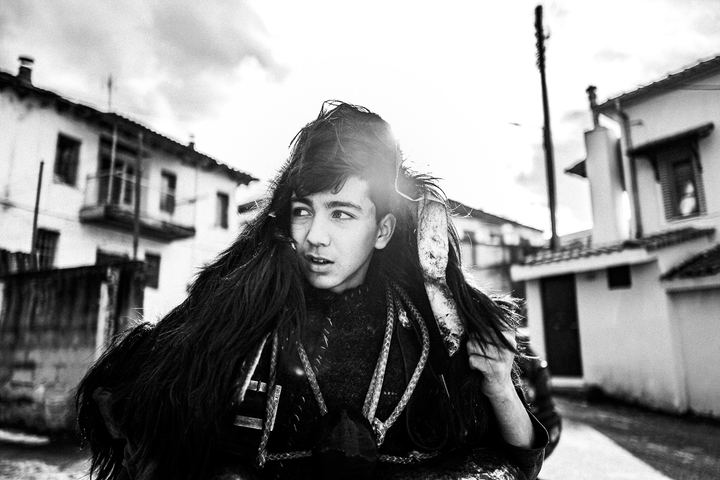
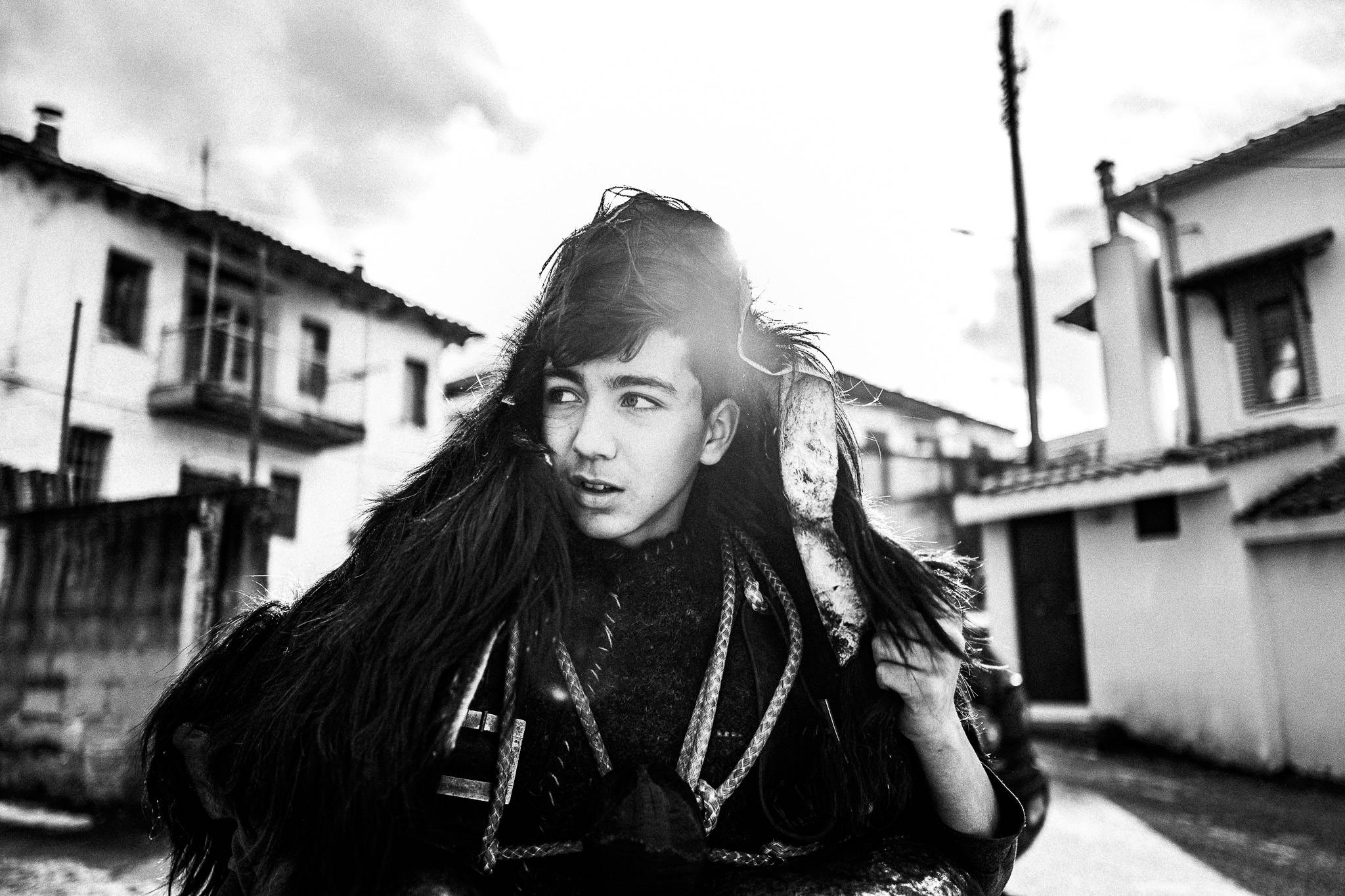
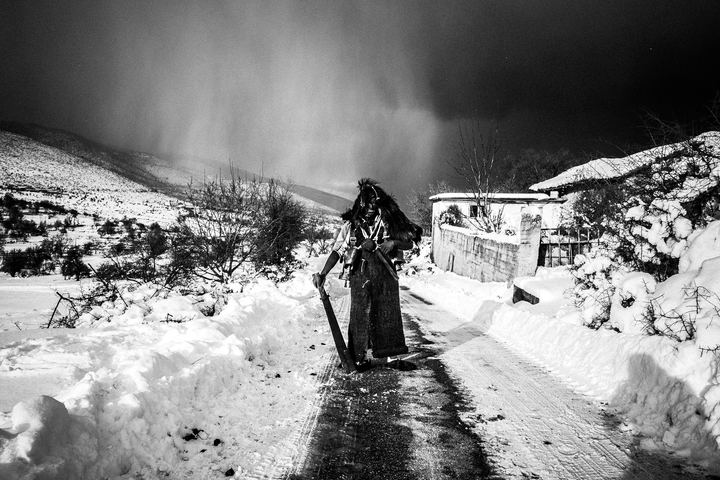
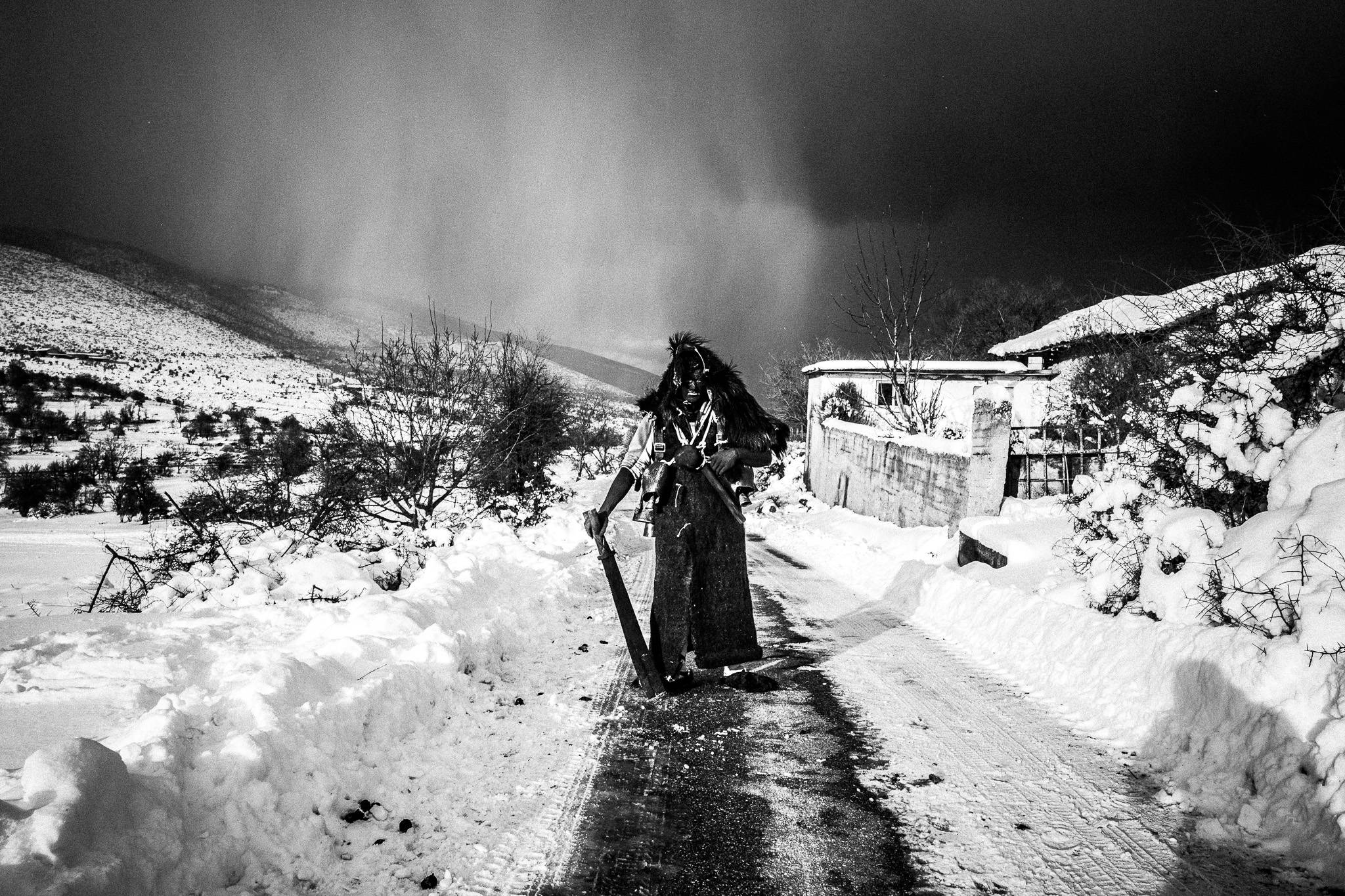
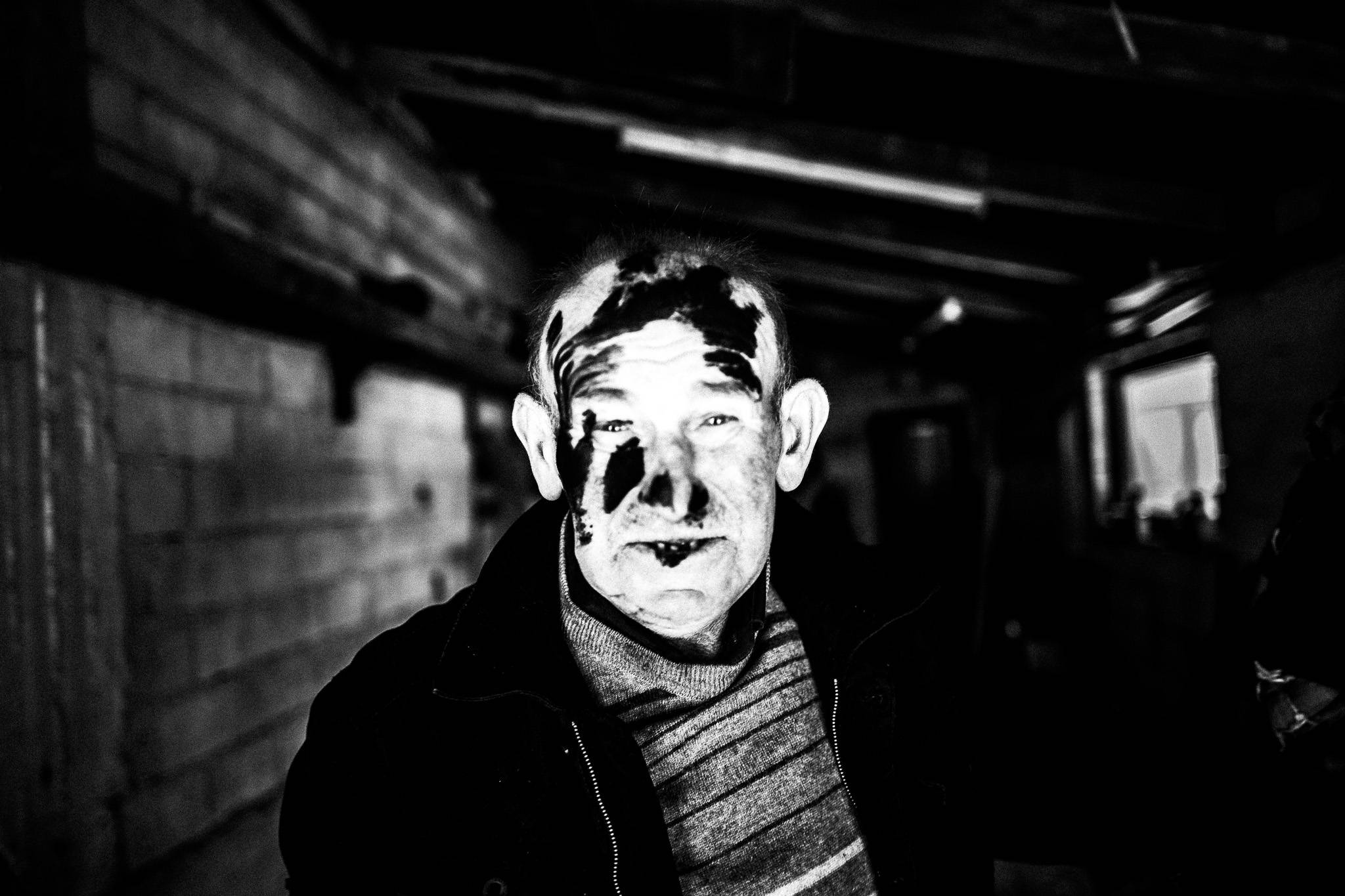
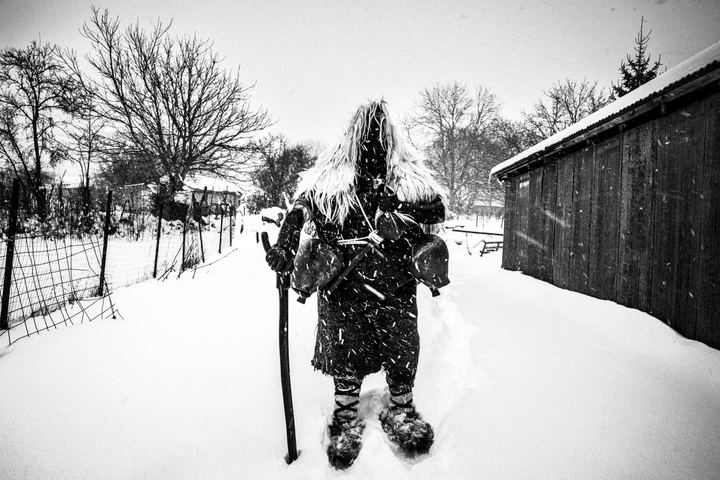
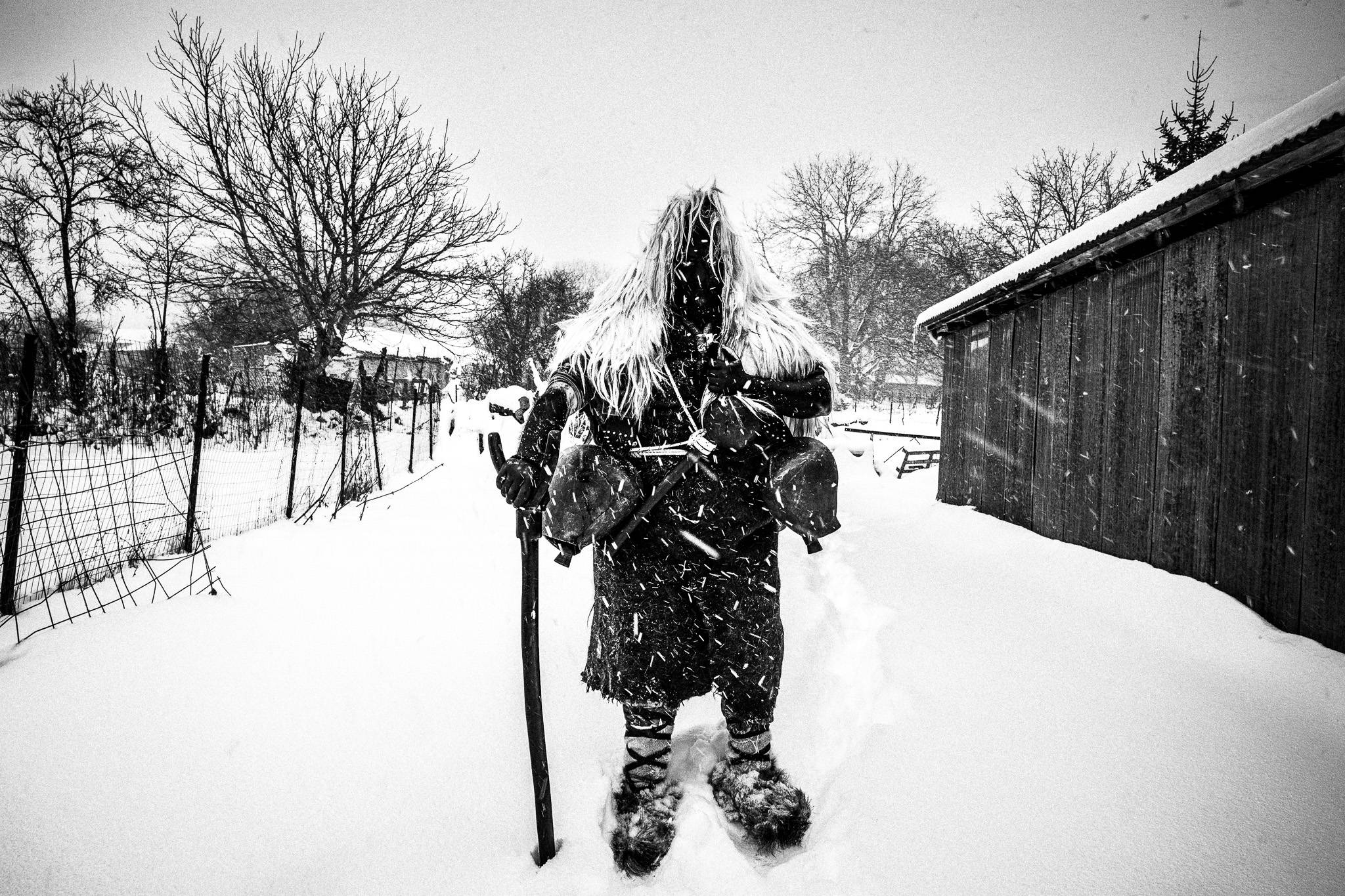
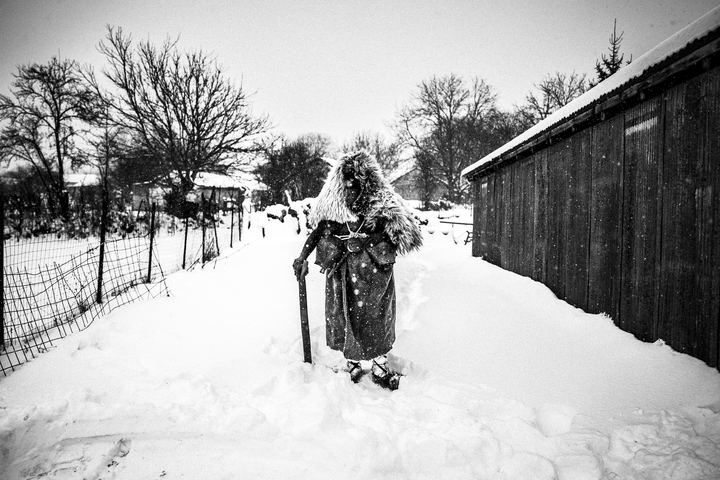
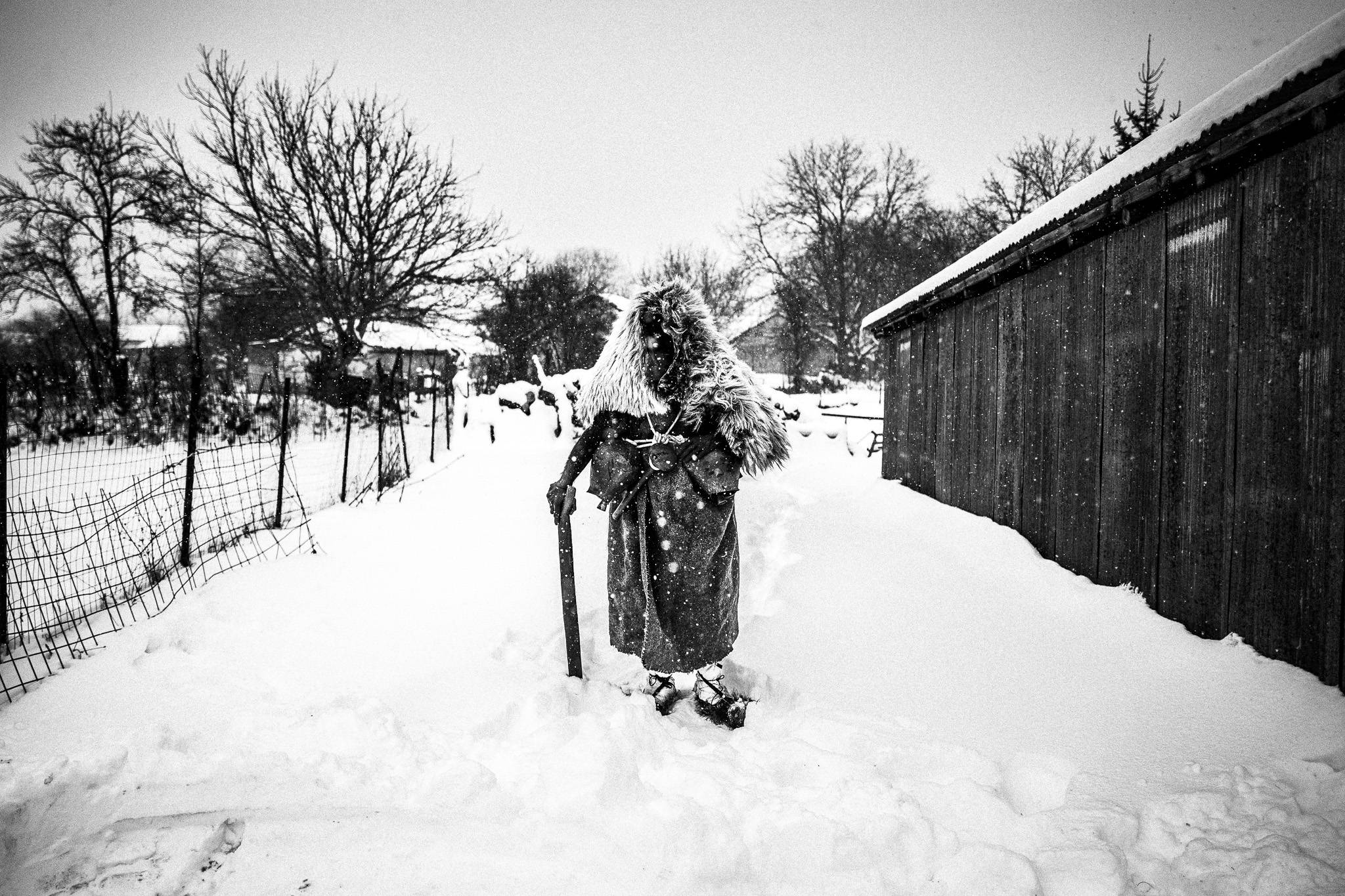
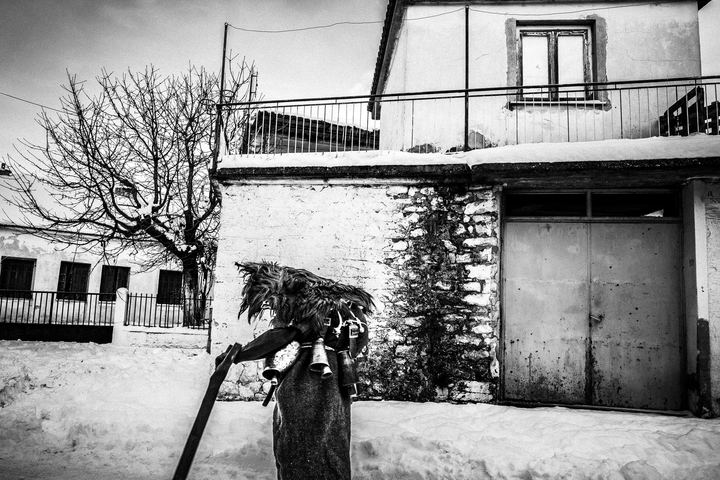
The Arapides of Volakas wear a hump made of a sack of straw and paint their faces, hands and arms pitch black. They bear bells around their waist as Arapides in other places also do, cover their head in goat’s fleece and hold a thick wooden crook that helps them keep pace while moving, striking the bells. This whole outfit takes about two hours to make ready. They have to put on many layers of blankets around their body so that they look bigger and keep warm when outdoors. Friends are helping each other to tie everything too tight so that they don't get loose with all the bell banging that takes place later on.
All of that took place inside the garage and the Arapides got ready to get their faces painted. Children of course go nuts and wait the whole year for the event to take place.
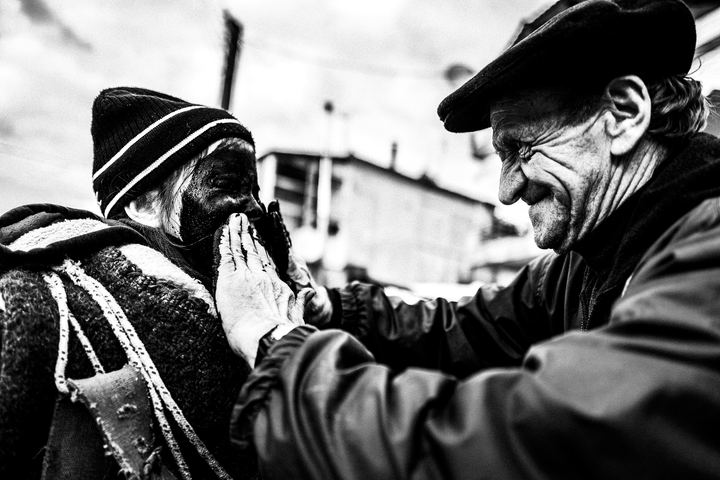
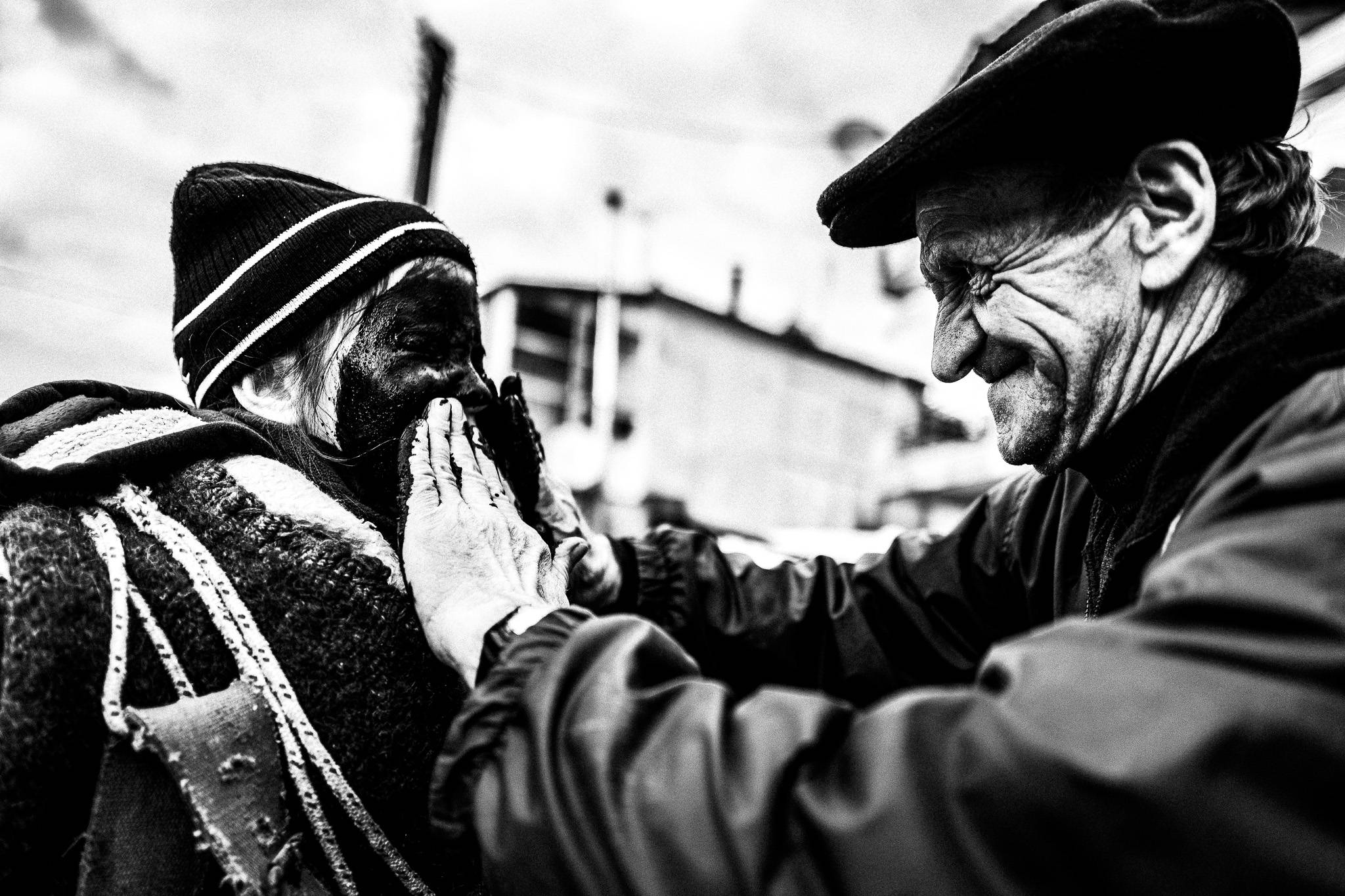
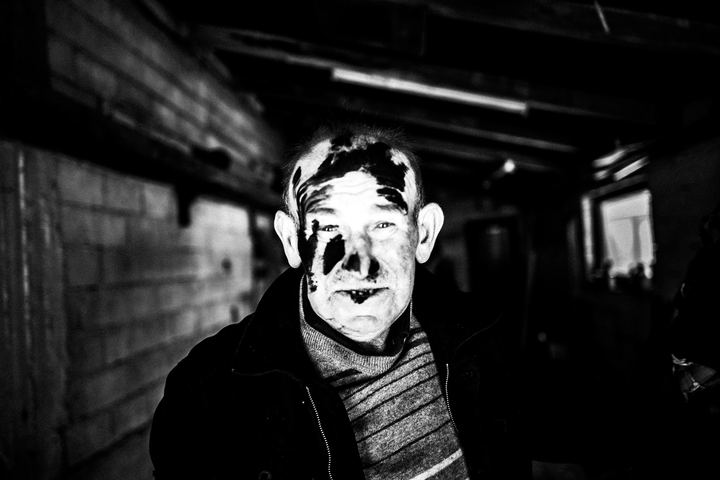
The painting of the face naturally takes place outside so that they don't make a mess of the houses and garages. In every Cheta there is usually one man who paints everyone's face and arms. Everyone has made a patent on how to better do that. You may use whatever will make a good result, be it coal, shoe paint, actual pitch or anything you can imagine.
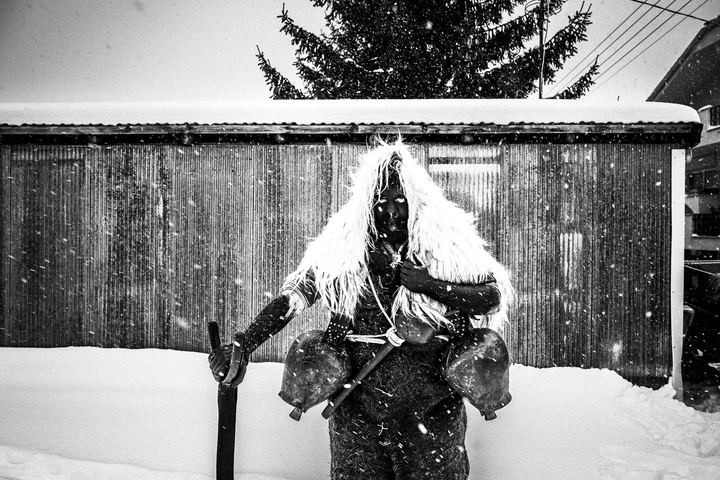
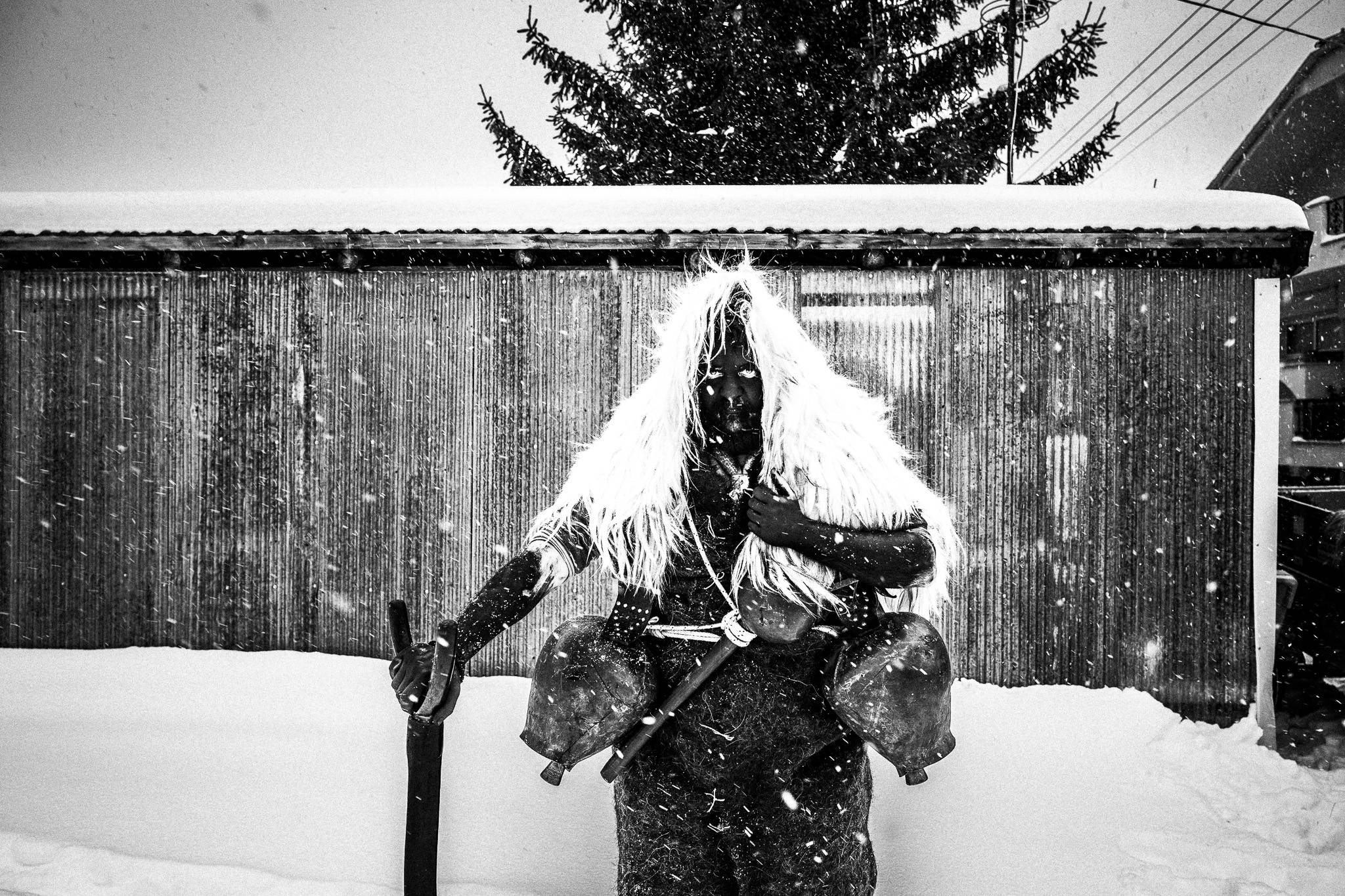
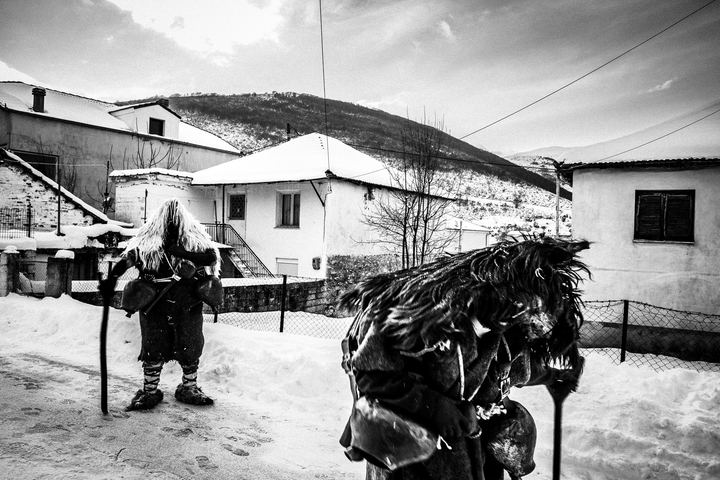
Visitors start to gather in the afternoon and the place gets quite crowded, with maybe 200-300 visitors being around us during the peak of the event. The Arapides all meet up on the main road, stand in formation and bang their bells in a synchronized manner. The bells from construction are tuned in certain frequencies to sound nice, so the whole thing sounds in sync. The banging is quite loud and the Arapides do look fierce and impressive. I am sure that any Kallikantzaros left would have gone back to the place it belongs.
Culture, held by place
Continue through Volakas.
Follow this tradition into its geographic and cultural context.