Living traditions
Kotsamania
Tetralofos, Kozani
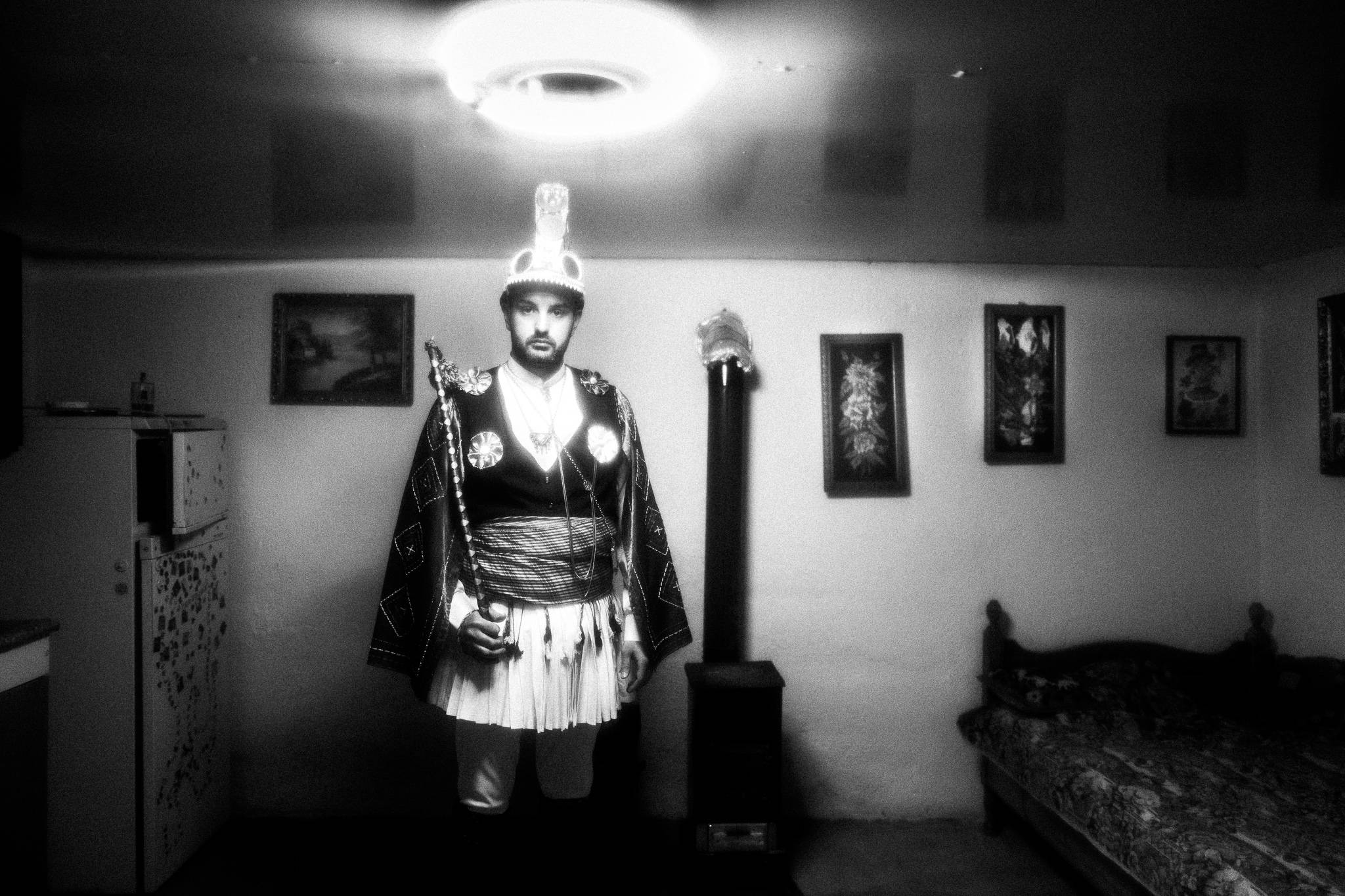
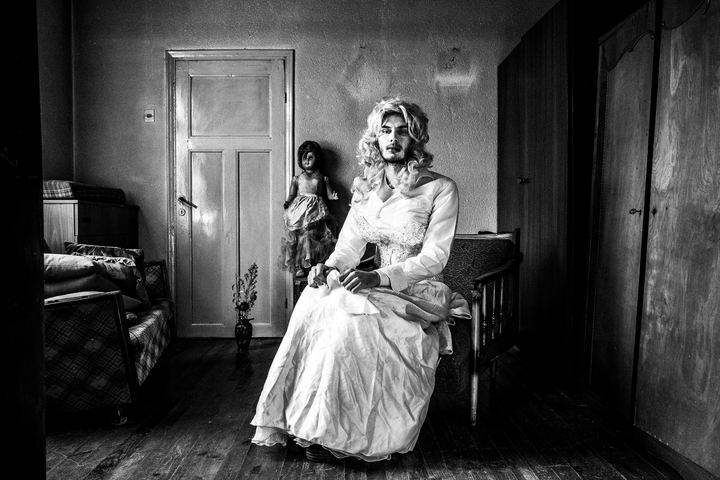
Field photographKotsamanos inside a local home.
Collector mode
A photograph to live with. Enter a private viewing.Introduction
A two-day Pontic winter ritual of costumed characters, improvised theatre, music and house-to-house processions in Tetralofos.
Kotsamania is a Pontic winter ritual preserved in Tetralofos, Western Macedonia. On 25 and 26 December, costumed dancers, musicians and comic characters move from the cemetery through the village, visiting each household. Dance, satire and fertility symbolism transform the custom into a living passage from the old year to the new.
Kotsamania is a Pontic winter ritual preserved in Tetralofos, Western Macedonia. Its name derives from the Turkish word “kocaman”, the great man, while its theatrical world recalls Momos, the ancient figure associated with satire, laughter and fault-finding.
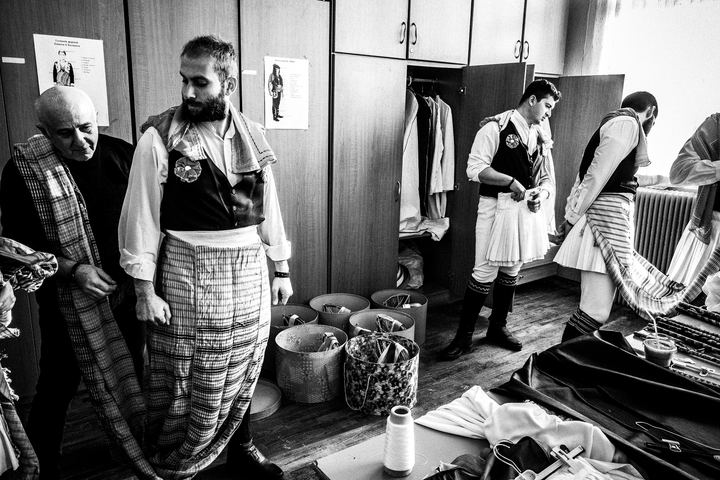
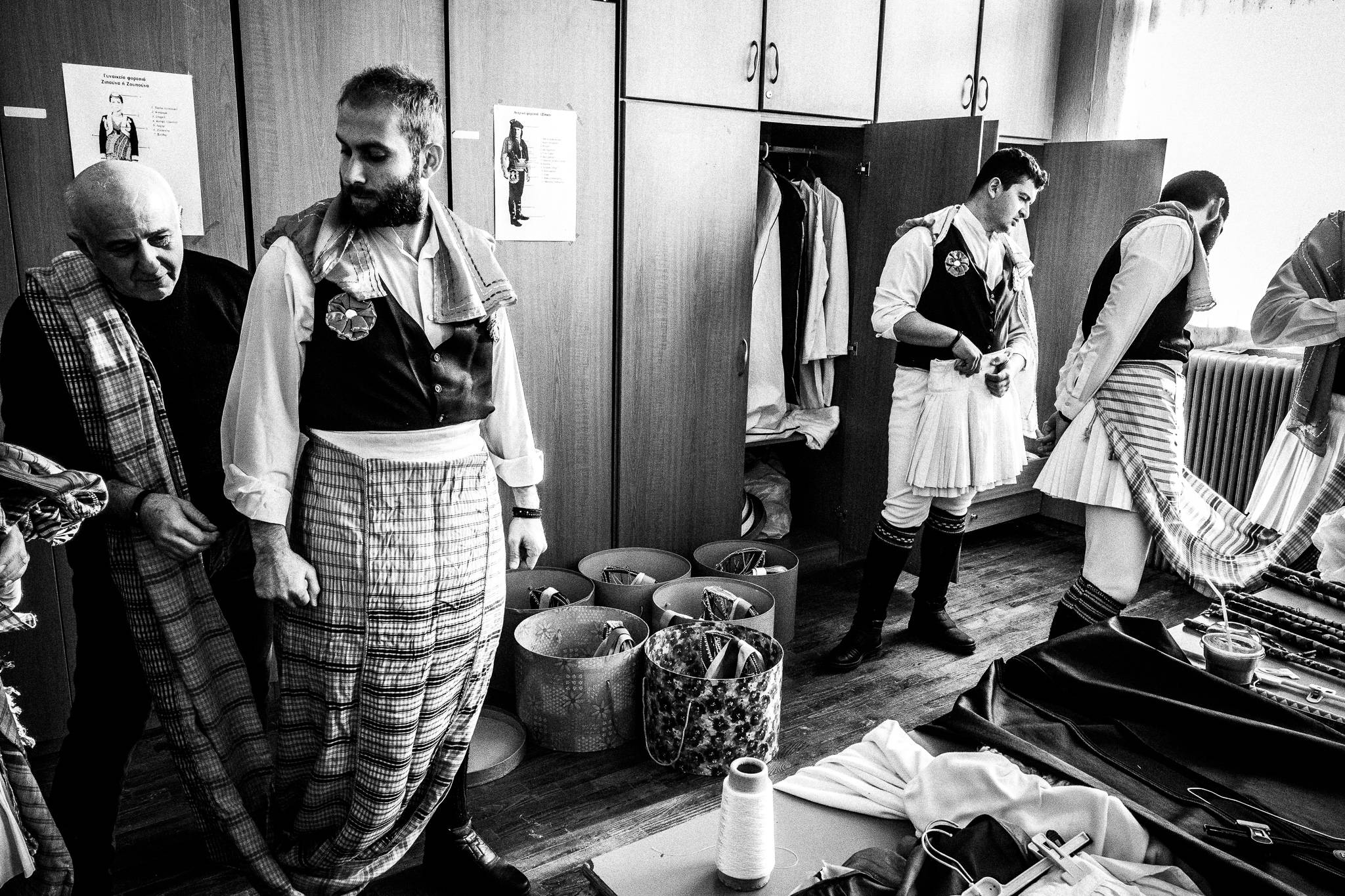
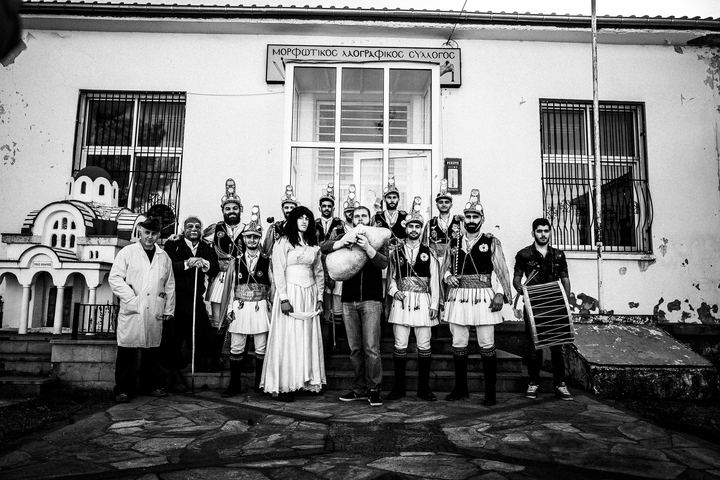
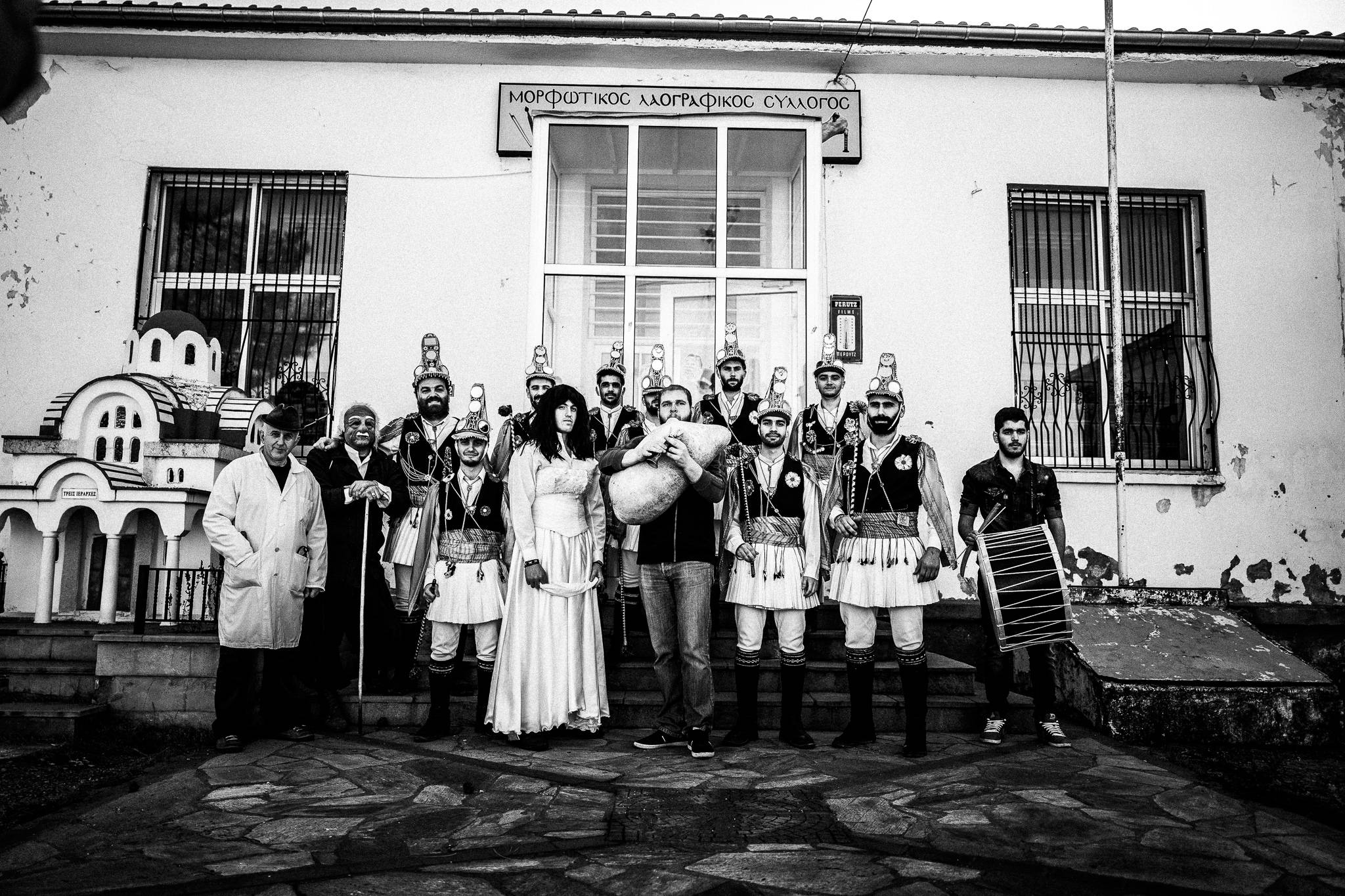
The ritual begins long before the procession reaches the streets. Costumes are assembled under the supervision of older generations, details are checked and the group gathers at the local cultural society. Preparation is part of the tradition: each year, the community reflects on what should be preserved and what could be performed more accurately.
The ritual begins
Musicians and costumed figures begin at the cemetery near the entrance of the village. At every stop, dance becomes ritual theatre. Kotsamania marks the passage from the old year to the new, while the community participates in a story that changes through improvisation.
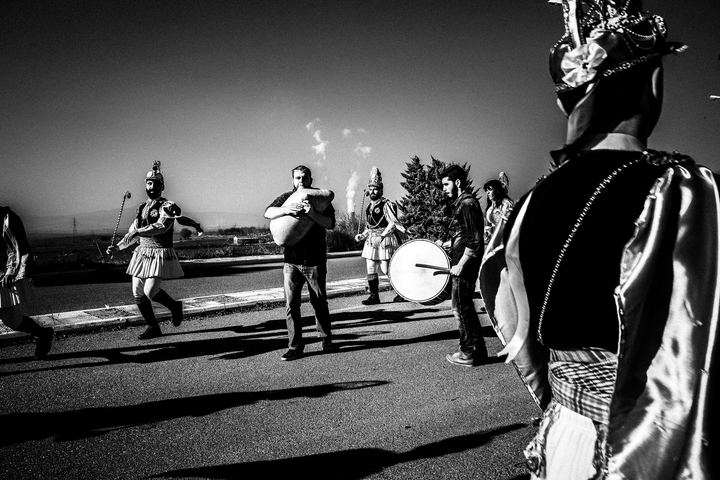
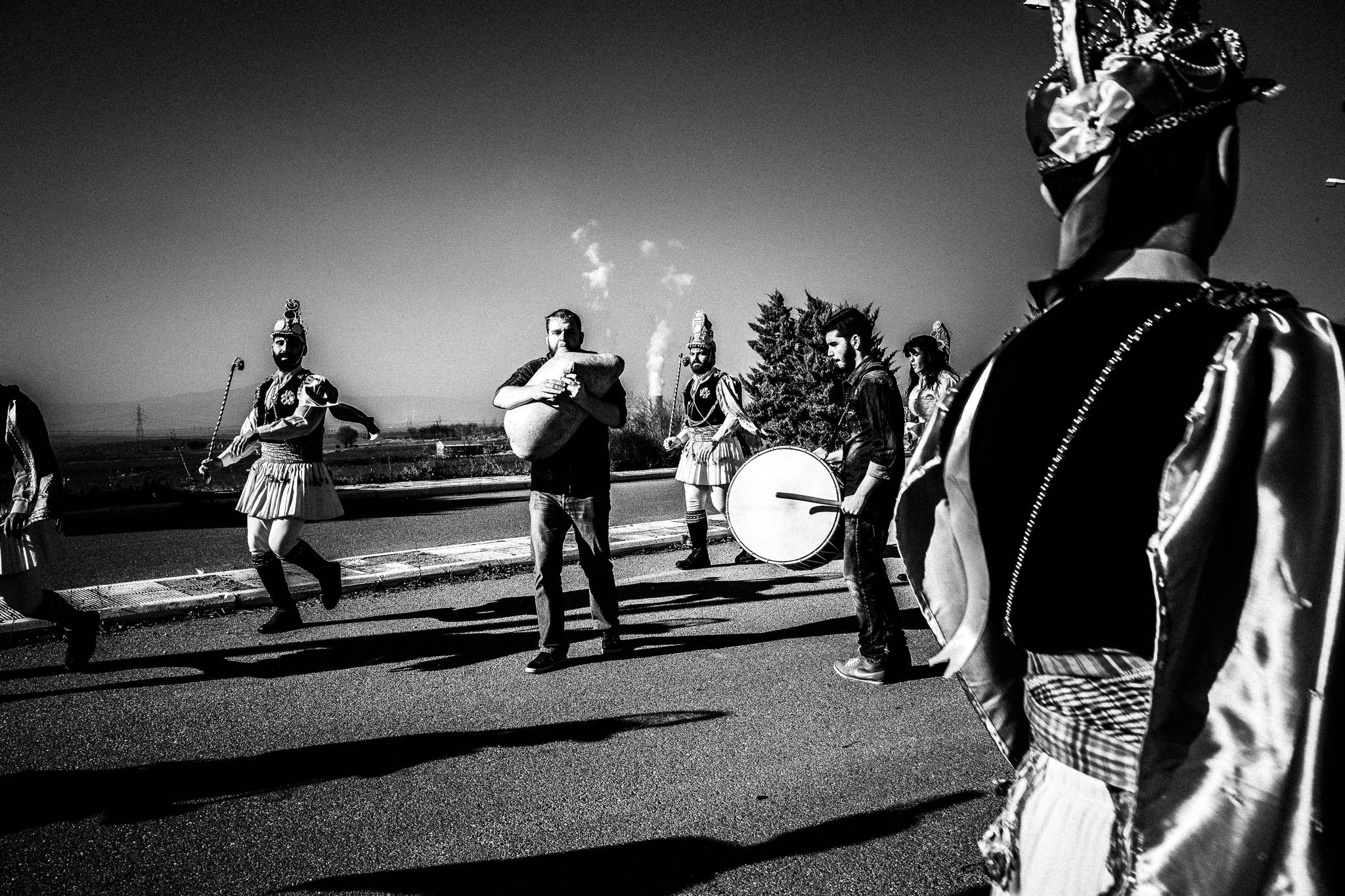
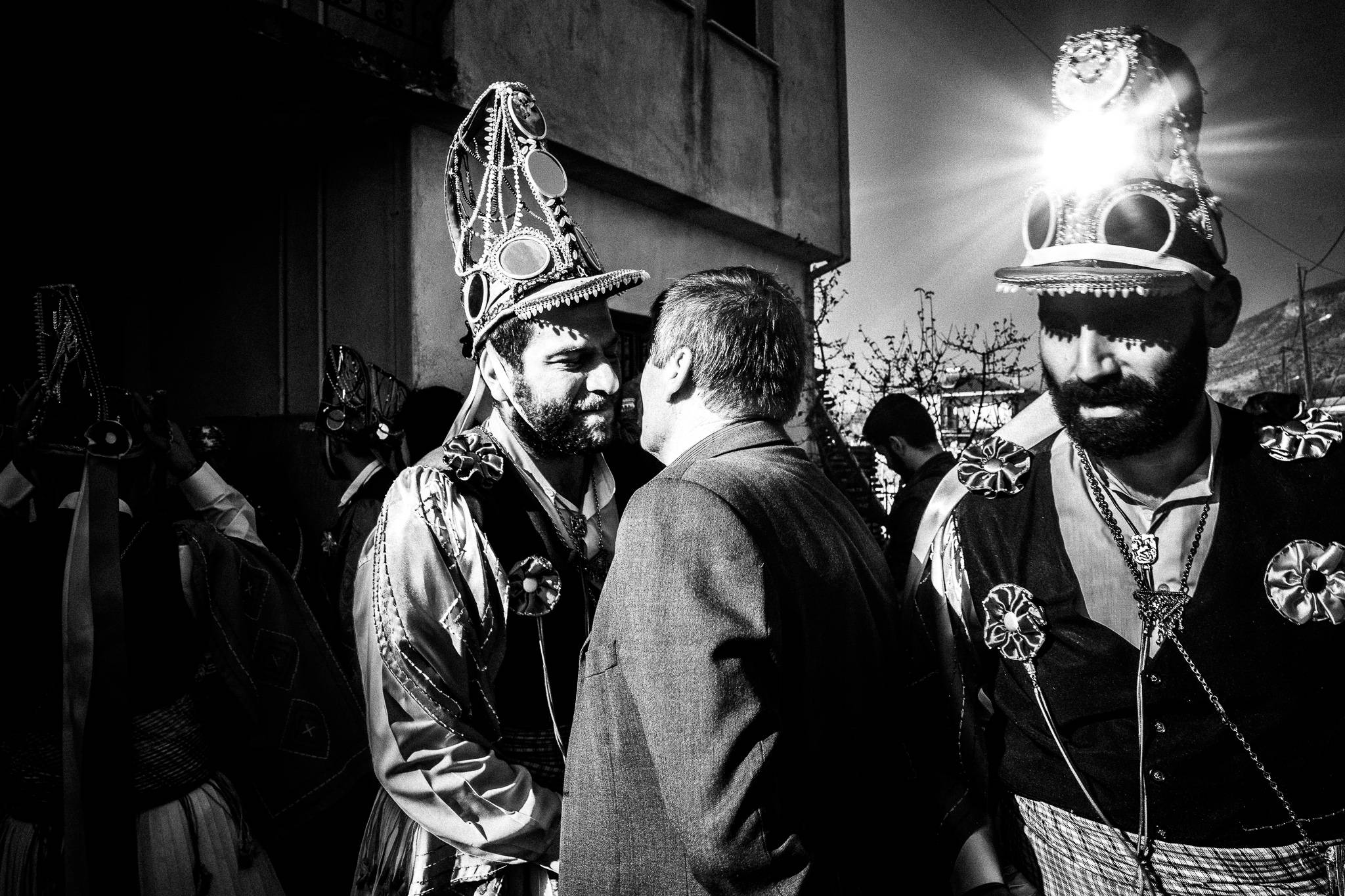
Characters, satire and fertility
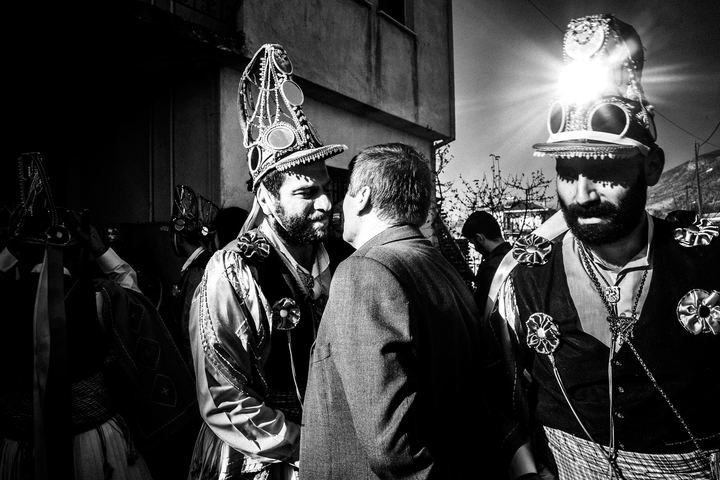
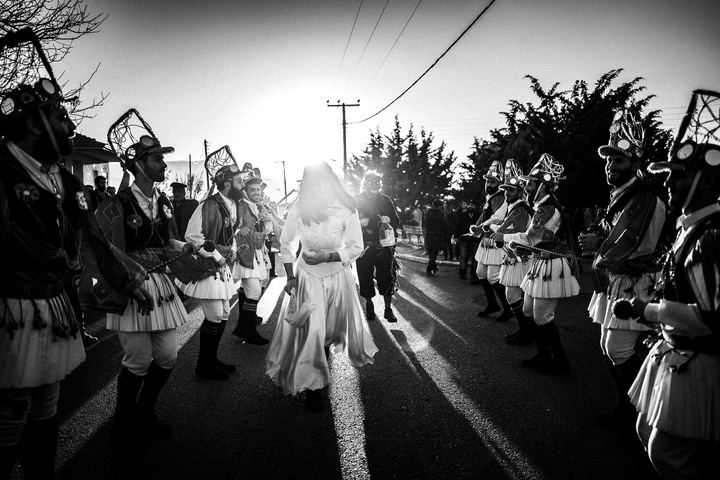
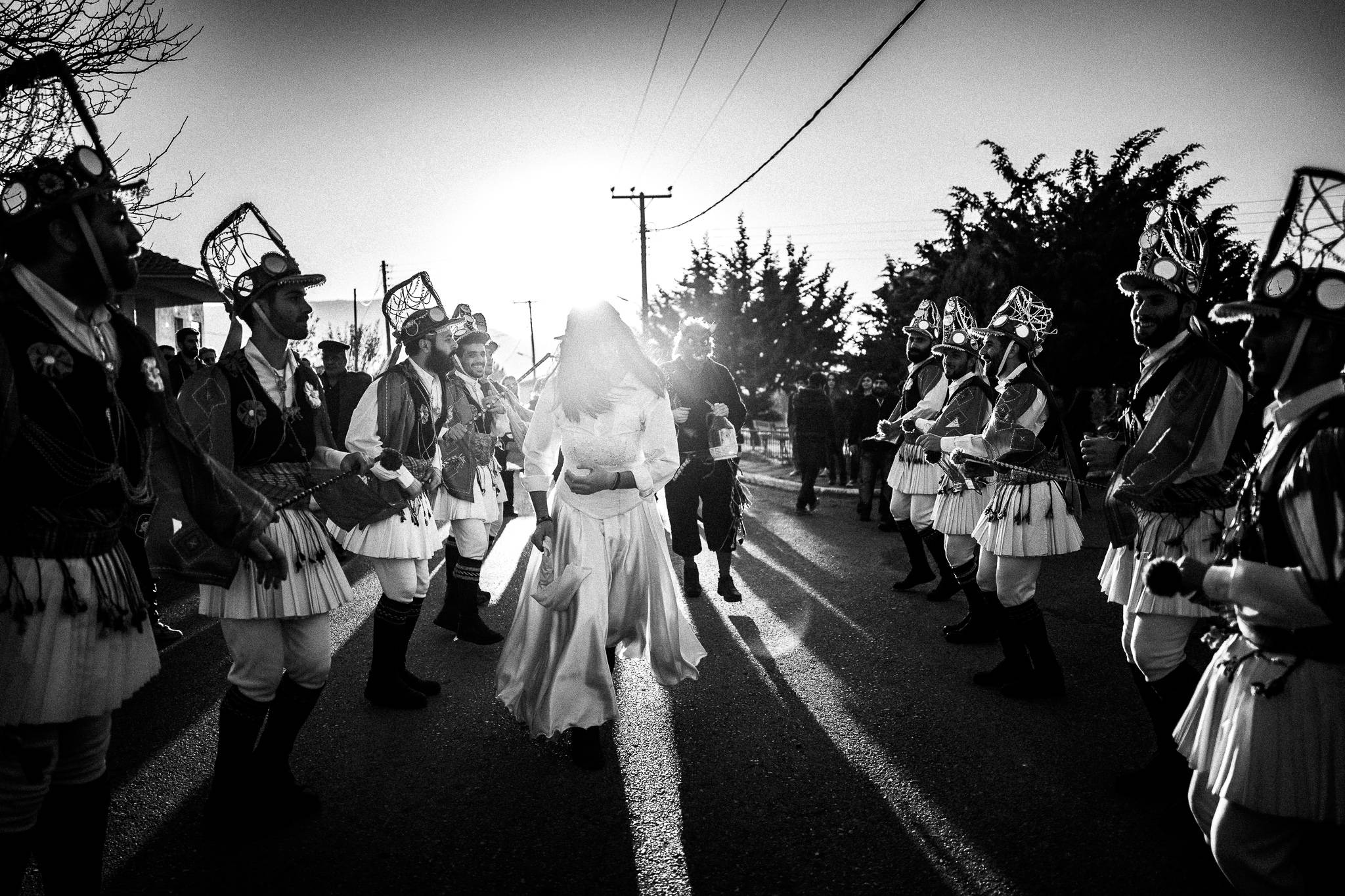
Twelve dancers are joined by musicians and a cast of theatrical figures: brides played by men, an old couple, a devil, a police officer and a doctor. Spectators may attempt to abduct the bride, prompting accusations, fines and improvised punishments. Pregnancy and marriage appear as comic symbols of fertility and renewal for the year ahead.
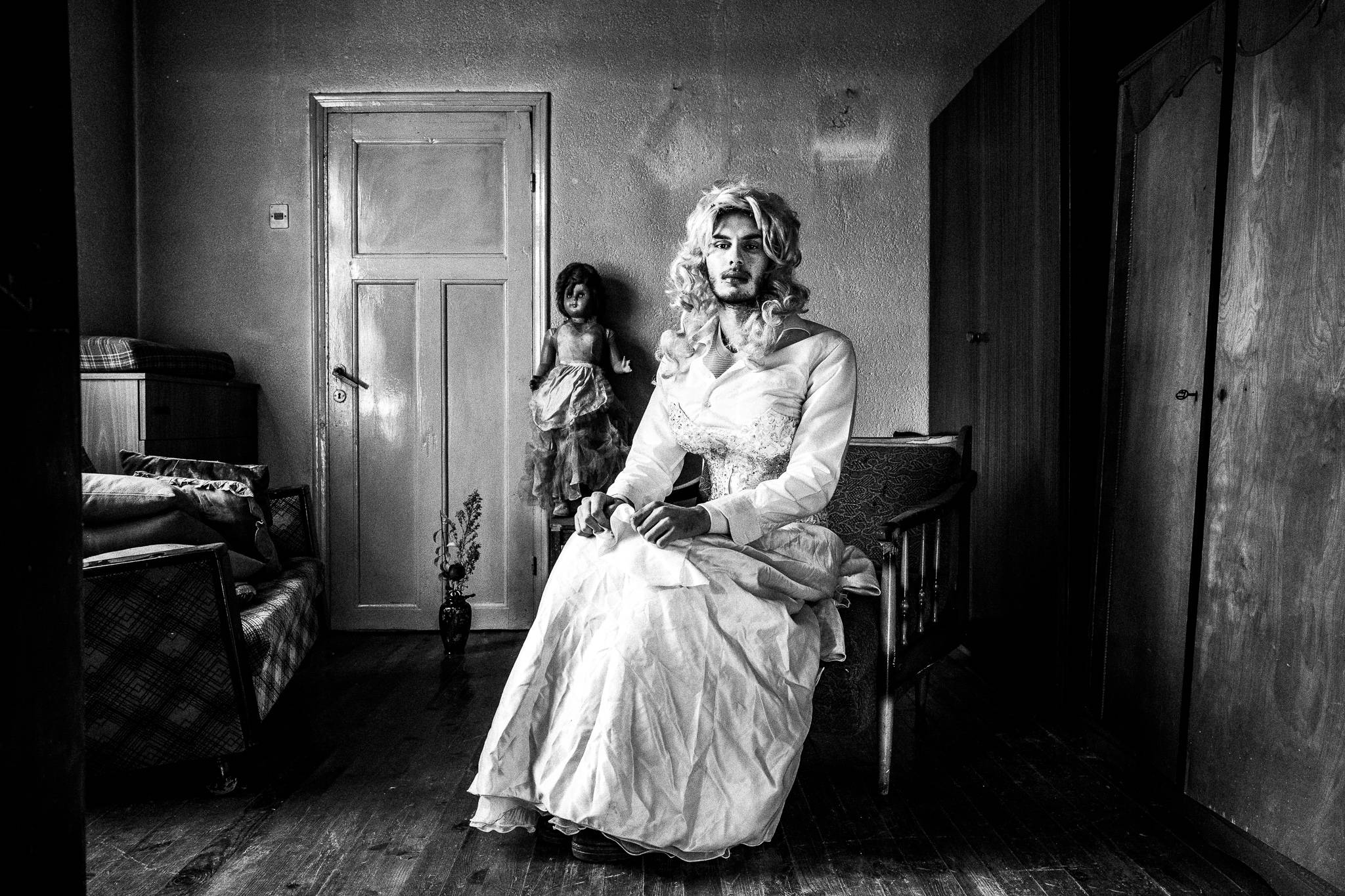
Two days through the village
On 25 and 26 December, the group visits a different part of Tetralofos each day so that it can reach every household. In each courtyard, the dancers perform and offer wishes for good fortune. Families welcome them with local food and tsipouro, while the devil creates disorder and mischief before symbolically departing with the year that has passed.
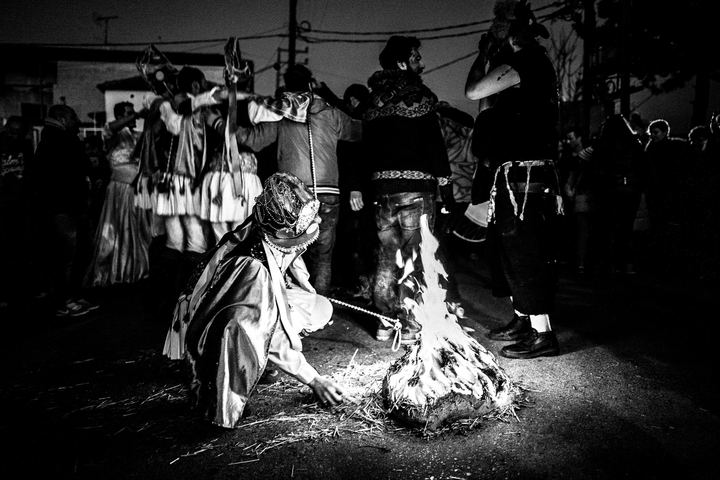
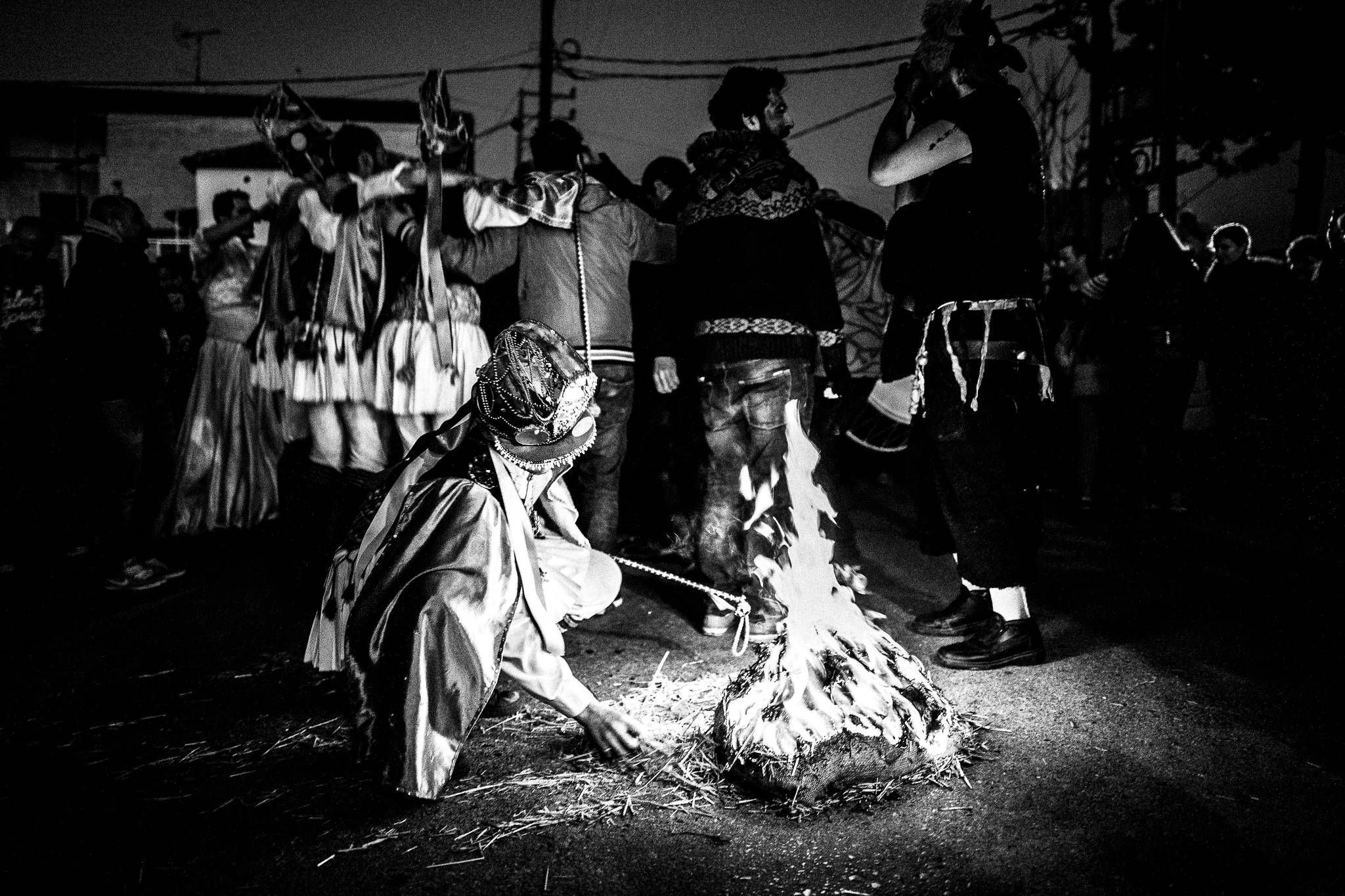
By nightfall, the community gathers again outside the cultural society. The old man’s sack is set alight as an act of cleansing, and the ritual gives way to food, fire and Pontic music. Kotsamania is not folklore observed from a distance, but a living act of memory, renewal and collective participation.
Culture, held by place
Continue through Kozani.
Follow this tradition into its geographic and cultural context.