Living traditions
Feast of Saint Minas in North Karpathos
Agios Minas, Karpathos
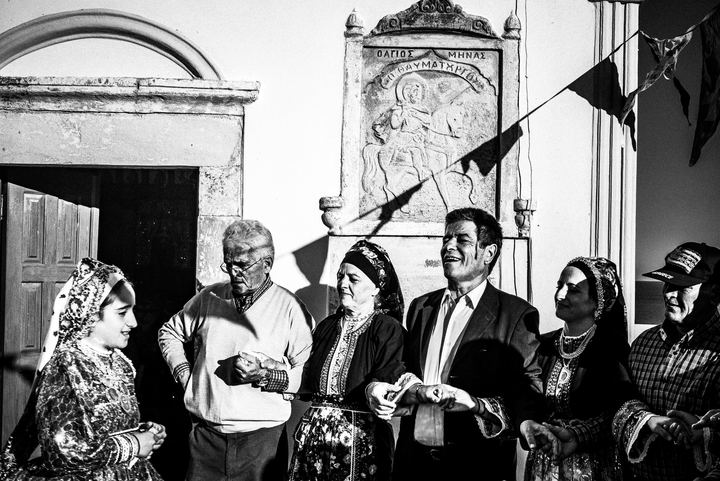
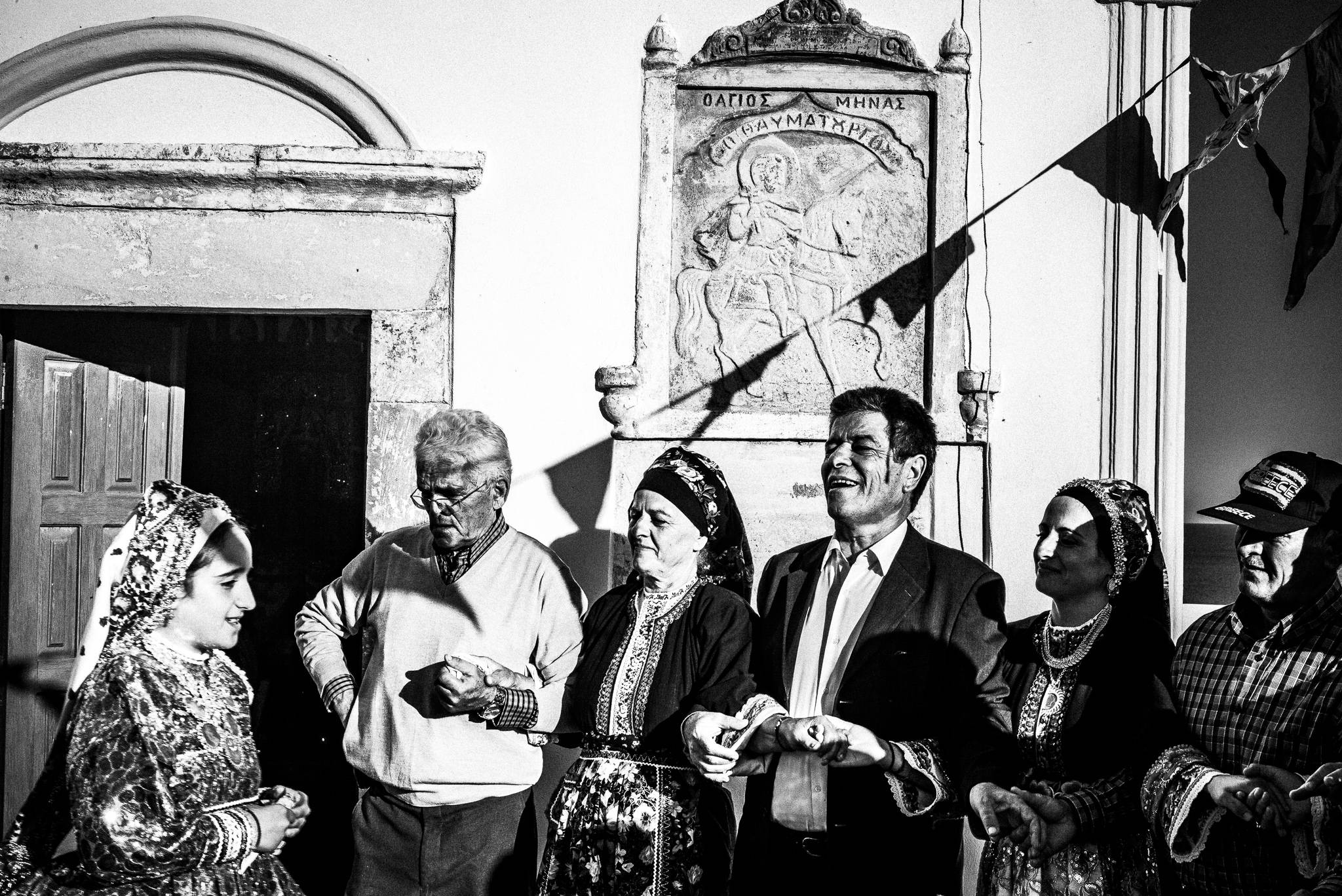
Field photographFeast of Saint Minas in North Karpathos — photograph 2.
Collector mode
A photograph to live with. Enter a private viewing.Introduction
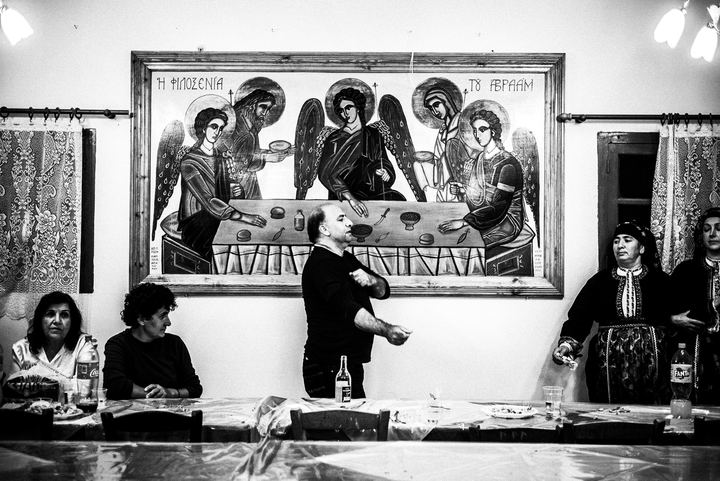
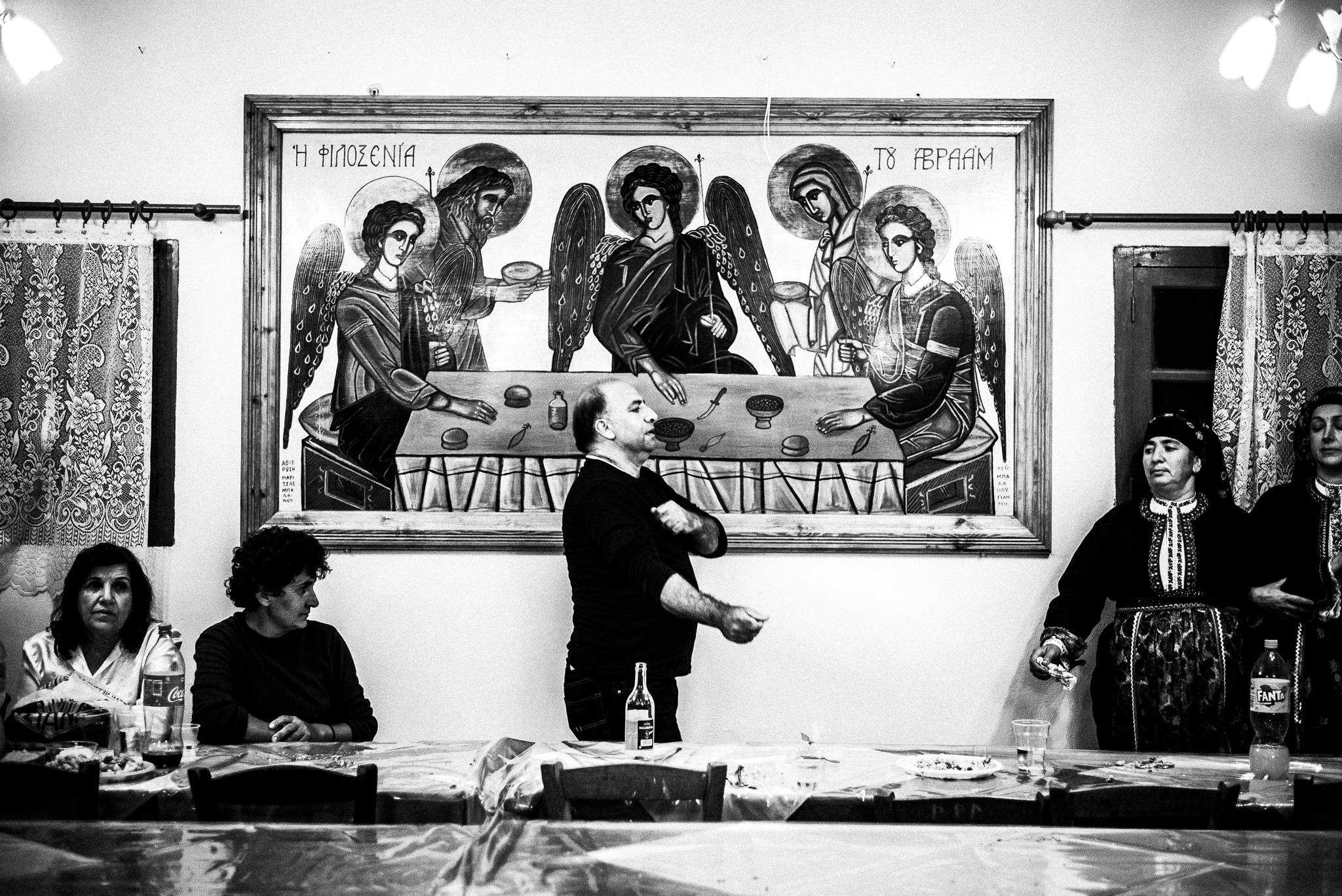
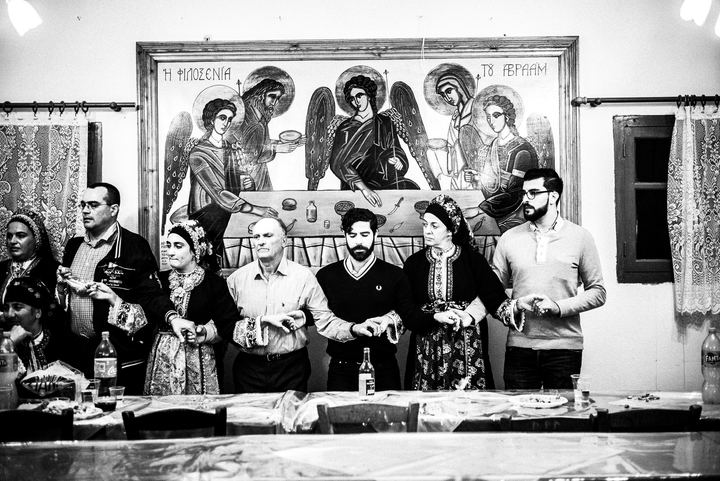
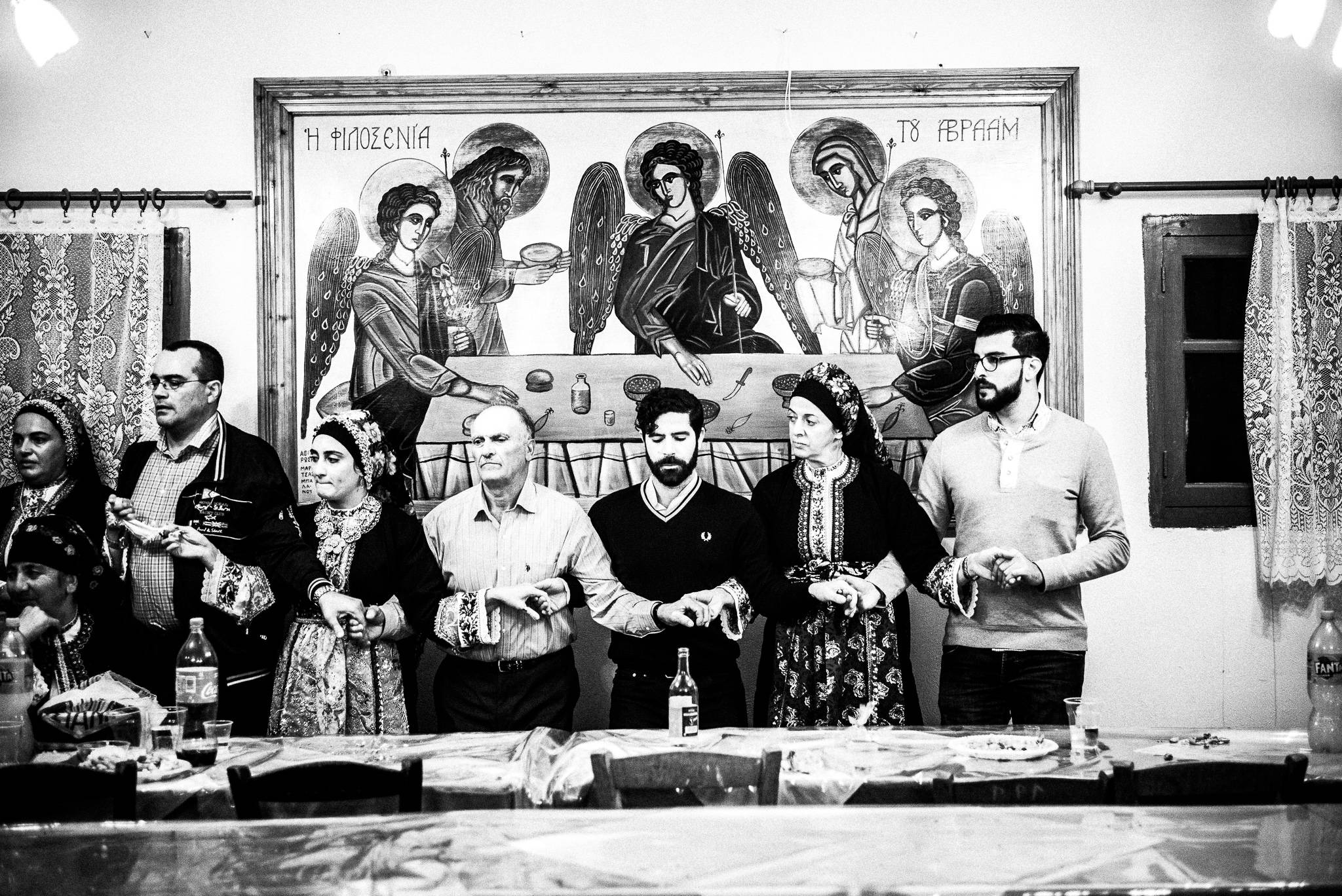
An overnight November feast above the secluded beach of Saint Minas, where the church hall fills with diners and the celebration moves from chanting and mantinades to the ecstatic pano choros.
The feast of Saint Minas begins with the evening service on 10 November and continues on 11 November at the church overlooking Saint Minas beach. Food and drink are offered freely, and some visitors remain overnight in the church hall.
The festival of St. Minas
The church of St. Minas has given its name to the beautiful beach, in my view one of the most lovely on the whole island, that the church overlooks. Having visited the area for a christening in August, I drove there for the festival, to enjoy the place again. Having been there before also meant that I was aware of the trickiness of the road. It is about 5km long, although the sign on the main road insists that it is only 2km, perhaps to avoid discouraging potential visitors.
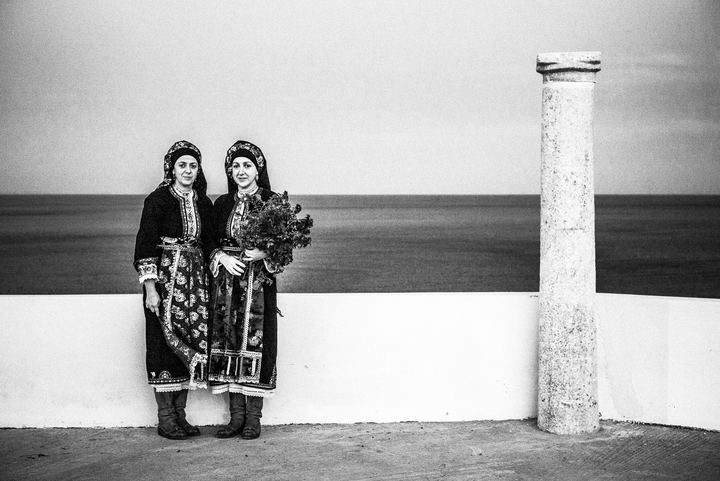
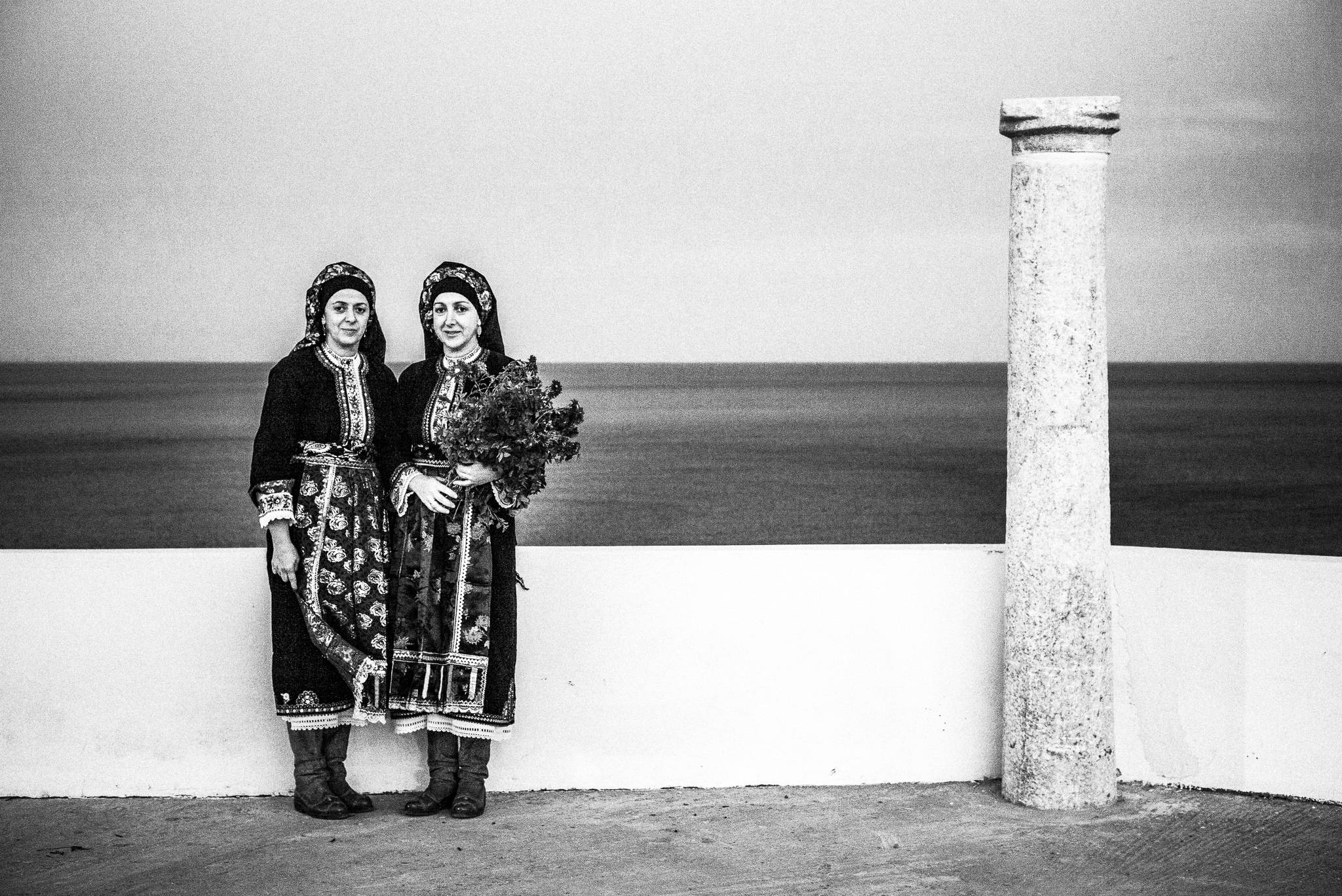
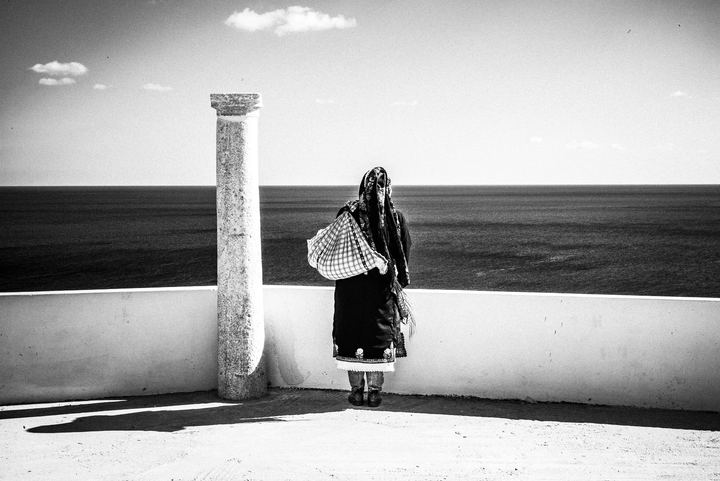
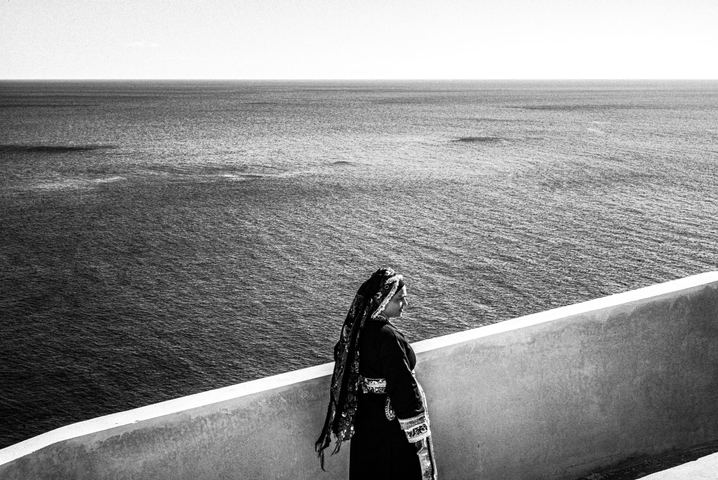
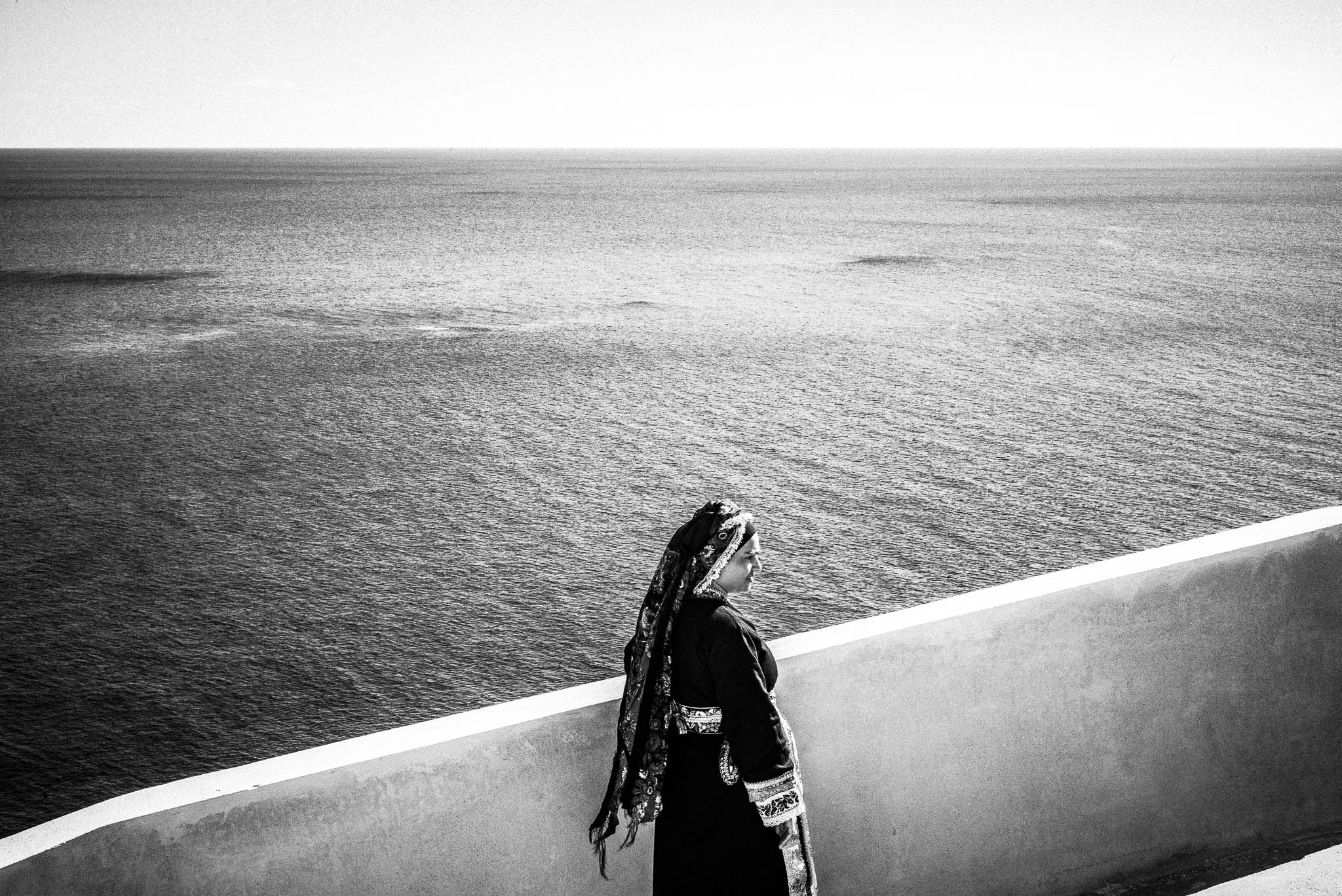
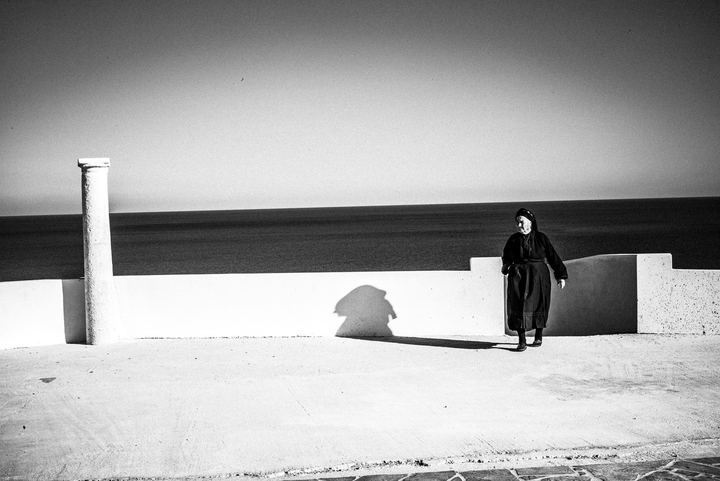
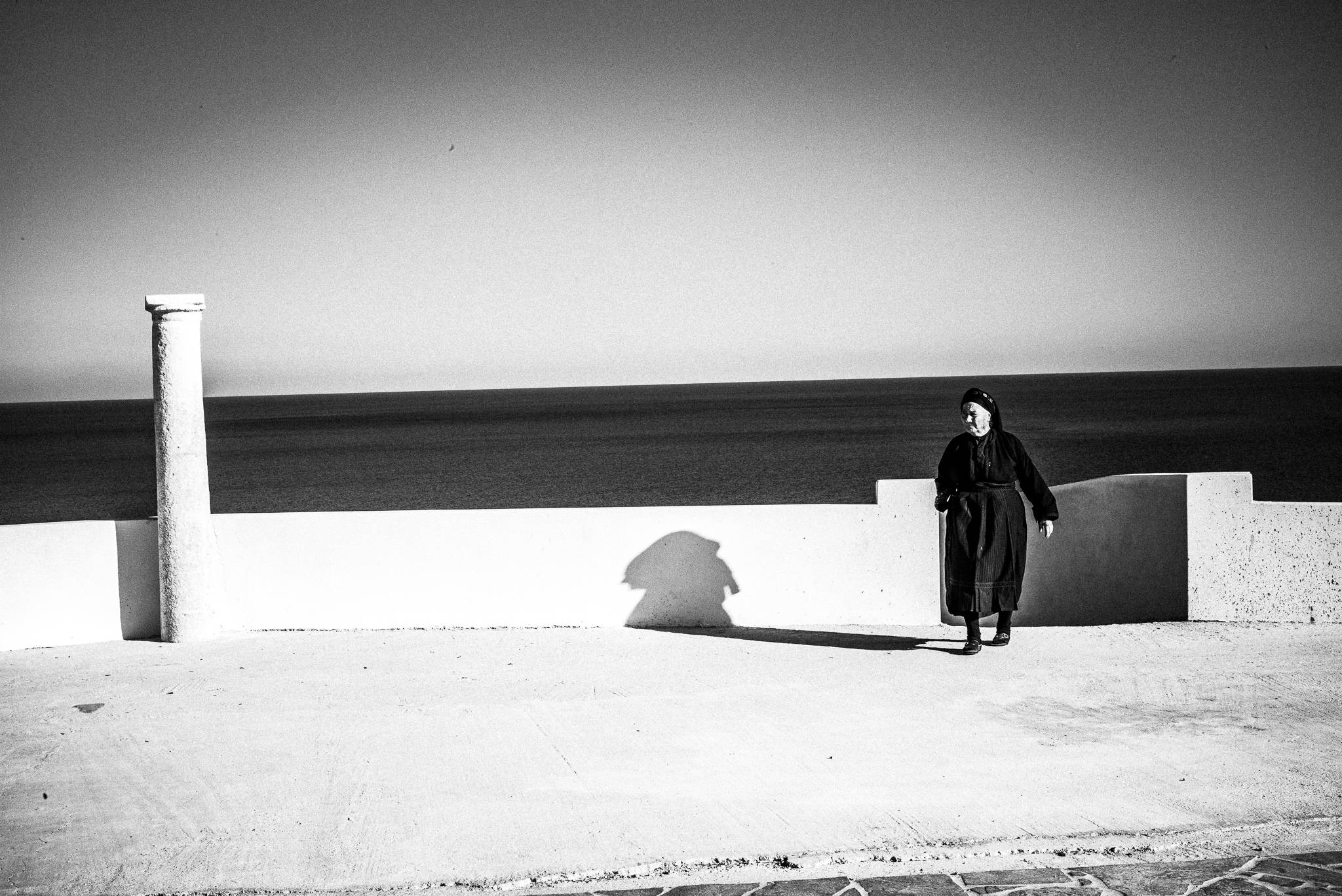
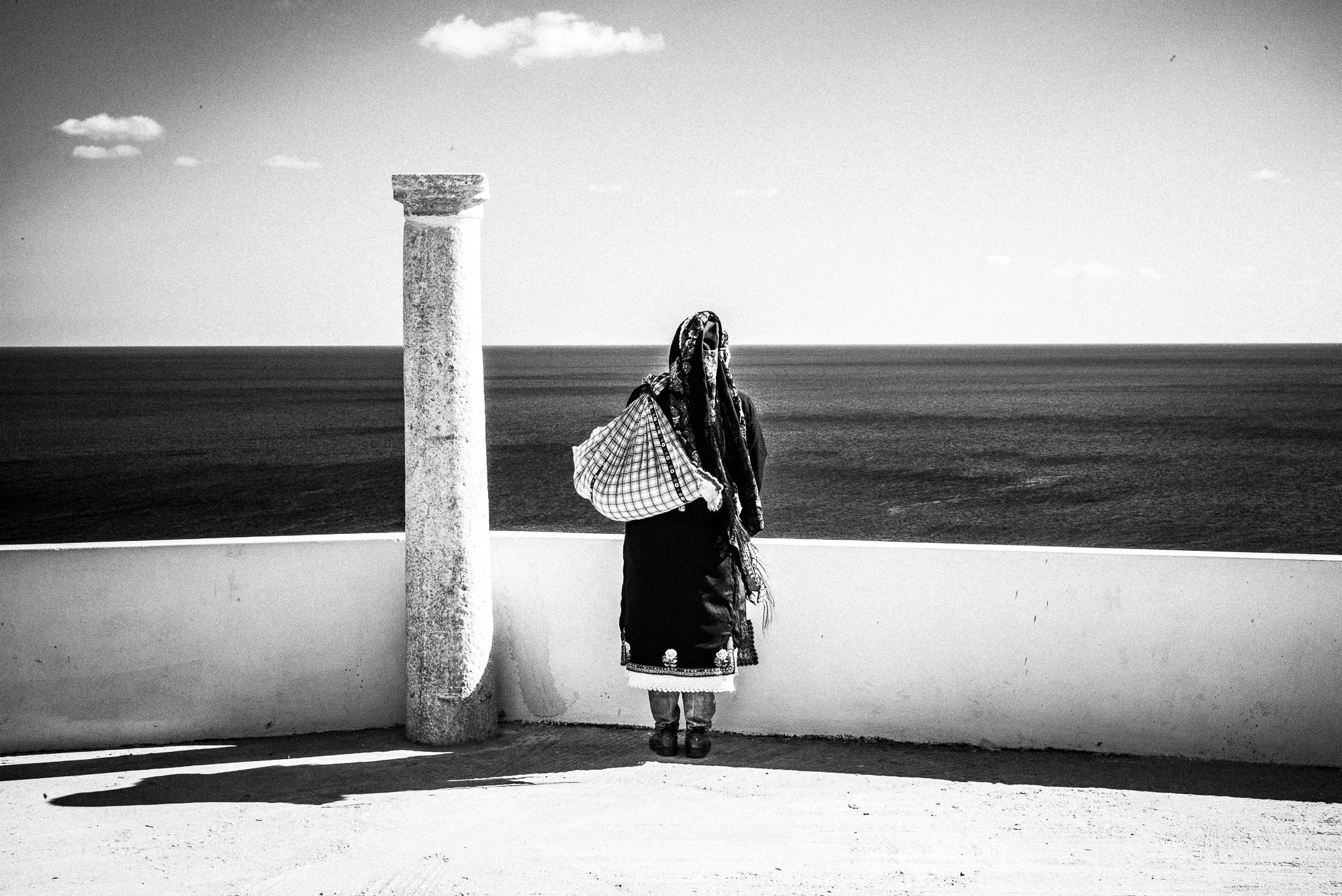
The feast of St. Minas takes place on 11 November. This means that the celebration of the festival starts during the evening liturgy the day before, although luckily, I had arrived in the morning and so had the chance to visit the olive groves behind the beach, where I came upon and photographed the couple from St. Minas harvesting their olives. Since the feast takes place in November, the celebrations take place in the church hall, although because there are so many diners, there is not enough space within and some sit outside. I was invited to sit inside, although I offered my seat to one of the local inhabitants.
After the liturgy and the dinner, the celebration followed its usual course. The reasons for the architecture of the dance became apparent to me as I watched. Individuals dance fast and indeed ecstatically, although they do not move from the spot they occupy, in contrast to traditional dances in other parts of Greece. The explanation for this static position of dancers would seem to be that Olympos once had a much larger population and so many more dancers at celebrations. To accommodate this potential pressure on space, the habit of dancing on the spot allowed as many as possible to enjoy the Dionysiac ecstasy of the dance.
A local family offered the dinner this time. However, if there is no family available to cover the costs, the church will finance the festival, since free food and drink for all is a fundamental of the festival. This is true of most such celebrations in Greece that have survived, rather than been revived. At celebrations that have been revived, it is usually expected that the participants will pay.
During the night, most of the participants returned to Olympos, since it is fairly close, although some decided to spend the night on the spot, some of whom had drunk a great deal. I, too, decided to stay, to observe the whole experience. In the church hall, two attics had been constructed, precisely to accommodate visitors to the festival. As one of these attics was almost full, I went to the other, only to find to my surprise that it was reserved for women, and so returned to the first attic, where I had to sleep in very cramped circumstances.
The next morning, since it was sunny, after the morning liturgy activities moved outside, to a spot in front of the church. Communion bread was distributed, as were loukoumades and ouzo, after which there was dancing. We returned to Olympos in the evening.
Culture, held by place
Continue through Olympos.
Follow this tradition into its geographic and cultural context.