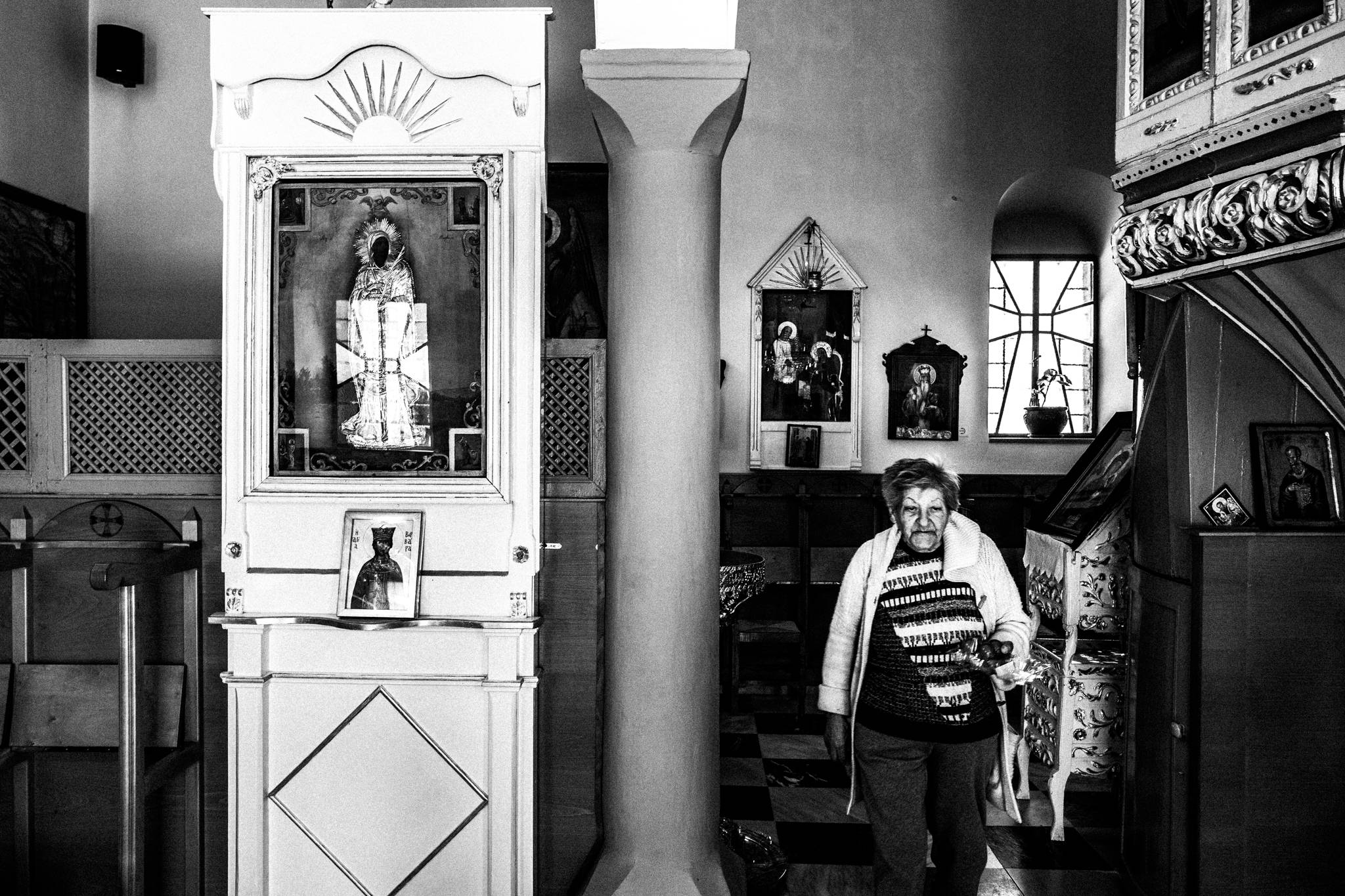
Smaragda Papastylianou inside the church of Taxiarches in Anavatos.
Collector mode
A photograph to live with. Enter a private viewing.
Introduction
In the nearly abandoned settlement of Anavatos, the ruined stone village and the presence of Smaragda Papastylianou create a story of memory, endurance and silence.
A story held by place
Continue through Anavatos.
Follow the people, photographs and traditions of this essay into their wider geography.
George Tatakis visited Anavatos, one of Chios’ most haunting settlements, where abandoned stone houses cling to the hill and time seems suspended. There he encountered Smaragda Papastylianou, whose presence inside the church of Taxiarches gave the ghostly village a deeply human centre.
A village suspended in time
Anavatos rises on a steep hill in central Chios, a stone settlement that feels almost detached from the present. Many of its houses now stand empty or ruined, and walking through it creates the sensation of entering a place held between memory and disappearance.
Its silence is part of its force. Narrow passages, crumbling walls and abandoned interiors suggest a village that once held dense communal life and now survives mostly through traces.
Anavatos.
Anavatos.
Smaragda inside Taxiarches
Within this atmosphere of abandonment, I encountered Smaragda Papastylianou inside the church of Taxiarches. Her presence shifted the experience of the village completely. What had felt spectral and distant suddenly became personal and inhabited.
The encounter revealed how even a place marked by ruin can still be held together by memory, care and the people who continue to return to it. In Anavatos, the human presence is rare, and for that reason it carries extraordinary weight.
Smaragda Papastylianou inside the church of Taxiarches.
In Anavatos, even a single human presence can change the meaning of the whole village.