Field notes · Photographic essay
Kapani Market on New Year’s Eve
Thessaloniki → Central Macedonia
New Year’s Eve around Kapani Market in Thessaloniki.
Collector mode
A photograph to live with. Enter a private viewing.Introduction
On New Year’s Eve in Thessaloniki, Kapani Market fills with food, drink, brass music and the festive pulse of the city.
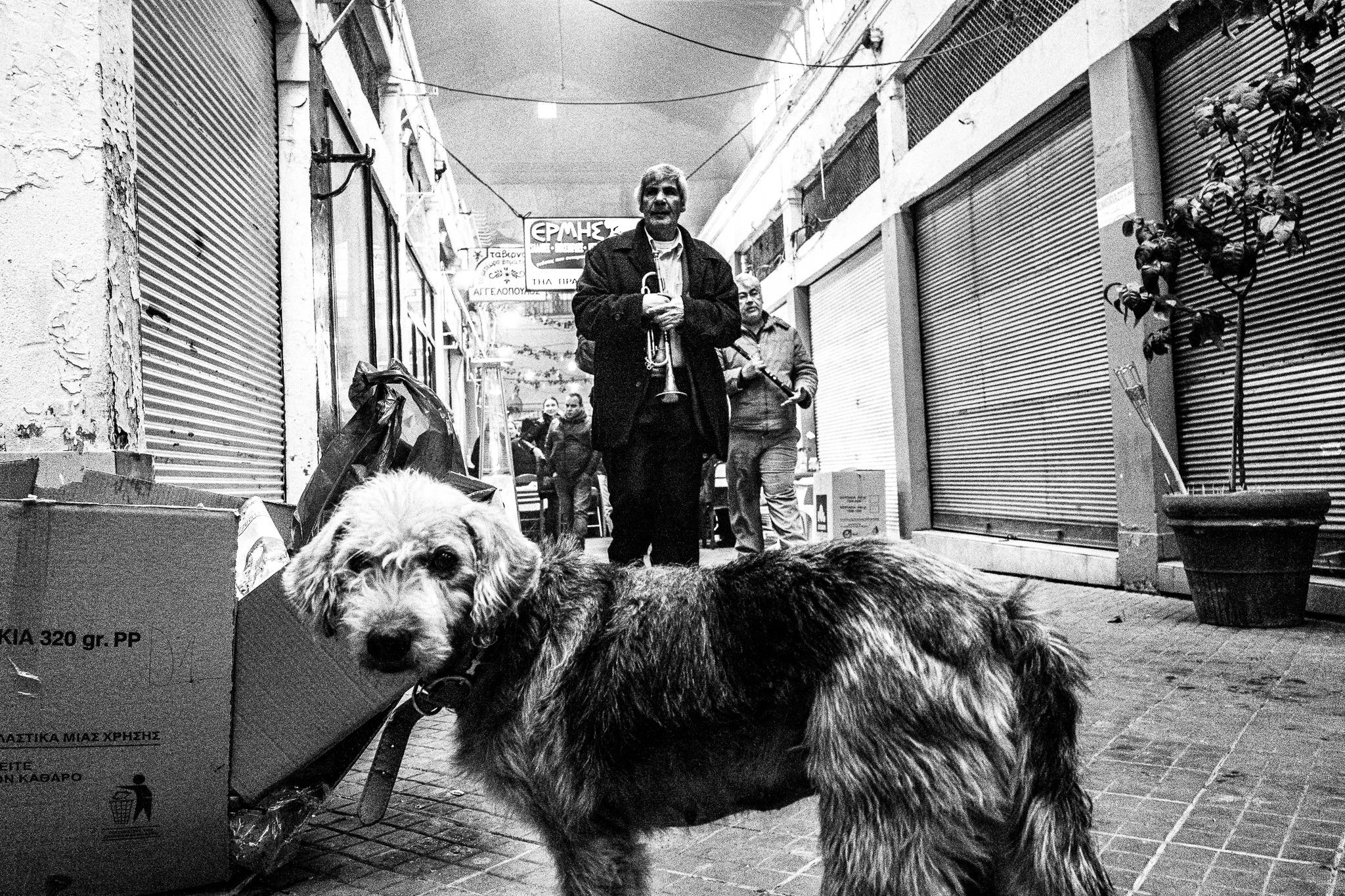
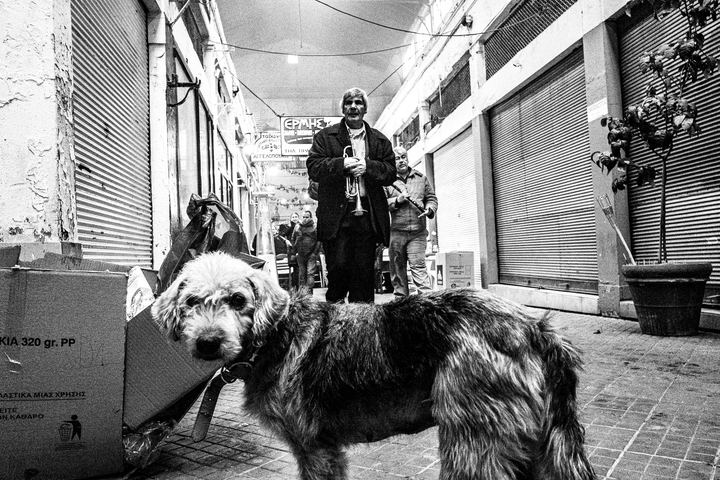
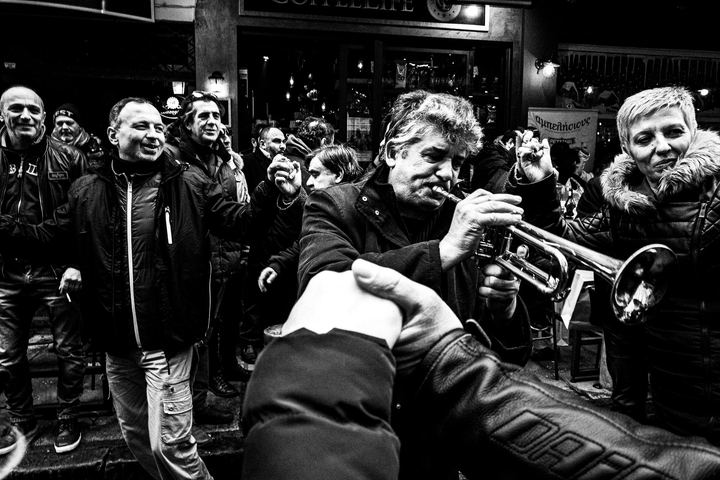
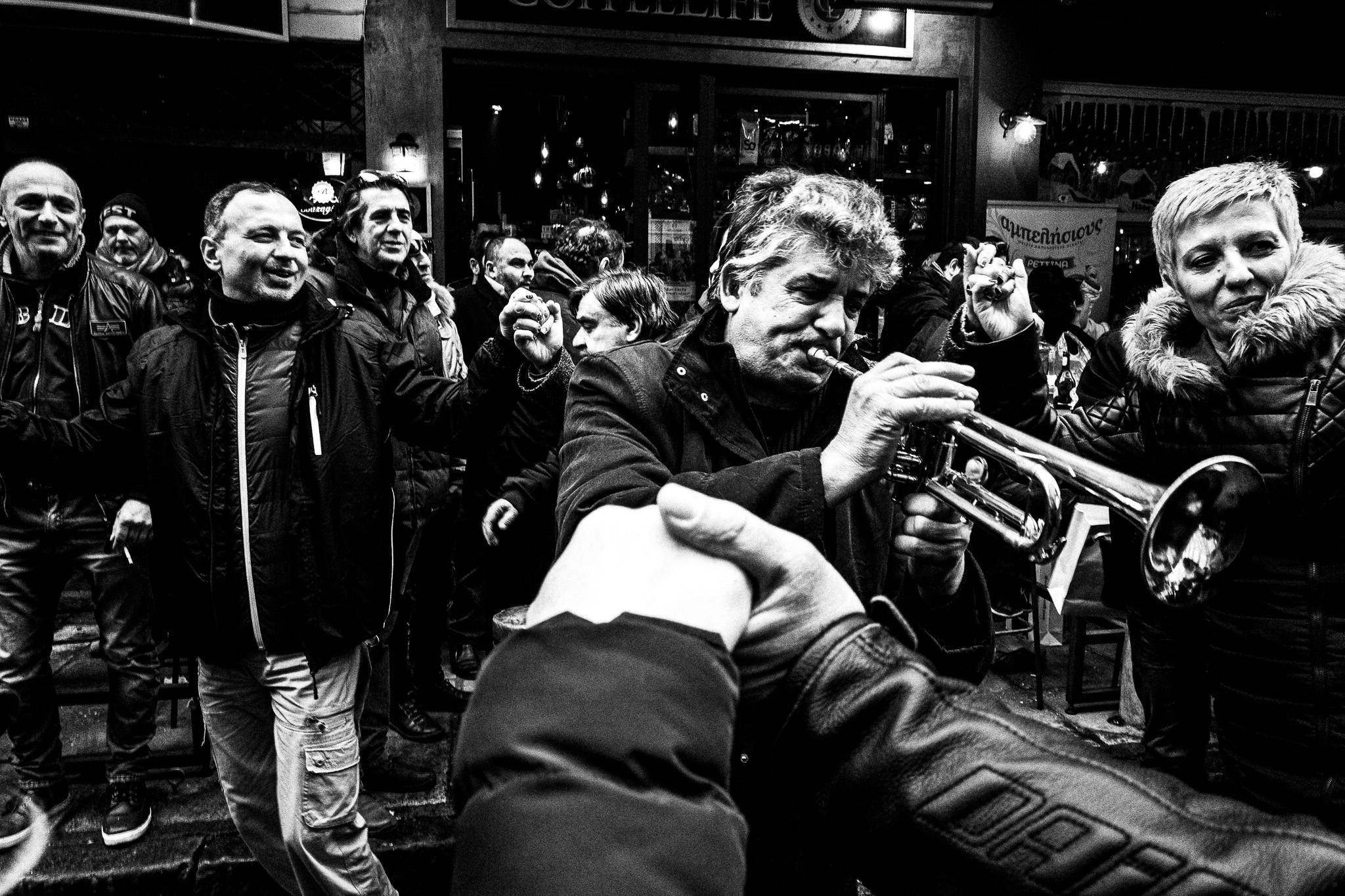
On New Year’s Eve in Thessaloniki, George Tatakis entered the crowded streets around Kapani Market, where people gathered for food, drink and live brass music. The market became a temporary stage for the city’s festive energy.
The market before the year turns
On New Year’s Eve in Thessaloniki, the streets around Kapani Market fill with a special kind of energy. People gather for food, drinks, conversation and music before the year changes.
The market is not a formal stage, but on that day it behaves like one. Brass musicians pass through the crowd, Balkan rhythms rise between the shops, and the city gathers around its own appetite for celebration.
A temporary city ritual
The scene felt urban, improvised and collective. It belonged to no single household or village, but to the city itself — a street-level ritual made from noise, food, music and proximity.
For a few hours, Kapani became a table, a stage and a street celebration at once.
It was one of those moments when a city reveals its character not through monuments, but through how people gather, eat, listen and move together before a new year begins.
A story held by place
Continue through Thessaloniki.
Follow the people, photographs and traditions of this essay into their wider geography.