Field notes · Photographic essay
Nikitas and the Sponge Diver on the Wall
Kalymnos → Dodecanese → South Aegean → Aegean
Nikitas at this place
Collector mode
A photograph to live with. Enter a private viewing.Introduction
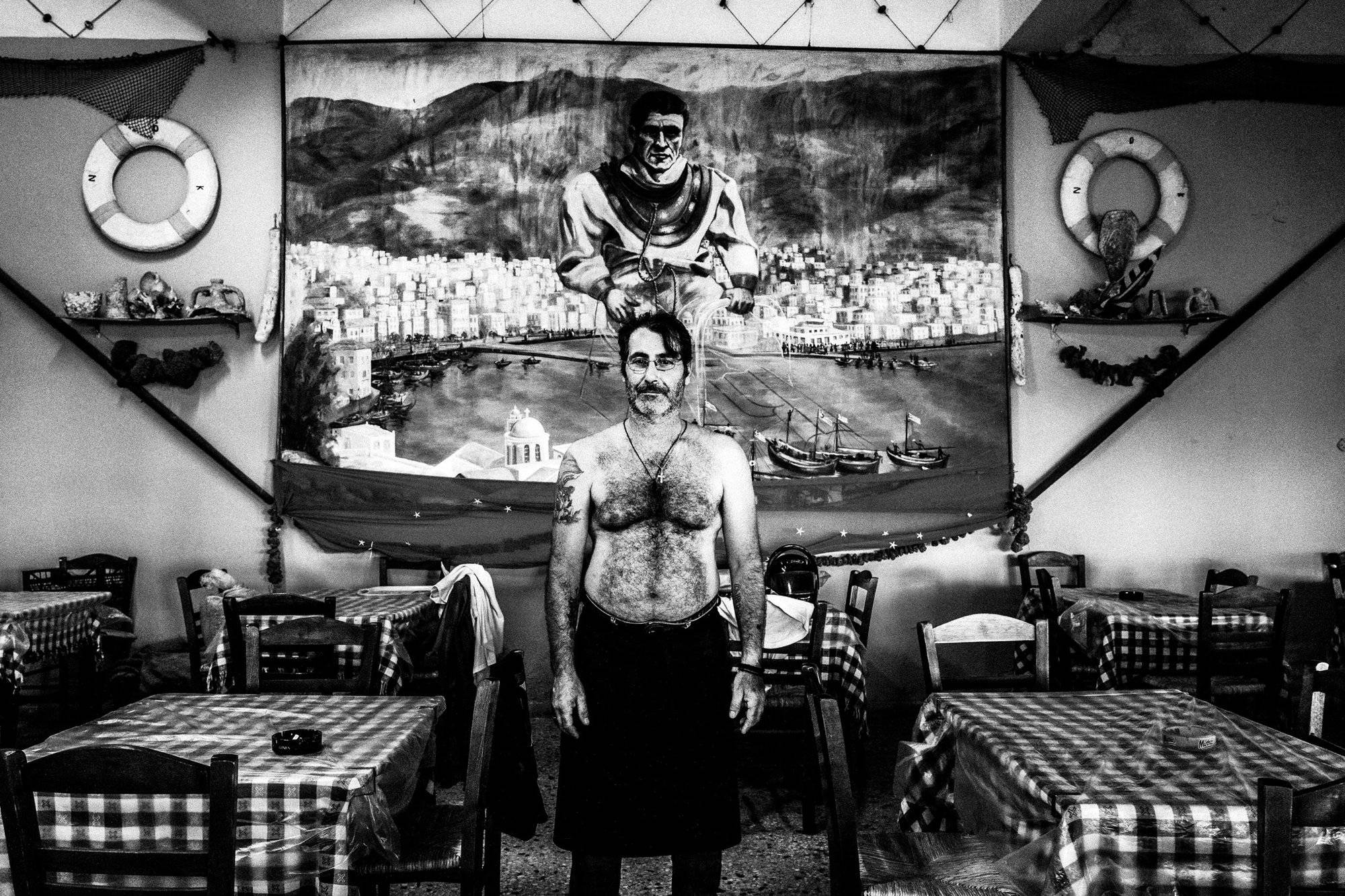
At Omilos near the harbour of Pothia, a tavern wall, a tattoo of Saint George and the image of a sponge diver hold a small piece of Kalymnos in plain sight.
A short field note from Kalymnos about Nikitas, Omilos tavern and the painted sponge diver that turned a simple meal into a photograph.
A wall near the harbour
Near the harbour of Pothia, Omilos looked at first like a simple place to stop. But in Kalymnos, even an ordinary wall can hold the island’s history.
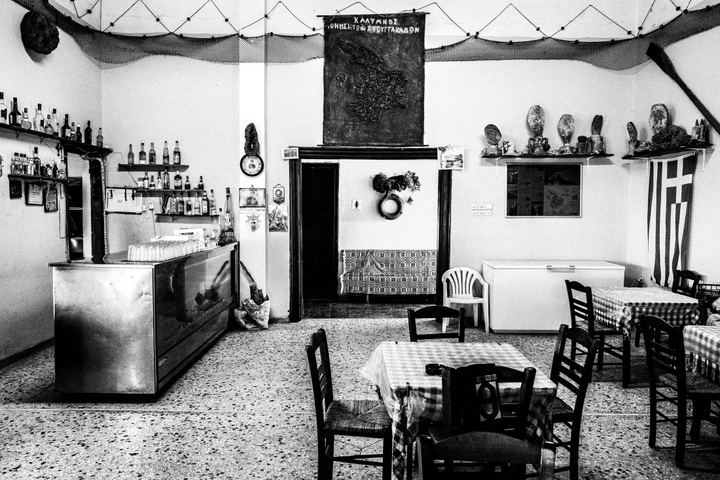
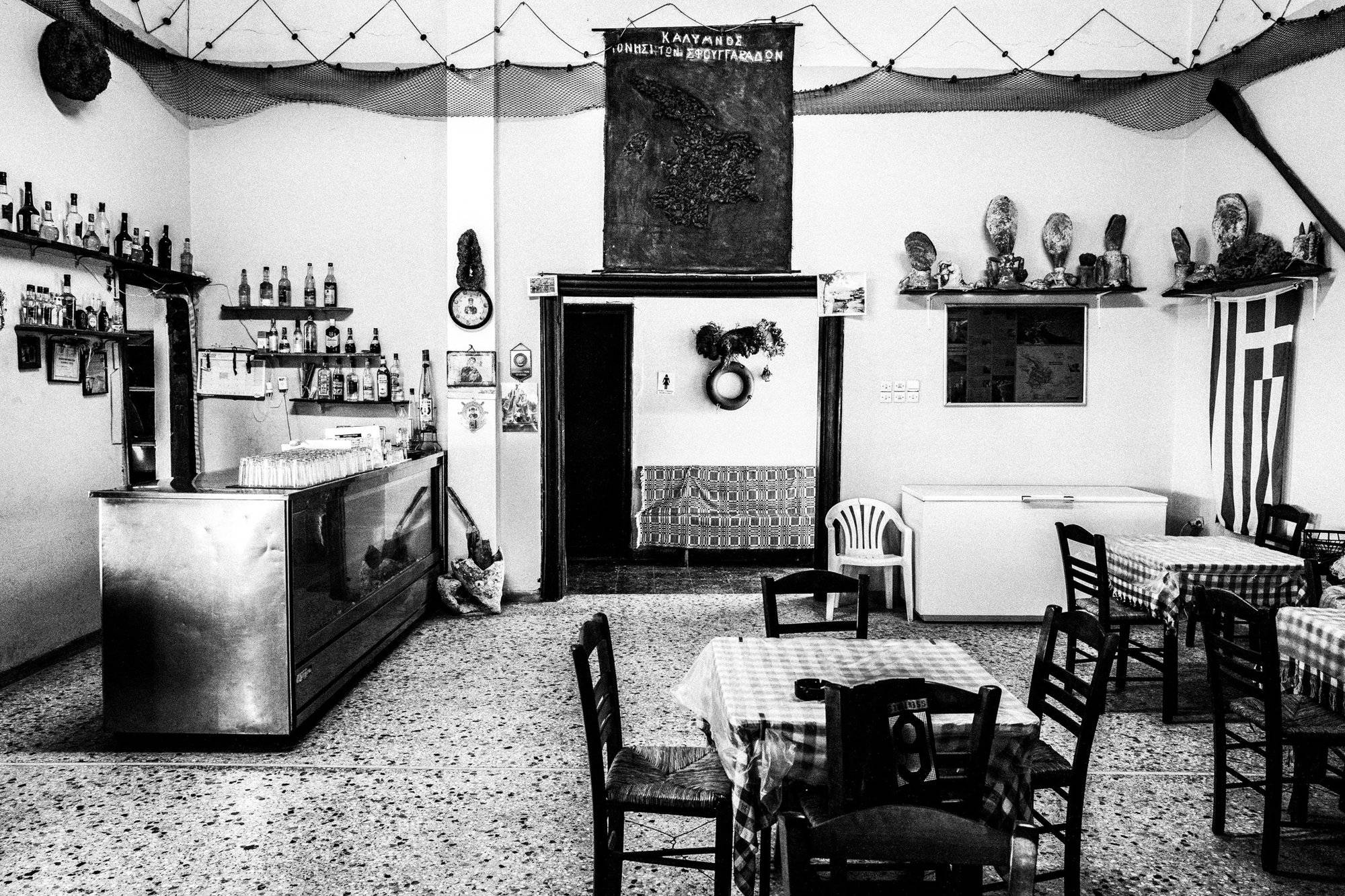
Inside the tavern, the image of a sponge diver appeared almost like a local icon. Not displayed as museum material, but living quietly inside a place where people eat, talk and pass through.
Nikitas
Nikitas belonged naturally to that setting. His tattoo of Saint George, the harbour nearby and the sponge diver on the wall created a small, layered portrait of Kalymnos without needing to explain the island directly.
Some places do not announce their importance. They reveal it through what remains on the walls.


The image inside the place
The photograph is not only about Nikitas or only about the painted diver. It is about the way Kalymnos carries the sponge-diving world into ordinary rooms, signs, gestures and conversations.
That is often where tradition becomes most visible: not in a staged setting, but in the background of daily life.
A story held by place
Continue through Kalymnos.
Follow the people, photographs and traditions of this essay into their wider geography.