Field notes · Photographic essay
Zafirenia’s Lantern
Anogia → Crete
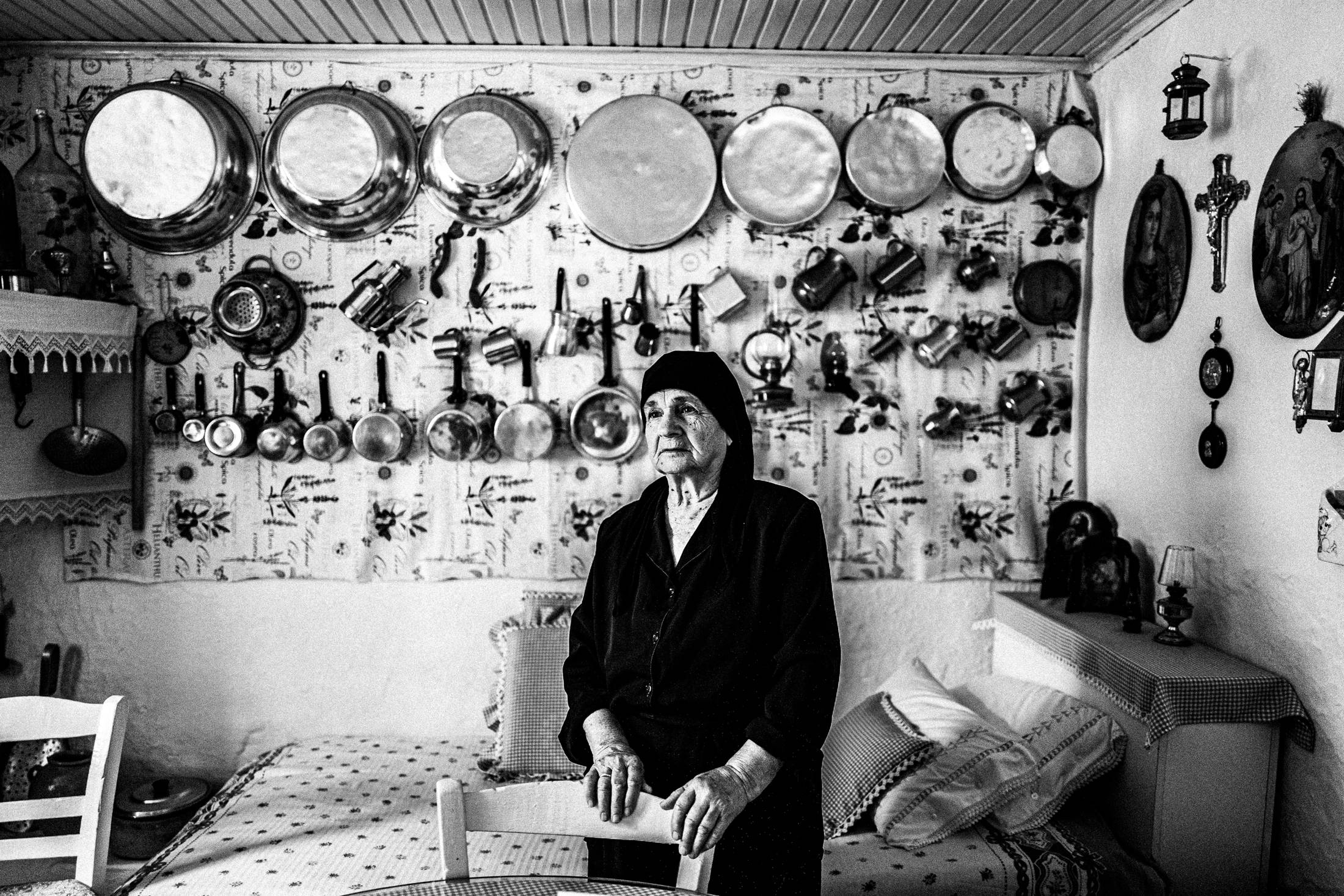
Zafeirenia in her home
Collector mode
A photograph to live with. Enter a private viewing.Introduction
In Anogia, Zafirenia welcomed George Tatakis into her home with raki, food and stories — including a lantern linked to Nikos Kazantzakis and a memorable visit from Robert Powell.
A chance encounter in a garden in Anogia led George Tatakis into the home of Zafirenia, an elderly woman whose hospitality opened the door to deeper stories of Crete. Over raki, cheese and conversation, she showed him a lantern reminiscent of one described by Nikos Kazantzakis and recounted the day actor Robert Powell came to visit her.
A house behind a garden
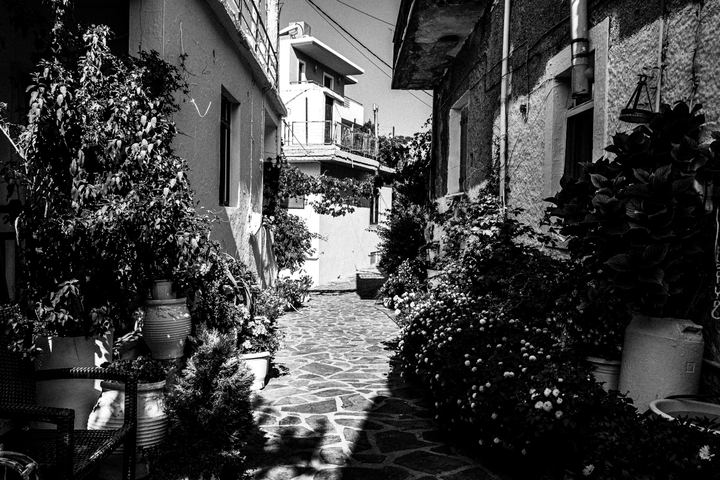
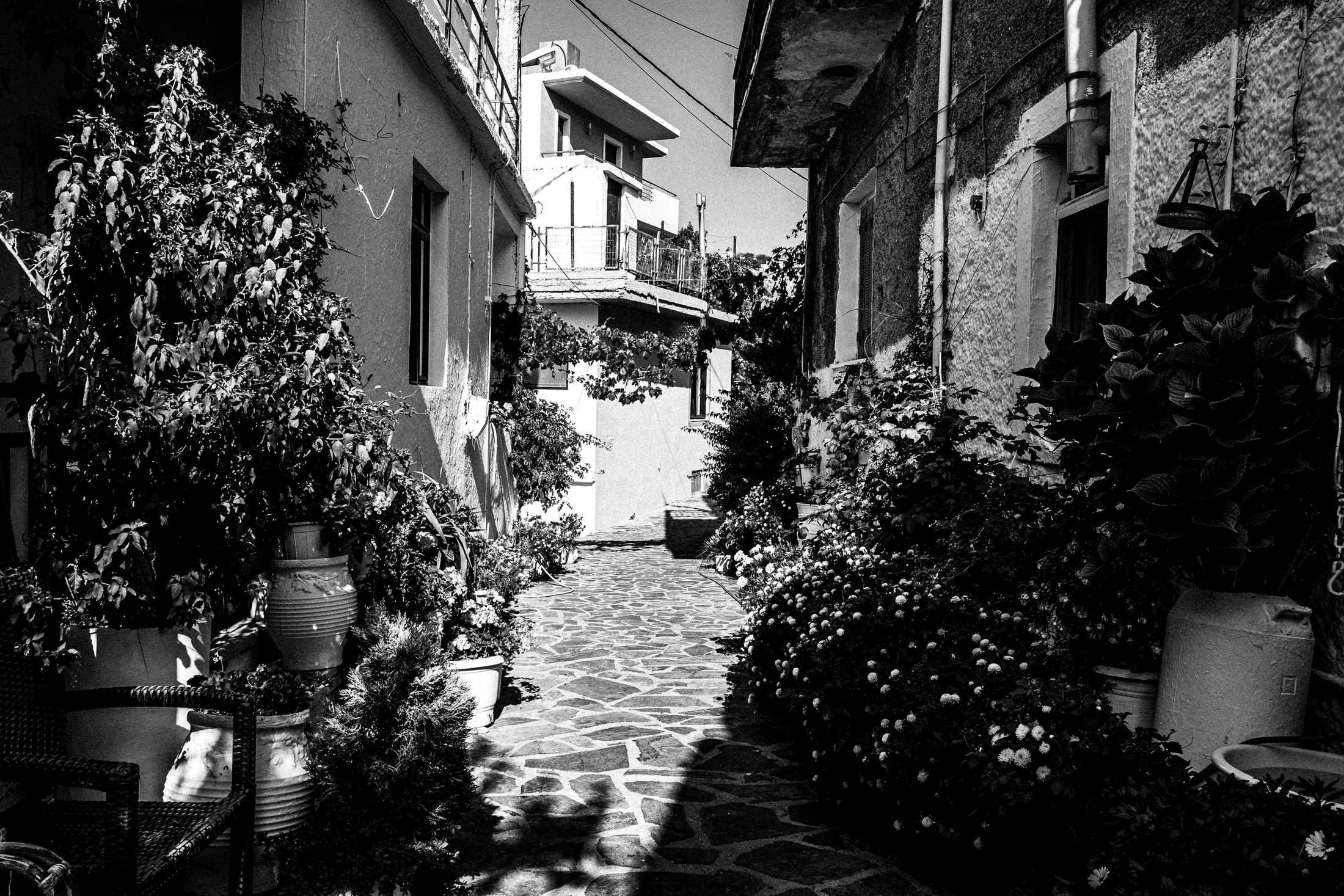
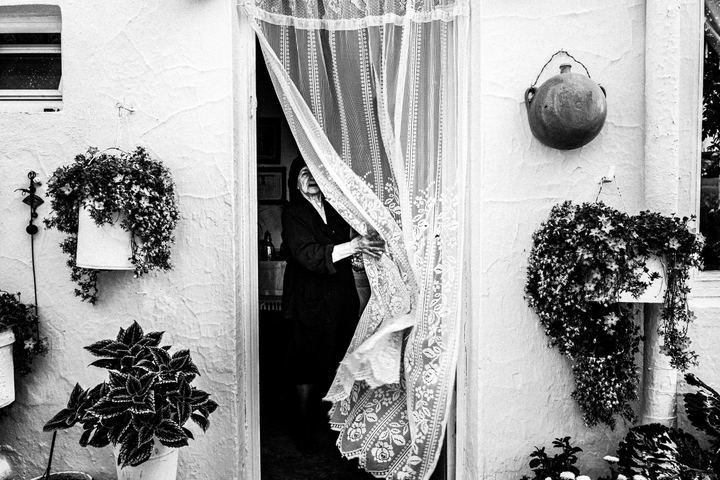
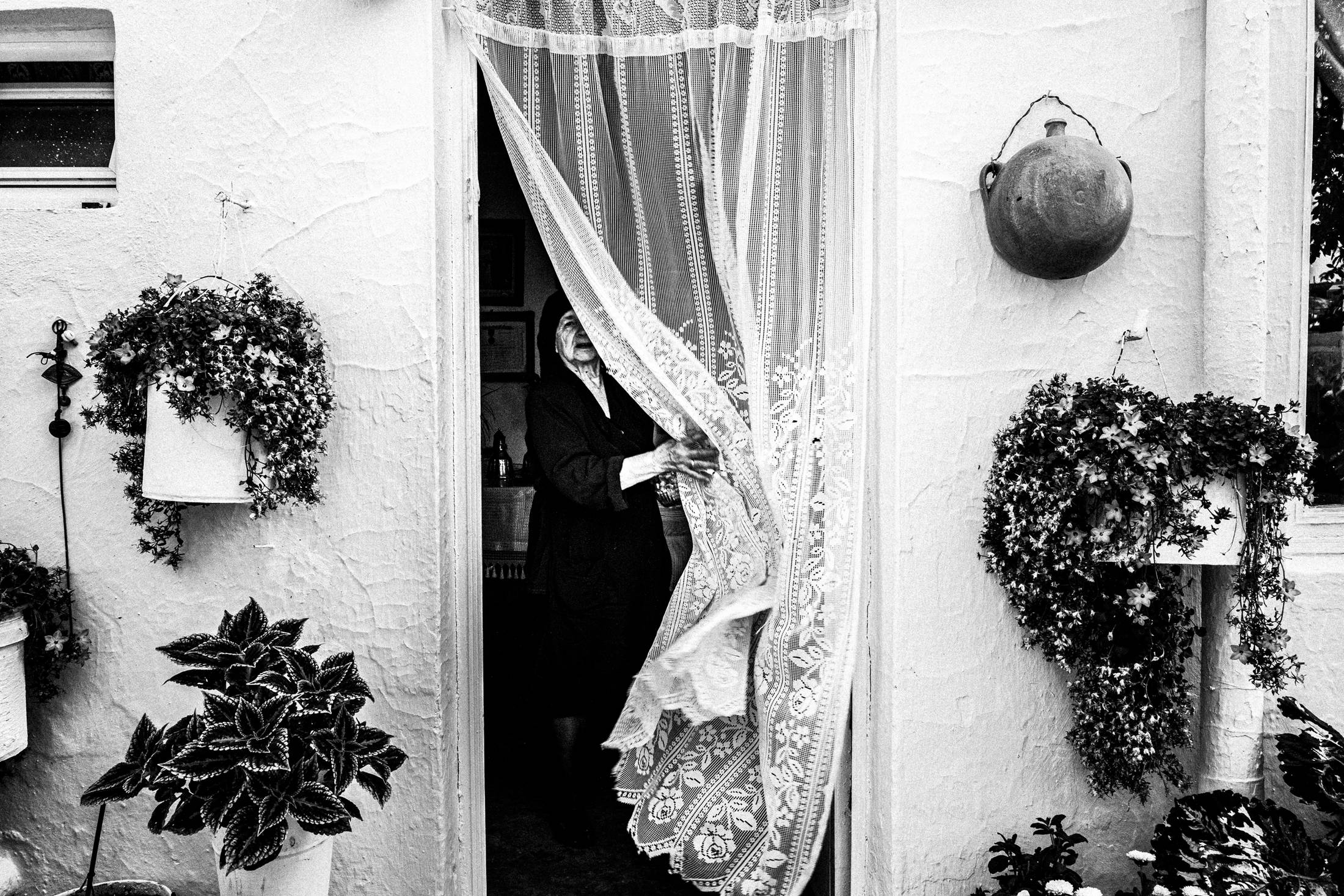
It was a typical day in Anogia when a garden caught my attention. As I paused to look more closely, an elderly woman dressed in black approached me. Her name was Zafirenia, and within moments she had welcomed me into her home.
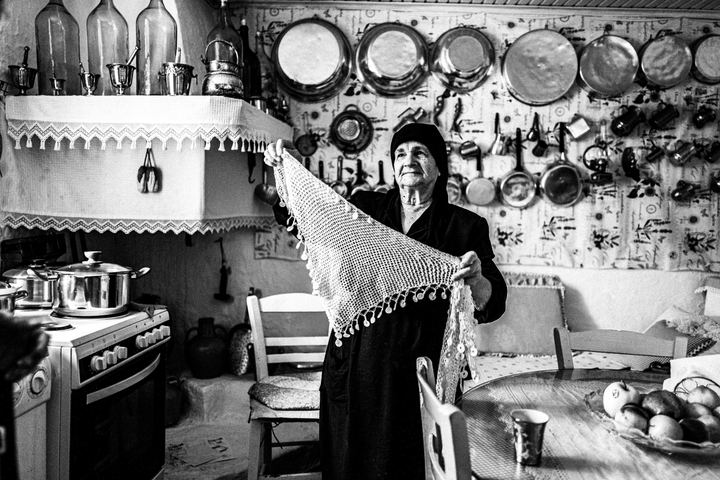
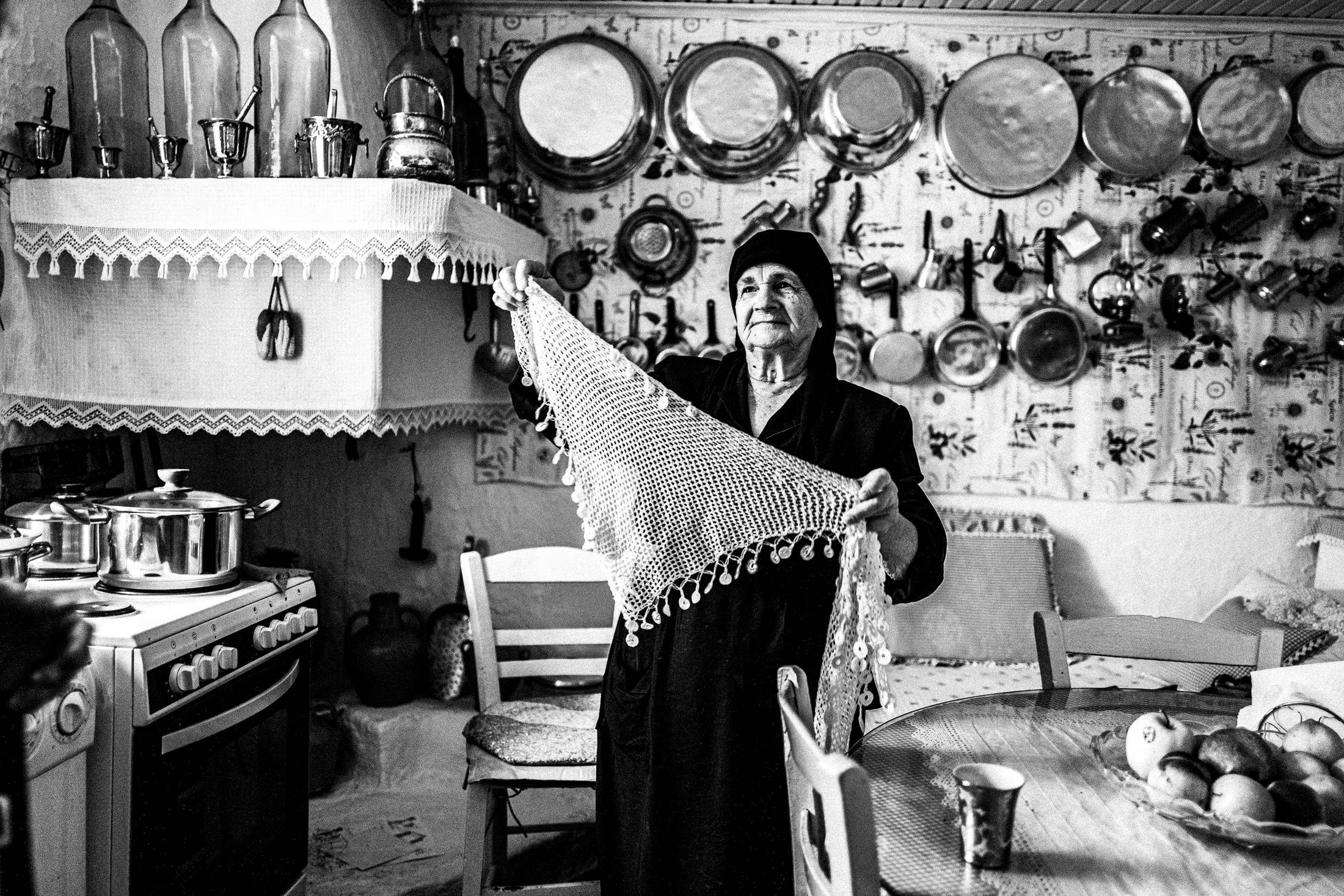
Inside, she offered me raki, bread, cheese, fruit and the kind of generosity that seems inseparable from the culture of Anogia. Her hospitality was immediate and effortless, as though opening the house to a stranger were the most natural thing in the world.
The lantern and Kazantzakis
As we spoke, I mentioned a passage from Nikos Kazantzakis’ Report to Greco, in which his grandfather would go out at night to bring foreigners home for food and shelter. Zafirenia responded by showing me a lantern hanging above her fireplace — the same kind of lantern described in the book.
The object seemed to connect her house to an older moral world of Cretan hospitality: a world in which receiving the stranger was not exceptional, but expected.
Robert Powell comes to Anogia
Zafirenia also told me about the time Robert Powell, who played Jesus in Jesus of Nazareth, came to Anogia. The locals knew she admired him and arranged for them to meet.
Because she did not want to enter the local café, Powell came to her house instead. When she saw him, she fell to her knees in reverence, explaining that although she knew he was not truly Jesus, he was the figure she had come to know as Jesus.
In Zafirenia’s home, hospitality was not a gesture. It was a way of being, carrying literature, memory and faith into everyday life.
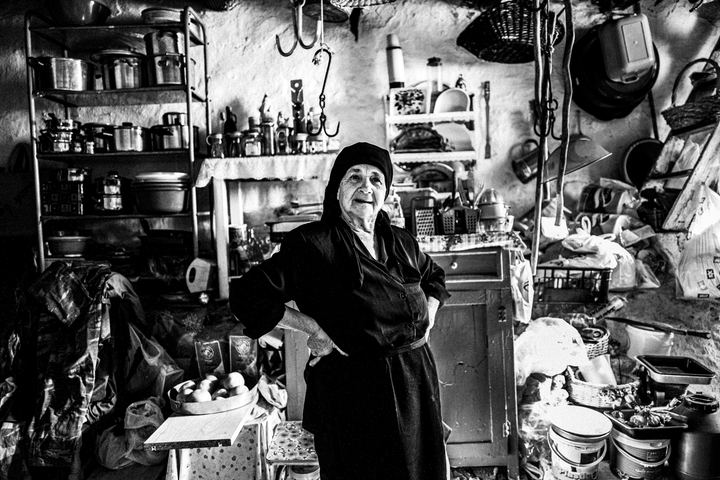
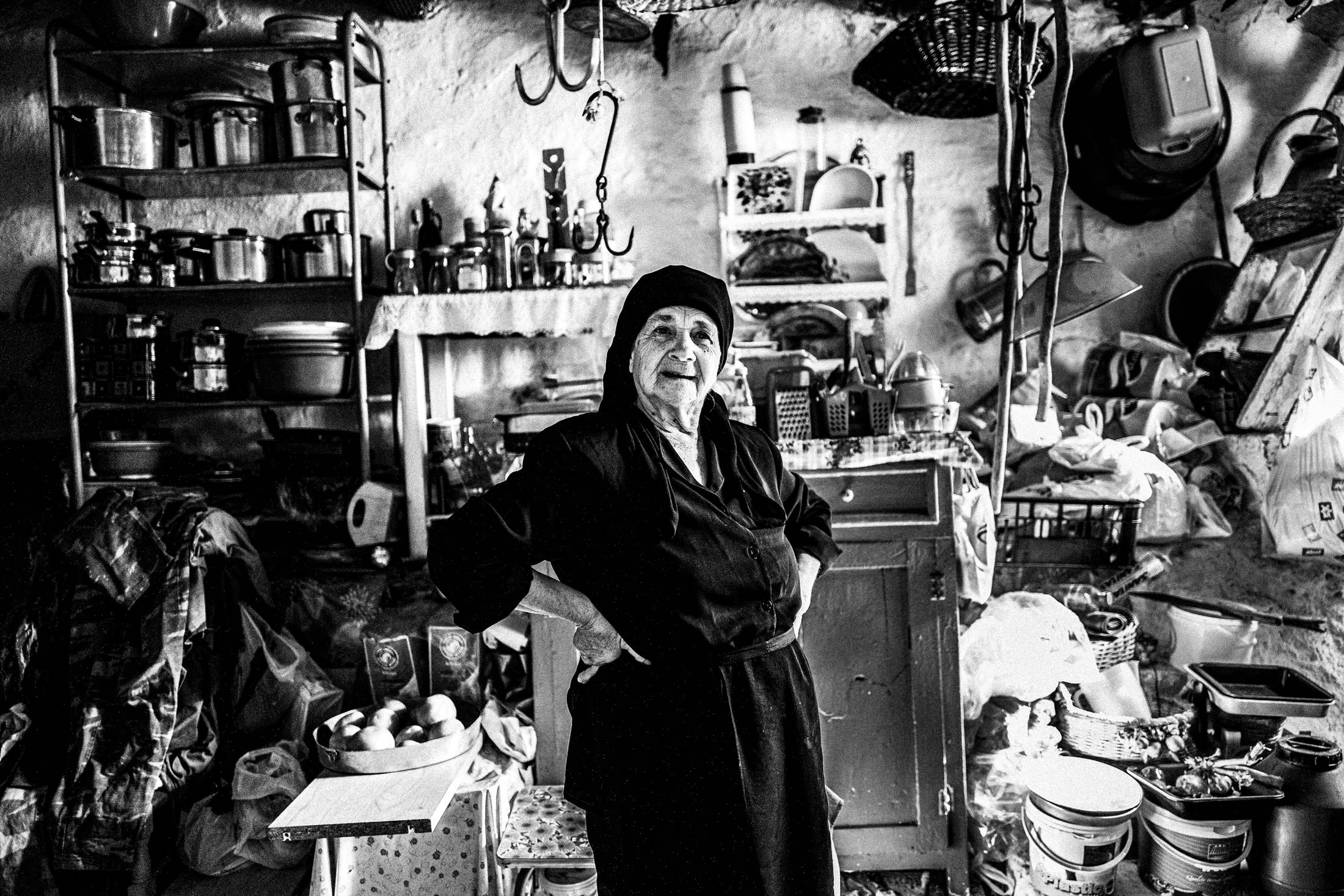
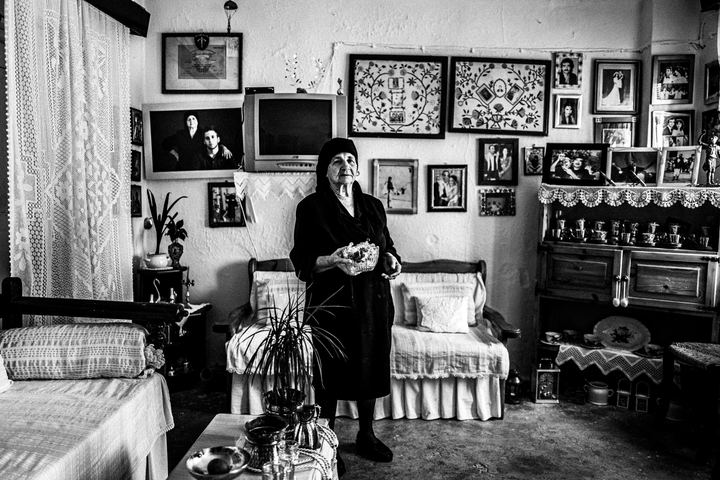
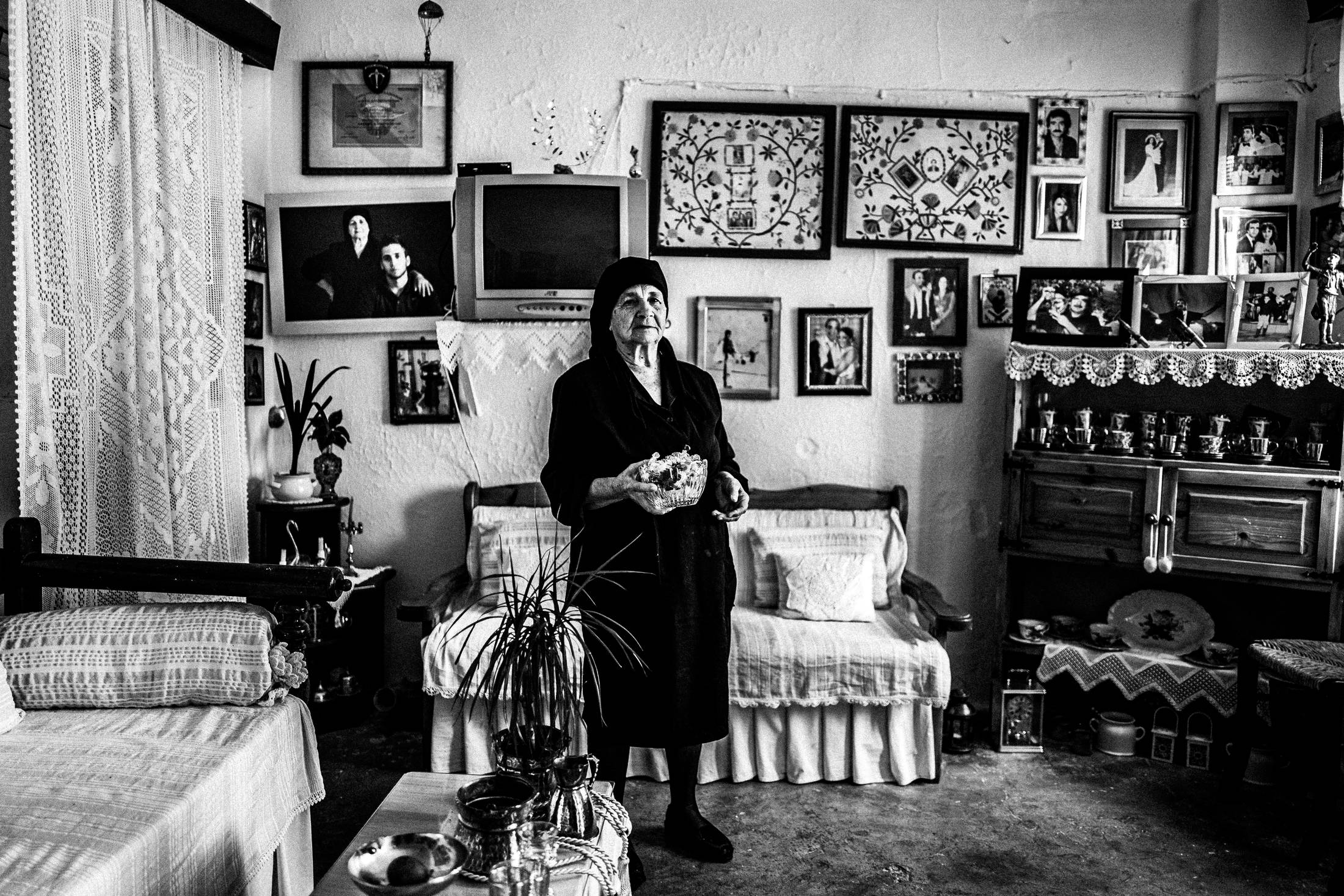
I photographed her in the kitchen, the living room and the pantry, feeling that each room held its own layer of story. What remained was not only a portrait of one woman, but a portrait of Anogia itself through her presence.
A story held by place
Continue through Anogia.
Follow the people, photographs and traditions of this essay into their wider geography.